


 New! Search Engine
 About
About
 Terms
Terms
 Privacy
 Contact
 Invest
Silent Sentinels of the Antarctic: The Remarkable Vigilance of King Penguins
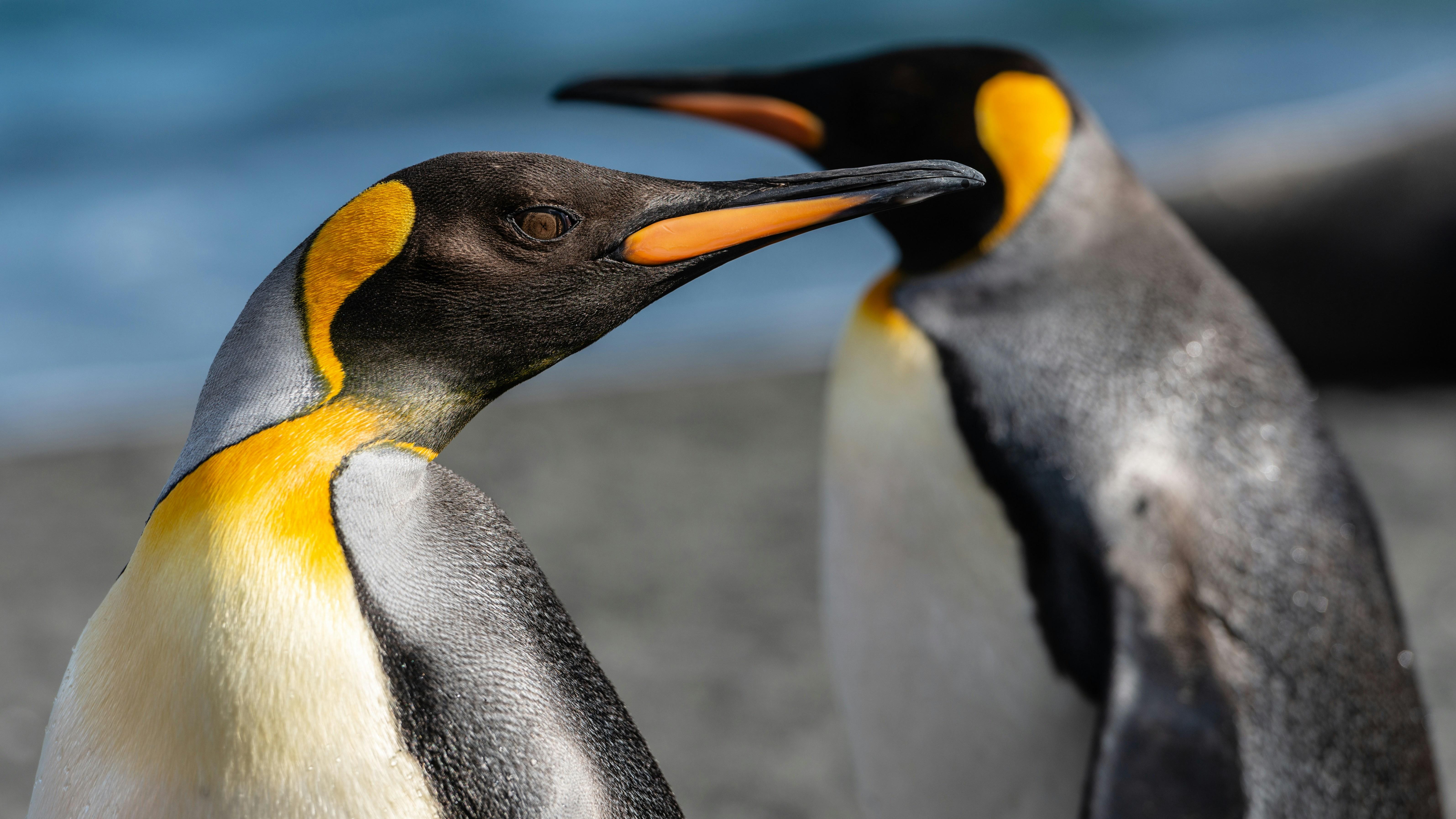
Amidst the gleaming ice and the relentless roar of the Southern Ocean, two King penguins stand in a serene stand-off, their beaks slightly open as if sharing an unscripted dialogue. Yet, beyond the casual camaraderie lies a vivid tableau of emotion. One of the penguins, adorned in striking golden patches, tilts its head in a manner that suggests a whimsical arrogance—a true monarch surveying its realm. Meanwhile, the other seems to be listening intently, as if deciphering the wisdom hidden in its counterpart's posture, vividly showcasing how communication transcends sound in the animal kingdom.
The emotional landscape of these penguins is rich and complex, characterized by an intricate mix of vigilance and social bonding. Research shows that King penguins exhibit an average vigilance duration of about 32% of their time spent outside the nest, a statistic that underscores their constant awareness of predators and environmental changes. In this context, the stance of the observing penguin may indicate heightened alertness, positioning itself as a sentinel against unseen threats. Interestingly, studies have revealed that approximately 25% of a penguin colony will simultaneously adopt sentinel roles, a sophisticated strategy that highlights the balance between individual and collective welfare, allowing for periods of rest among the group.
The nuanced behavior of these penguins extends beyond mere survival instincts. The physiological and emotional responses tied to this vigilance reveal a deeper narrative. When observing predators, the levels of stress hormones like cortisol increase, yet this response can vary significantly. For example, penguins in more stable environments exhibit notably lower stress fluctuations compared to those in more dynamic habitats. This indicates a fascinating interplay between a penguin's emotional state and its environment—a reminder that stress levels are not just individual responses but are deeply rooted in community interactions.
For those passionate about animal welfare, the behaviors observed in species like the King penguin carry valuable lessons. An enriched living environment is crucial in ensuring their natural instincts are honored. Enclosures should mimic their natural habitats as closely as possible, allowing opportunities for social interactions and sentinel behaviors. Research indicates that habitats with at least 40% visual barriers reduce anxiety-related behaviors in captive penguins—a testament to the importance of a diverse environment that fosters both security and social dynamics.
As we reflect on the remarkable lives of King penguins, we find ourselves drawn into their world—a world where vigilance blends with social connectivity. These sentinels teach us that attention and awareness, though often perceived as burdens, can forge deeper connections within a community. Just as the penguins depend on each other for safety, we too, as humans, thrive in the shared moments of existence that remind us we are never truly alone. May we honor the wisdom of these regal birds, pushing us to embrace vigilance not out of fear, but as a means of fostering richer connections with those around us.
 English
 Thai
Thai
 French
 Spanish
 Portuguese
 Deutsch
 Turkish
 Dutch
Dutch
 Italiano
 Russian