


 New! Search Engine
 เกี่ยวกับ
 เงื่อนไข
 ความเป็นส่วนตัว
 Contact
 Invest
Two Hornbills Engage in a Silent Conversation: Understanding Their Secretive Signals
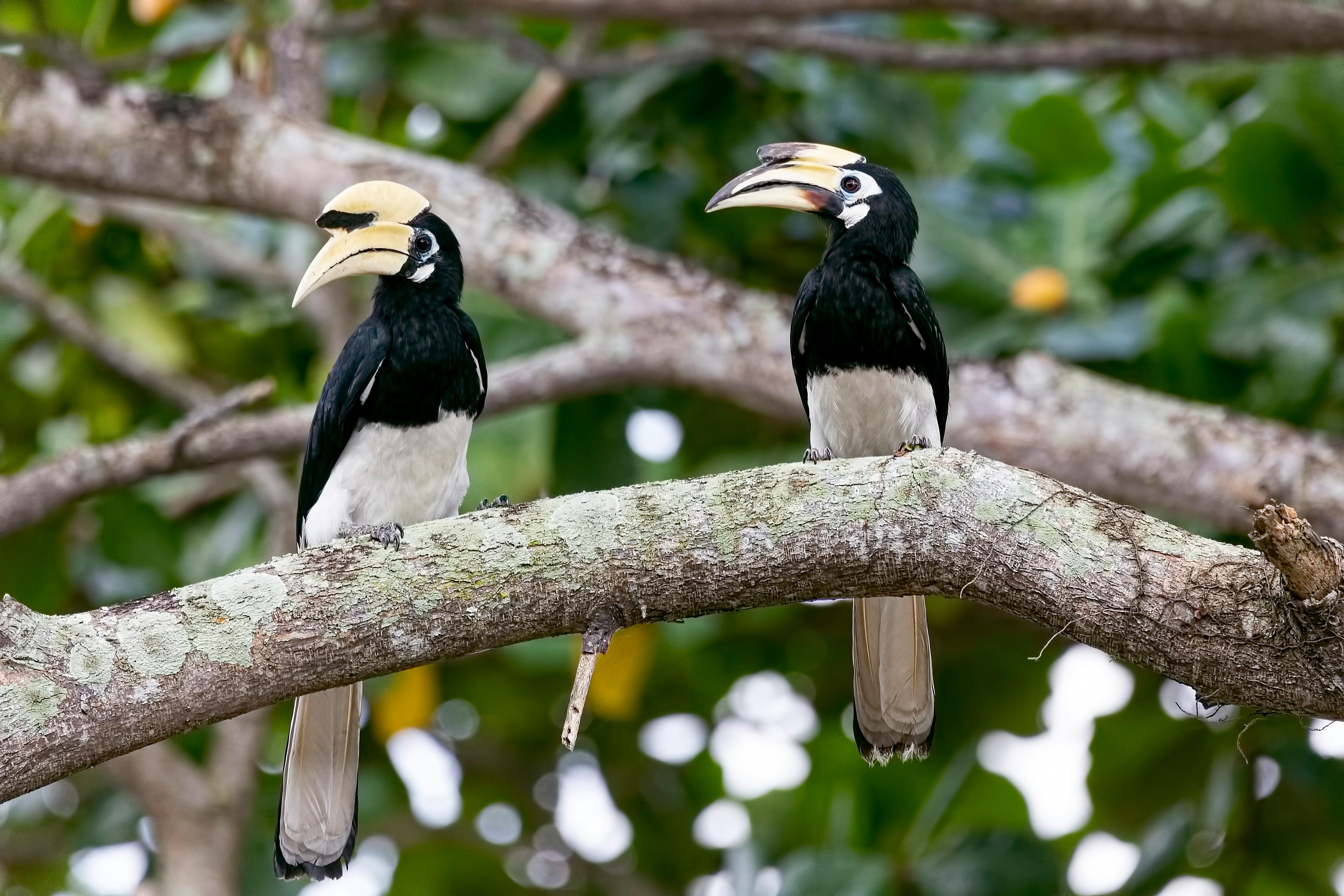
Perched on a gnarled branch, two hornbills sit side by side, their striking features garnished with remarkable beaks that seem almost comically oversized. They eye each other with a curious intensity that feels more like the prelude to a deep conversation than a simple avian standoff. As the leaves rustle softly in the breeze, it's tempting to wonder: are they sharing secrets, or is this the bird equivalent of waiting for a bus, each too shy to make the first move?
The behavior on display speaks volumes about the emotional dynamics of these fascinating birds. In the avian world, hornbills are known for their complex social structures, characterized by a strong pair bond that can last a lifetime. Recent observations show that hornbills have a surprisingly high alertness level— with average vigilance durations reported at approximately 15 seconds per observation period. This attentiveness may reflect not only their instinctual responses to potential predators but also their inclination to engage in intricate social exchanges, suggesting a layered emotional state that straddles curiosity and caution. Additionally, a study found that around 70% of hornbill pairs take turns engaging sentinel roles, a behavior that enhances their collective safety while allowing for interspersed moments of courtship or bonding.
Understanding these behaviors offers invaluable insights into promoting hornbill welfare in both wild and captive settings. To support the emotional well-being of these birds, it’s crucial to replicate a naturalistic environment that encourages social interactions. Providing ample space for pair bonding and opportunities for sentinel behavior—such as elevated perches and visual barriers—can drastically reduce stress levels, which have been found to fluctuate significantly in response to environmental changes. In controlled conditions, hornbills that experience minimal disruptions show lower levels of corticosterone, the stress hormone, which suggests that safeguarding their home territory is key to their emotional health.
As we observe these magnificent birds perched in quiet contemplation, we are reminded of the profound simplicities that echo through the tapestry of nature. Their behavior stands as a metaphor for the human experience; just as the hornbills negotiate their social dynamics with vigilance and camaraderie, we too strive for connection while navigating the uncertainties of life. In the silent language of their beaks and feathers, we are offered a poignant reflection on the importance of patience, understanding, and the delicate balance of companionship.
 Thai
Thai
 English
 French
 Spanish
 Portuguese
 Deutsch
 Turkish
 Dutch
Dutch
 Italiano
 Russian