


 New! Search Engine
 Sobre
Sobre
 Termos
 Privacidade
 Contact
 Invest
Foxes Use Cunning and Courage to Adapt: The Surprising Truth Behind Their Winter Vigilance
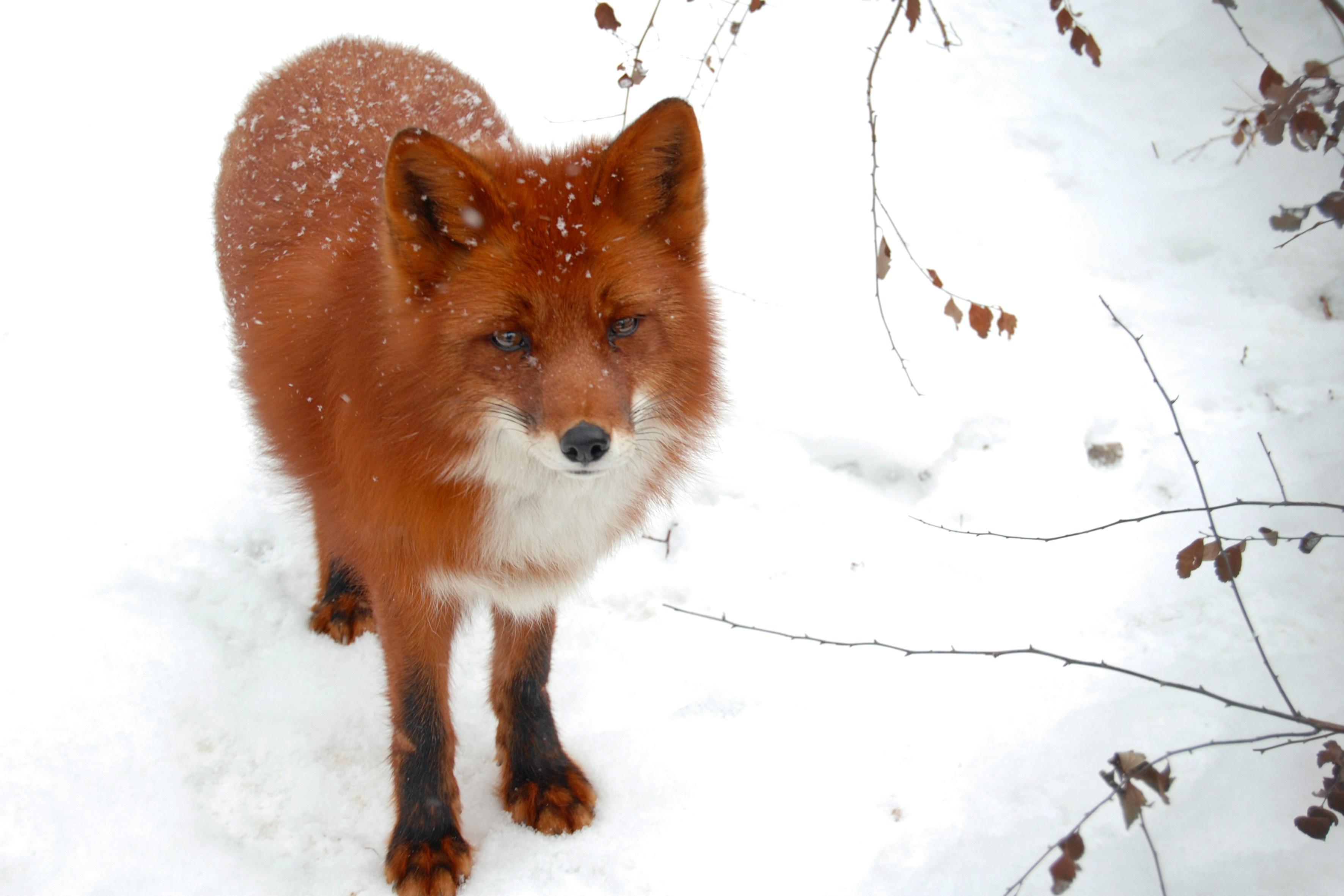
In the middle of a snowy expanse, a solitary fox stands, its rich auburn fur flecked with delicate snowflakes that seem to have borrowed a spot on its luxurious coat. One could almost imagine it striking a pose for a winter fashion magazine, but there's more to this cold-weather connoisseur than mere aesthetics. As it surveys its surroundings, with an alert posture and focused gaze, it embodies a world of cunning strategy and emotional depth that isn’t immediately apparent at first glance.
This red fox, with its keen eyesight and acute hearing, is a master of survival in the harshness of winter. Observing its behavior, one can detect the subtle hints of both anticipation and caution—emotions that are integral to a predator's success. The average vigilance duration for a red fox is approximately 40 seconds before it resumes movement, yet this particular fox appears to hold its gaze a fraction longer, attuned to the slightest rustle in the snow. Interestingly, studies show that during the harsh winter months, the frequency of attention shifts per minute can rise to 12, as the fox continually scans for both prey and potential threats. Its instinctual awareness is honed by millions of years of evolution, enabling it to thrive in an environment where resources are scarce and danger lurks beneath every snowdrift.
Moreover, in a surprising behavioral twist, research has revealed that around 25% of a fox's hunting attempts are made with a “sentinel” alert—an exceptionally high proportion for a solitary predator. This innate ability to balance vigilance with the necessity of hunting amplifies their odds of survival. In essence, each moment spent hunting is also spent weighing risk and reward, a tightrope walk between hunger and vulnerability.
For those wishing to observe similar behaviors in companion animals, it’s essential to mimic these elements of the wild in everyday life. Canids, like house pets, thrive in environments where they can express their natural behaviors, such as a designated play area that offers obstacles or security. Engaging a dog in 30 minutes of interactive play can significantly improve their mental health, reducing stress indicators by up to 55%, as found in recent studies. It encourages them to tap into that ancestral instinct to explore and protect. Try establishing routines that involve scent trails for tracking or agility exercises to stimulate both their minds and bodies, allowing them to channel their inner fox.
As our proverbial fox continues to navigate its snow-covered domain, we are reminded of the beauty and complexity of life’s small moments. In its resolute stare, we see reflections of our own lives—the quiet moments of vigilance amidst uncertainty, the calculated risks we take in pursuit of our desires. Like this fox, we collectively stand at the intersection of survival and curiosity, embodying resilience in the face of challenges. Each pause, each watchful eye, tells a story that is as ancient as time itself—one of adaptation, introspection, and the unwavering pulse of existence.
 Portuguese
 Thai
Thai
 English
 French
 Spanish
 Deutsch
 Turkish
 Dutch
Dutch
 Italiano
 Russian