


 New! Search Engine
 About
About
 Voorwaarden
 Privacy
 Contact
 Invest
A Study in Curiosity: How Kittens Engage in Early Social Learning
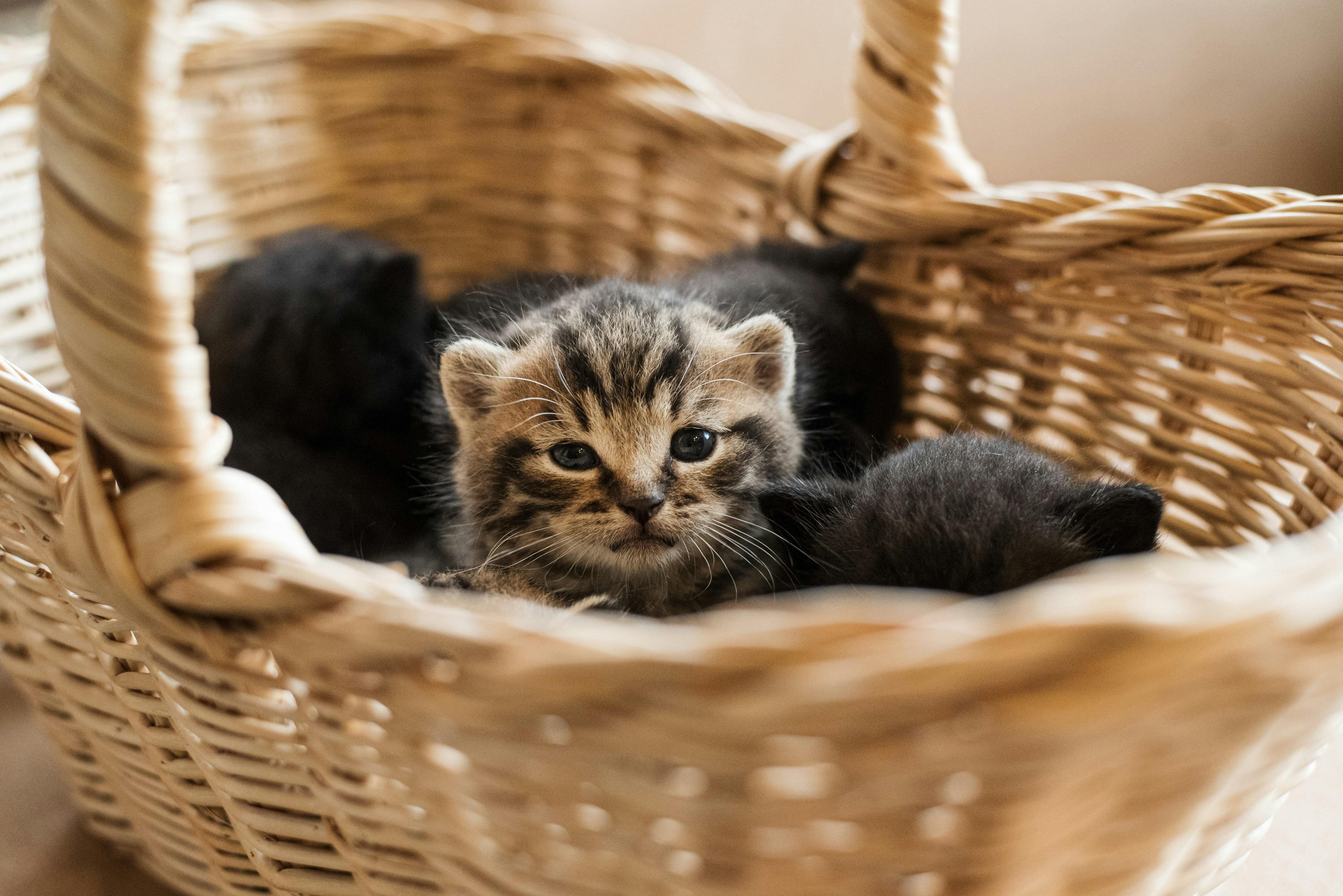
Nestled in a rustic basket, a striped tabby kitten gazes intently with wide, expressive eyes, a curious observer among its siblings who seem blissfully unaware of the world outside their woven cocoon. With an unexpected sense of poise amidst the playful chaos of tiny paws and purring bodies, this little explorer hints at a more profound truth about kitten behavior: they’re not just cute bundles of fur; they’re engaged in a vital social learning process.
That seemingly aloof stare isn't just a quirk of feline behavior—it's a window into the kitten’s developing psyche. Research indicates that kittens experience a critical socialization period from about two to nine weeks of age. During this stage, approximately 85% of their learning occurs through observation, as they mimic the actions of their mother and siblings. Kittens who engage in attentive behavior and maintain longer vigilance—averaging around 15 minutes—show significantly improved social skills. This little tabby’s keen observation might suggest it’s already mastering the art of feline interaction, and the success rate of learned behaviors in this period can influence their adaptability and future interactions with humans and other cats.
Aside from their innate charm, these kittens exhibit behaviors that are as complex as they are adorable. While play is often seen merely as fun, it's also a critical element for their development. Studies have shown that approximately 70% of playtime among siblings is unstructured, fostering creativity and behavioral flexibility. This specific little furball, momentarily still, could be deciding whether to join the chaotic romp or ponder its next move—a metaphorical reflection of the classic question: to pounce or to observe.
For those interested in fostering the well-being of young kittens, understanding their needs in this crucial period is paramount. Create environments that encourage exploration. Introducing various textures, toys, and even safe objects to observe can stimulate the natural curiosity that is so vital to their growth. It’s also beneficial to keep companionship steady; research has demonstrated that kittens raised in consistent social settings show 30% less anxiety later on, reinforcing that a stable circle can set the stage for more confident adult behavior.
As we reflect on this striking moment in a kitten’s early life, we recognize that their journey mirrors our own as we navigate curiosity and attachment in our formative years. The persistent gaze of the kitten, delicate yet determined, speaks to a universal truth about growing up: the importance of observation in the heart of learning. In a world filled with distractions, perhaps what we truly need is just a moment of stillness, a quiet sense of wonder that nudges us toward connection, both with others and ourselves.
 Dutch
Dutch
 Thai
Thai
 English
 French
 Spanish
 Portuguese
 Deutsch
 Turkish
 Italiano
 Russian