


 About
About
 Terms
Terms
 Privacy
 Contact
 Invest
The Intriguing Gaze of the Canine Mind
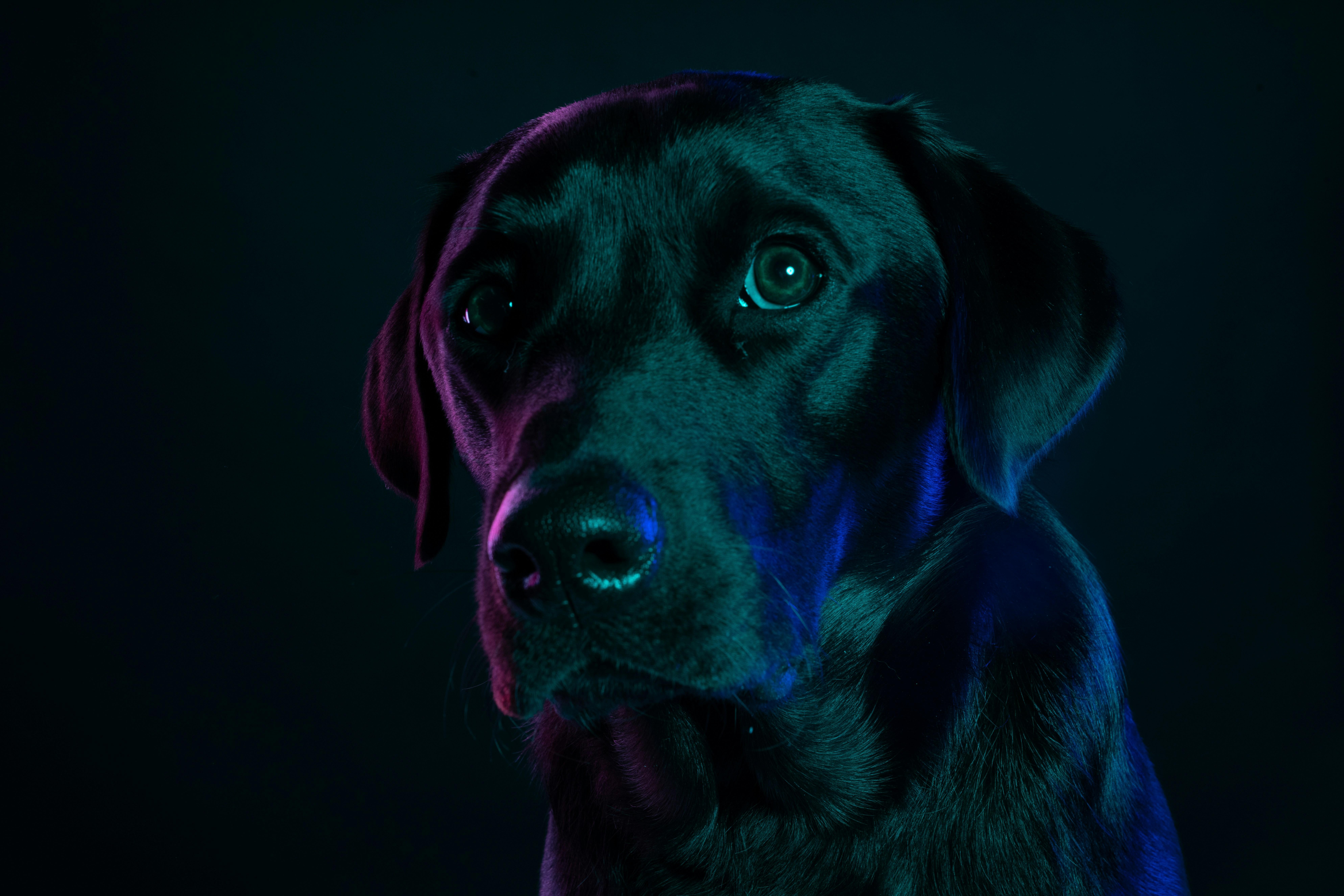
In the depths of a dog's soulful gaze lies an intricate web of biology and behavior, a narrative painted in shades of instinct and cognition. This particular reflection—deep, dark, and ethereal—offers a window into the thoughts of a creature that has shared our space for thousands of years. The canine brain, though smaller than our own, is a complex organ, capable of emotions that mirror human experiences. Scientific studies have shown that dogs not only recognize human emotions but can also respond to them, suggesting a shared understanding that transcends the species barrier.
As the light dances across its coat, it invites us to ponder the evolutionary history that has brought these animals into our lives. Wolves, their distant ancestors, roamed the wild with a fierce independence, yet through generations of domestication, dogs have cultivated a unique bond with humans. This relationship speaks to their adaptive behaviors—they have become experts in reading human social cues, responding with remarkable loyalty and sensitivity that often astounds us.
Canines possess an innate talent for communication, a silent language based on body posture and facial expressions. The seemingly simple tilt of the head or the sparkle in their eye can reveal entire stories of curiosity or concern. This is no mere coincidence; it is the result of thousands of years of evolution, selecting for traits that foster cooperation between species.
At this moment, as this dog regards us with intensity, we realize that it is not just a sentinel of loyalty but a reflection of an evolutionary partnership that continues to evolve. Among the myriad species on Earth, dogs stand out as a testament to mutual adaptation, with estimates suggesting that around 67% of households in the U.S. have at least one canine companion. This profound interdependence is a reminder that within each glance, there lies an unspoken history, an unbreakable link between two worlds.

 Thai
Thai
 French
 Spanish
 Portuguese
 Deutsch
 Turkish
 Dutch
Dutch
 Italiano
 Russian