


 About
About
 Terms
Terms
 Privacy
 Contact
 Invest
The Curious Cadence of Bear Behavior
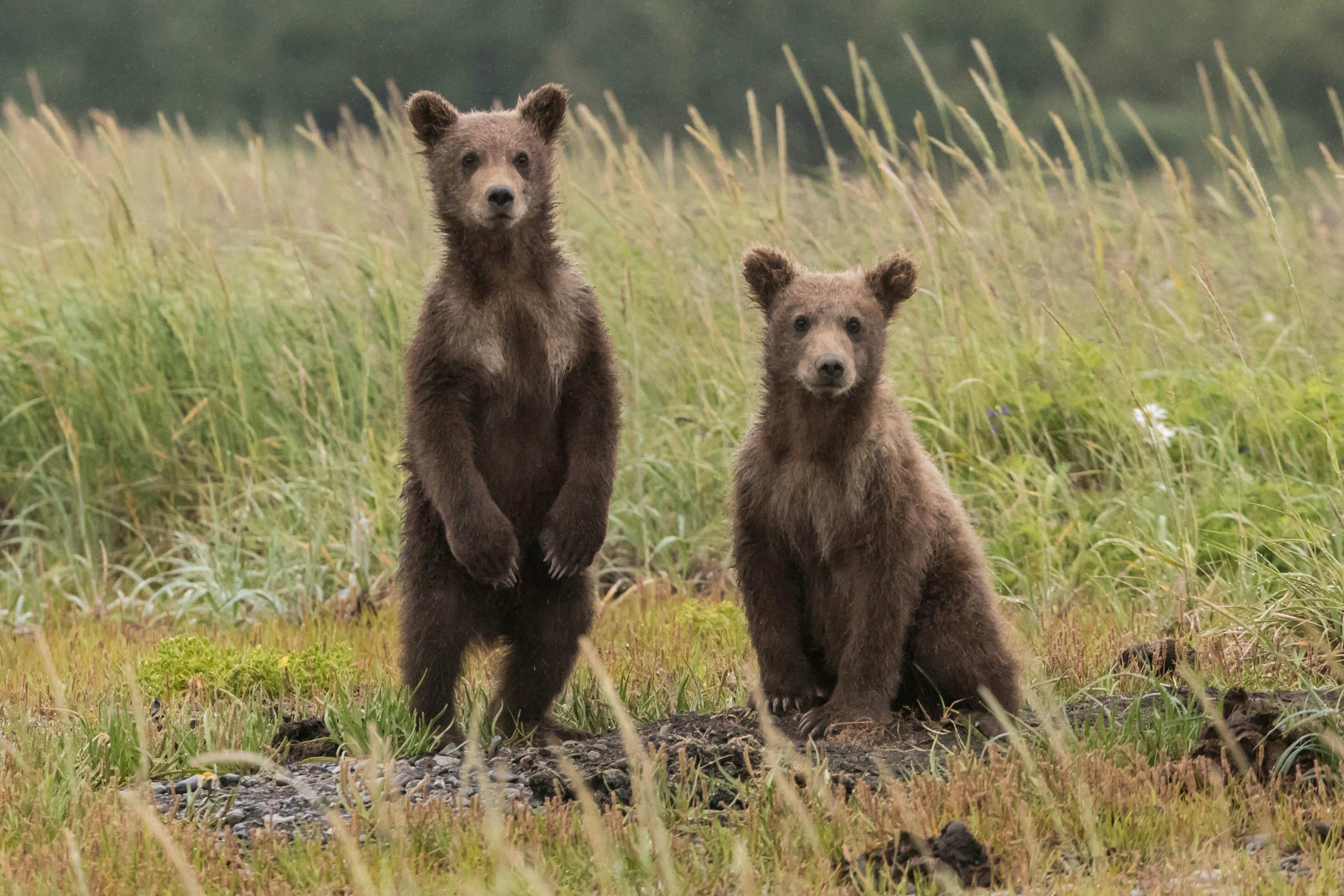
In a lush expanse where grass sways like ocean waves, two young bears invite us to ponder the complexities of animal life. Standing upright amidst a backdrop that blends earth and sky, they embody the essence of curiosity inherent in their species. This behavior, often seen in various mammals, serves a vital purpose. It allows them to perceive their environment better, a skill crucial not only for survival but also for social learning.
Young bears, like the duo in this verdant realm, are exploratory by nature. Their inquisitive stance, a blend of both cautious observation and playful engagement, represents a critical phase in their development. Scientists suggest that such behavior helps young bears gather vital information about food sources, potential threats, and social dynamics within their groups. This learning process not only shapes their survival skills but also molds their future interactions with the natural world.
What is particularly fascinating is the dynamic between playfulness and instinct. These young bears might seem like they are merely playing, but this playful behavior is fundamental in honing their hunting techniques and social skills. While they spar and tumble, they engage in a form of practice, preparing themselves for the more serious challenges of adulthood. It's nature’s way of teaching through mimicry, where trial and error bend and shape their biological behavior.
As evening approaches, these two bears symbolize a moment of innocent curiosity in an often harsh world. In fact, studies indicate that playful behavior in young mammals lays the groundwork for complex social structures—the very foundation of civilization in the animal kingdom. And so, we are left to reflect on this simple yet poignant observation: amidst the beauty of nature, even playful moments serve as essential milestones, revealing the intricate dance of life that shapes existence in surprising ways.

 Thai
Thai
 French
 Spanish
 Portuguese
 Deutsch
 Turkish
 Dutch
Dutch
 Italiano
 Russian