


 About
About
 Terms
Terms
 Privacy
 Contact
 Invest
The Curious Life of a Beach Piglet
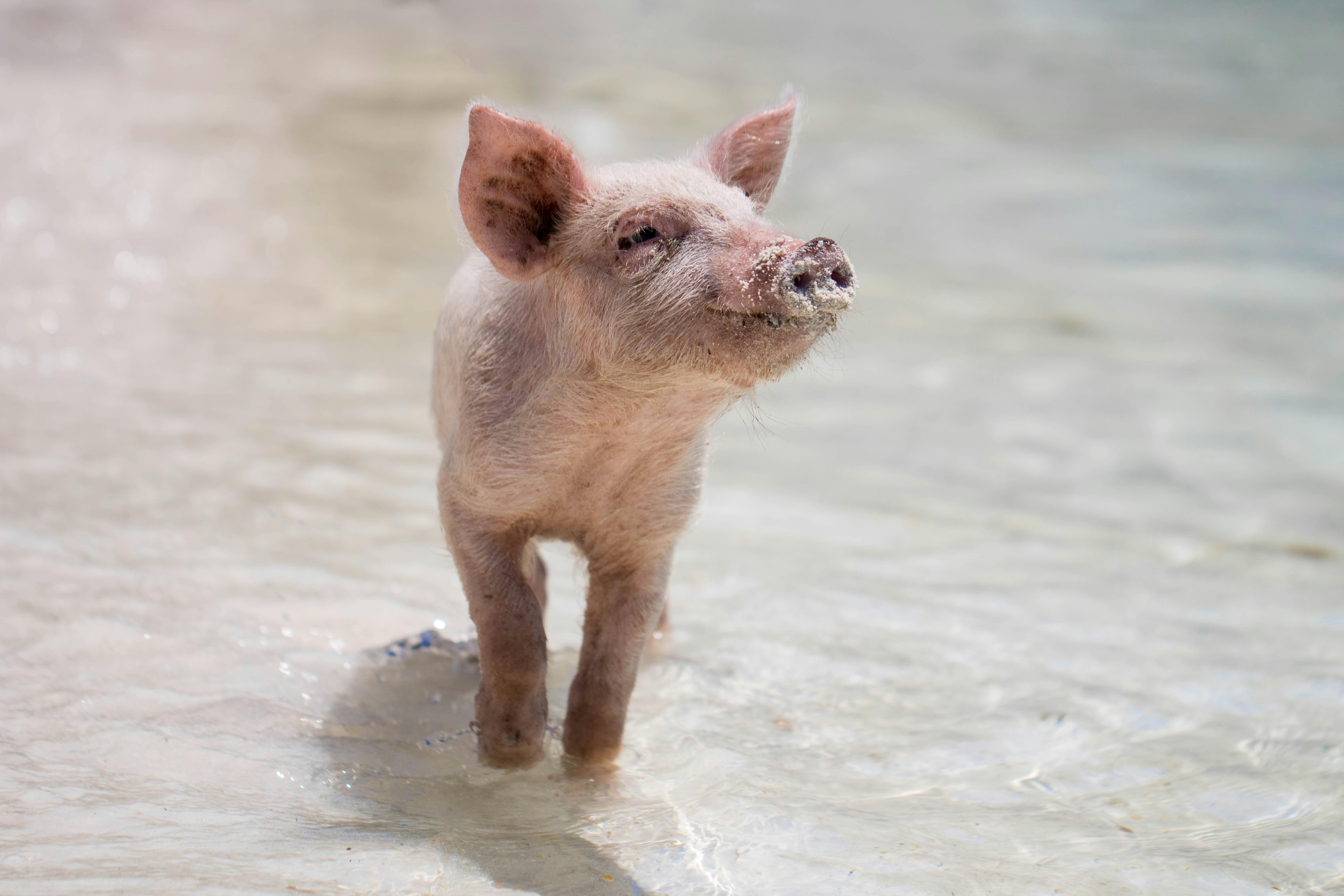
Imagine a day where the sun swathes the beach in warmth and a young creature, a piglet, wades through the gently lapping waves. This whimsical image does more than evoke smiles; it underscores the fascinating adaptability of biological behavior in unexpected environments. Pigs, often seen rooting in mud or munching on feed, reveal their incredible versatility by embracing aquatic surroundings.
This charming piglet’s choice to explore the shoreline highlights a lesser-known fact: pigs are not merely terrestrial animals. They possess a unique array of instincts that encourage them to traverse various terrains, including water. Recent studies suggest that pigs can swim, a skill attributed to their muscular bodies and buoyant structure. In the wild, their adaptability is crucial for foraging and escaping predators, as they are known to be highly intelligent animals capable of complex problem-solving.
Moreover, piglets are social by nature, often exhibiting behaviors akin to those of human children. This one appears curious, perhaps engaging in a playful dance with its tiny trottered feet splashing in the surf. Such interactions are vital to their development, as young pigs learn through play and exploration. It’s like watching a toddler discover the sea for the first time, with an innate drive to explore, learn, and grow.
In the broader ecological narrative, the beach piglet serves as a reminder of the interconnectedness of life forms. As we witness animals adapting their behaviors in diverse settings, it speaks to an astounding fact: pigs can recognize over a dozen distinct vocalizations, showcasing the depth of their social intelligence. The next time you encounter a piglet, whether on land or by the sea, remember that beneath their playful exterior lies a complex world of behavior waiting to be unraveled.

 Thai
Thai
 French
 Spanish
 Portuguese
 Deutsch
 Turkish
 Dutch
Dutch
 Italiano
 Russian