


 เกี่ยวกับ
 เงื่อนไข
 ความเป็นส่วนตัว
 Contact
 Invest
In the quiet corners of a cozy home, the age-old rivalry between dogs and cats appears to dissolve, revealing instead a captivating narrative of interspecies playfulness. The scene depicts a stout dog meeting a spry cat in a spirited engagement, embodying
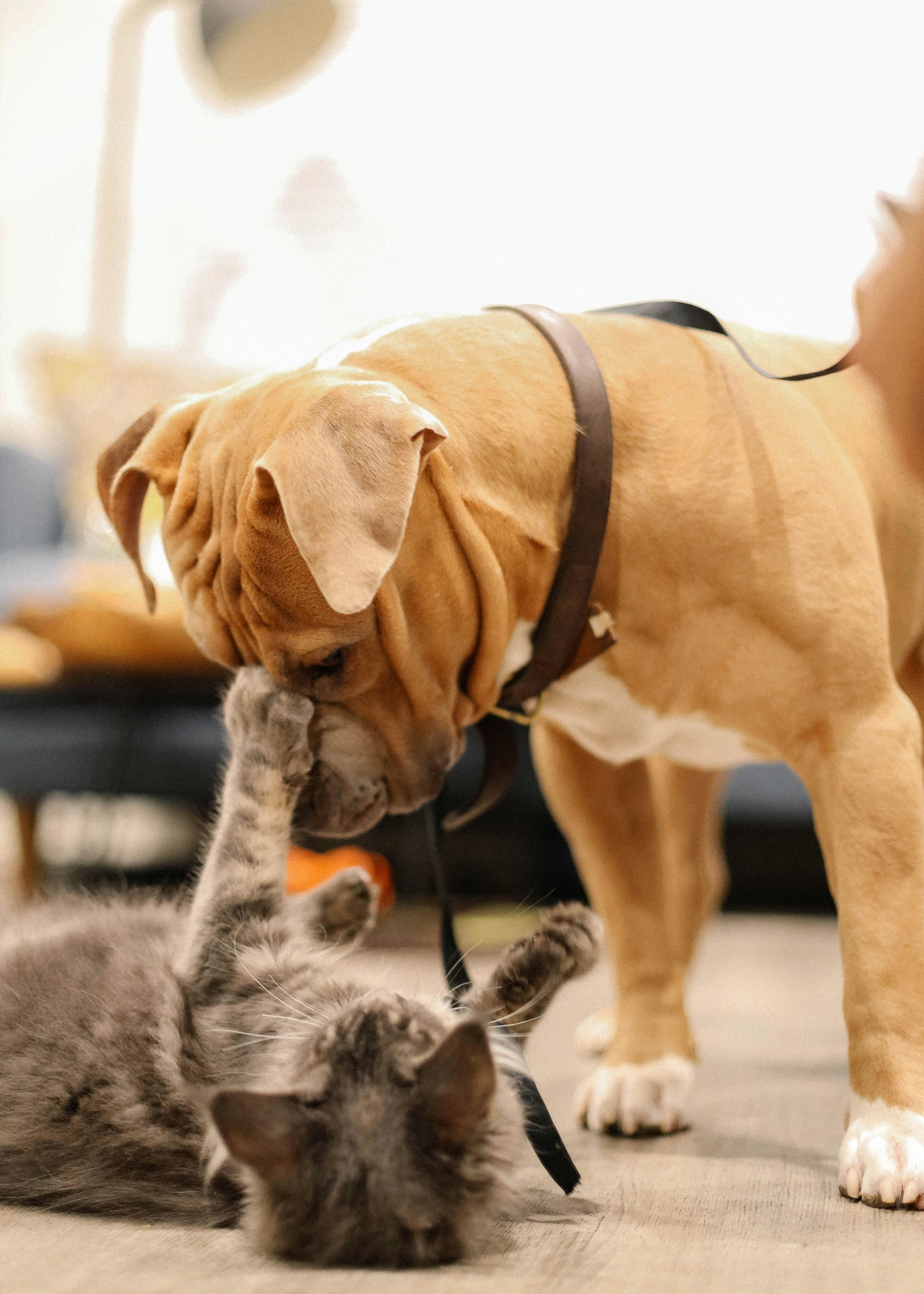
This interaction sparks curiosity about the social dynamics between differing species. Dogs, descendants of wolves, have long been known for their pack mentality, relying on social cues and bonds. Cats, in contrast, are more solitary by nature, yet they exhibit their own unique social behaviors, particularly in domestic settings. As they tussle, what might appear as mere playing is, in fact, a complex ballet of evolutionary traits, with an underlying guide of communication that transcends vocalization.
Interestingly, research suggests that when animals engage in play, it often serves as a critical function in social learning and development. For instance, dogs and cats develop their unique communication skills through these playful interactions, an essential process for establishing behavior norms with one another. So while their lingering stereotypes suggest animosity, the truth is often much more nuanced.
As this playful drama unfolds, one might ponder the importance of such interspecies interactions. According to studies, animals that engage in social play experience lower stress levels and increased adaptability. Perhaps in these moments of playful skirmish, our furry companions are not merely frolicking; they are secretly honing the social skills necessary for a harmonious existence. In the grand tapestry of life, it is these seemingly trivial moments that weave the threads of understanding and cooperation among species, reminding us of the interconnectedness of all living beings.

 English
 French
 Spanish
 Portuguese
 Deutsch
 Turkish
 Dutch
Dutch
 Italiano
 Russian