


 About
About
 Terms
Terms
 Privacy
 Contact
 Invest
In the soft light of dawn, a young fox sits serenely amidst the emerald foliage, caught in a moment that reflects a deeper biological narrative. With one eye closed and its tongue playfully flicking out, this seemingly simple interaction is a window into a
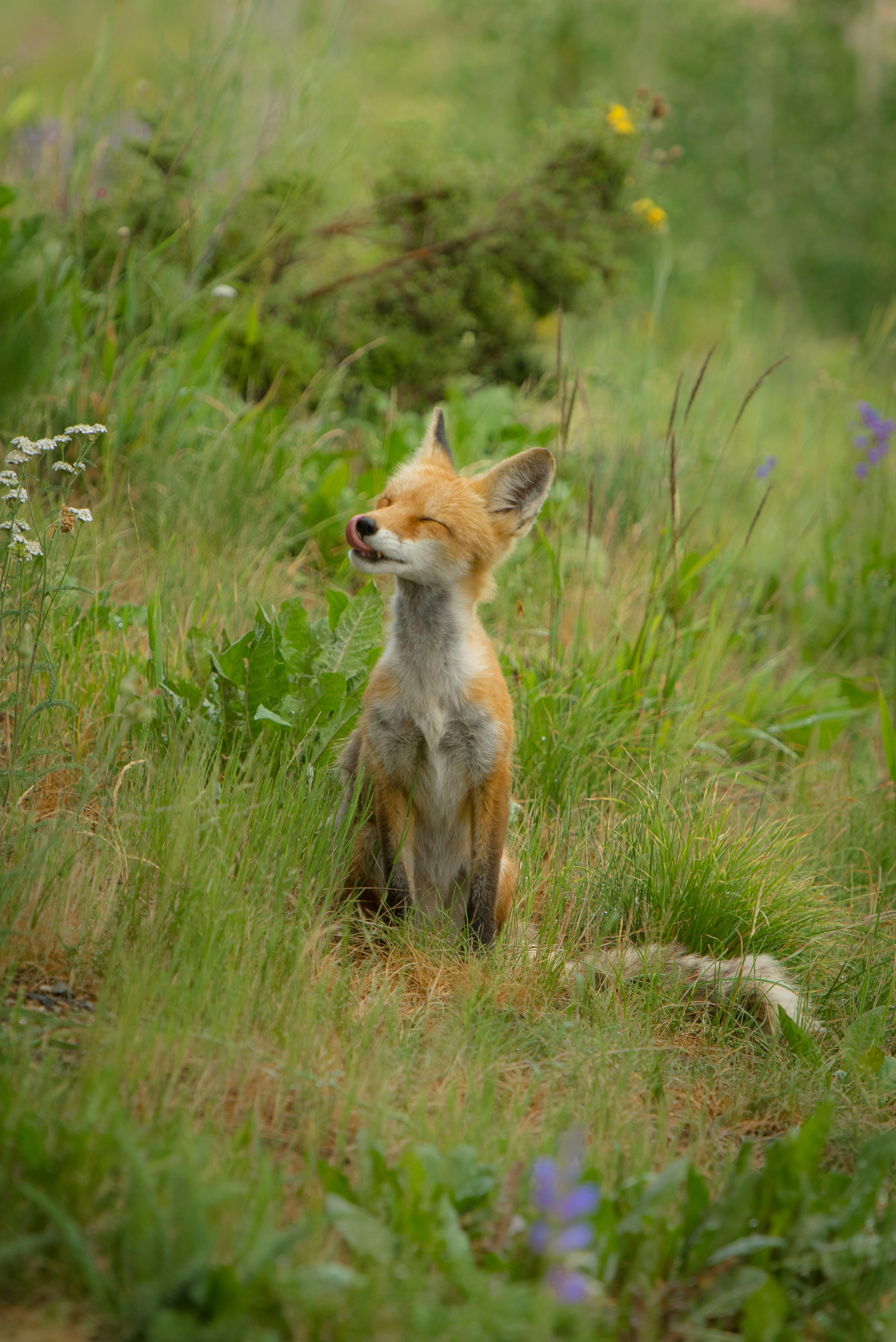
Foxes, like their canid relatives, are known for their finely tuned sense of smell, which is crucial for hunting and social interactions. The act of licking often serves a dual purpose—tasting the air while simultaneously communicating scents that others within its species may find intriguing. This behavior is not merely idiosyncratic; it is a skill honed through evolution, allowing these clever creatures to navigate their territories while seeking nourishment and companionship.
While many of us may think of animals as instinct-driven beings, the fox embodies a curious blend of instinct and learning. The balance between playful exploration and survival is crafted over time, with each interaction enriching its understanding of the world. In this grassy habitat, where every rustle could signal the presence of both potential threats and opportunities, the fox’s ability to discern nuances can significantly impact its fate.
Studies suggest that the average lifespan of a wild fox is a mere three to five years, yet some defy the odds, living up to ten years or more. This creates a fascinating paradox: as we marvel at their ephemeral existence, we also observe their remarkable resilience. Every flick of the tongue, every twitch of the ear, is an illustration of survival in a world that constantly challenges their cunning nature. In the end, the simple act of licking in the wild is a reminder that life’s complexities often hide in plain sight, waiting for us to pay closer attention.

 Thai
Thai
 French
 Spanish
 Portuguese
 Deutsch
 Turkish
 Dutch
Dutch
 Italiano
 Russian