


 Environ
 Conditions générale de vente
 Confidentialité
 Contact
 Invest
The Joyful Frolic of Lambs in Nature
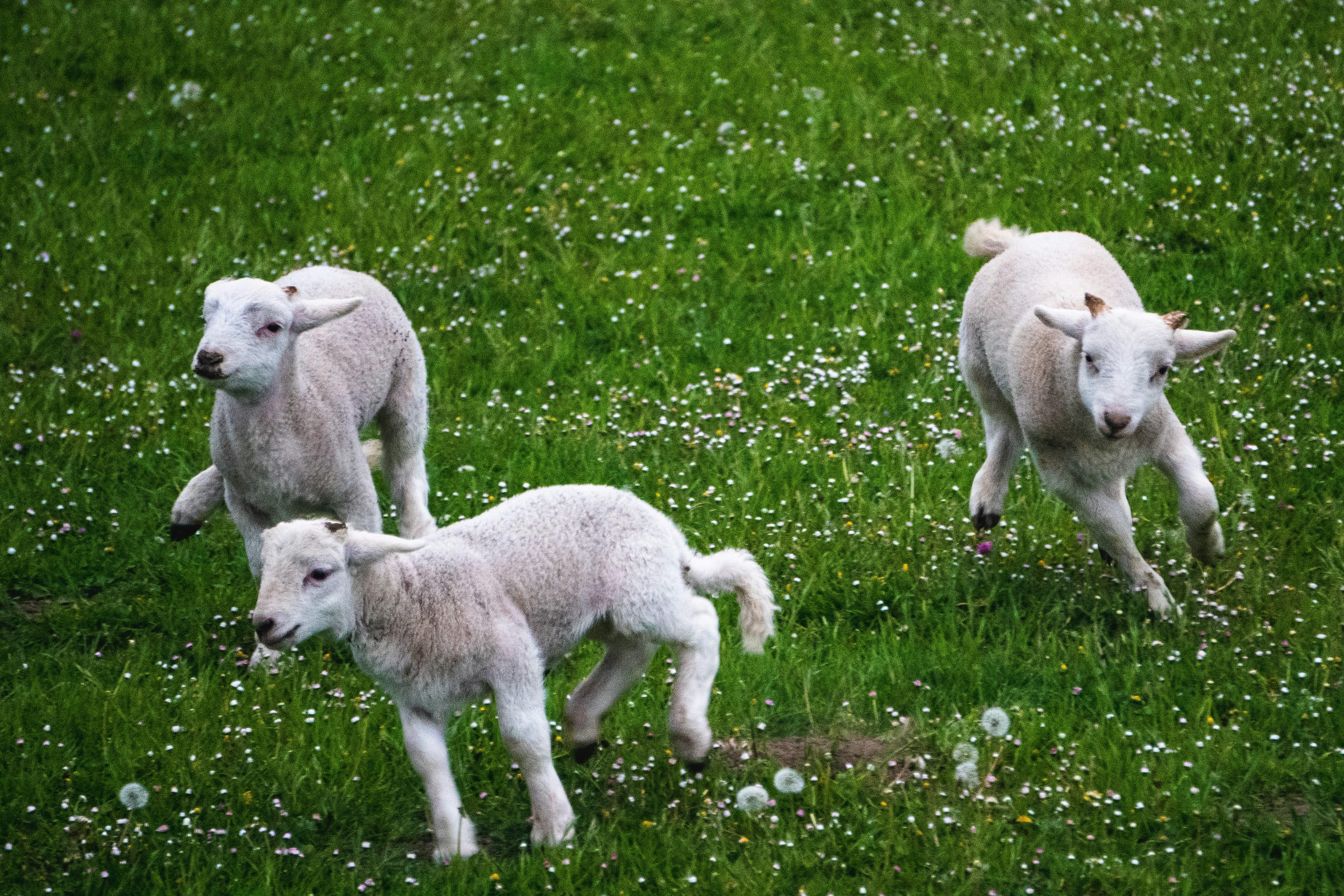
In the emerald expanses of a spring meadow, a delightful scene unfolds. Three lambs, their woolly coats a blur of white against the lush backdrop of grass and wildflowers, engage in a spirited game of tag. This lively behavior reflects not only their playful nature but also an underlying biological imperative that resonates through generations of this beloved species.
Lambs, like a child in a playground, embody the intricate dance of social behavior and instinctual learning. As they scamper and bound with glee, they are honing critical survival skills—strengthening muscles and coordination, developing agility to evade potential predators. Their frolicking isn't just for fun; it's a natural rehearsal for the challenges of adulthood. In this playful arena, they formulate social bonds that are fundamental for their species. The innocent chaos of their antics often mirrors complex social structures found in more prominent members of the animal kingdom.
Curiously, lambs also experience a phenomenon known as "social facilitation," where one enthusiastic leap prompts another. It’s almost as though they have an invisible cue embroidered into their essence, promoting communal play and learning. Observing their antics brings to mind the often-untold stories of cooperation in the wild, where playful interactions lay the groundwork for future alliances and teamwork.
In the wild, 60% of young ungulates will fall prey before their first birthday. However, those that engage in such communal frolics develop skills that improve their chances of survival, emphasizing the delicate balance of play, instinct, and necessity. Amid the laughter of life in a spring meadow, the playful spirit of lambs serves as a reminder of nature's intricate design, where joy and survival intertwine seamlessly.
 French
 Thai
Thai
 English
 Spanish
 Portuguese
 Deutsch
 Turkish
 Dutch
Dutch
 Italiano
 Russian