


 Environ
 Conditions générale de vente
 Confidentialité
 Contact
 Invest
The Enigmatic Behavior of Kittens: A Window into Feline Curiosity
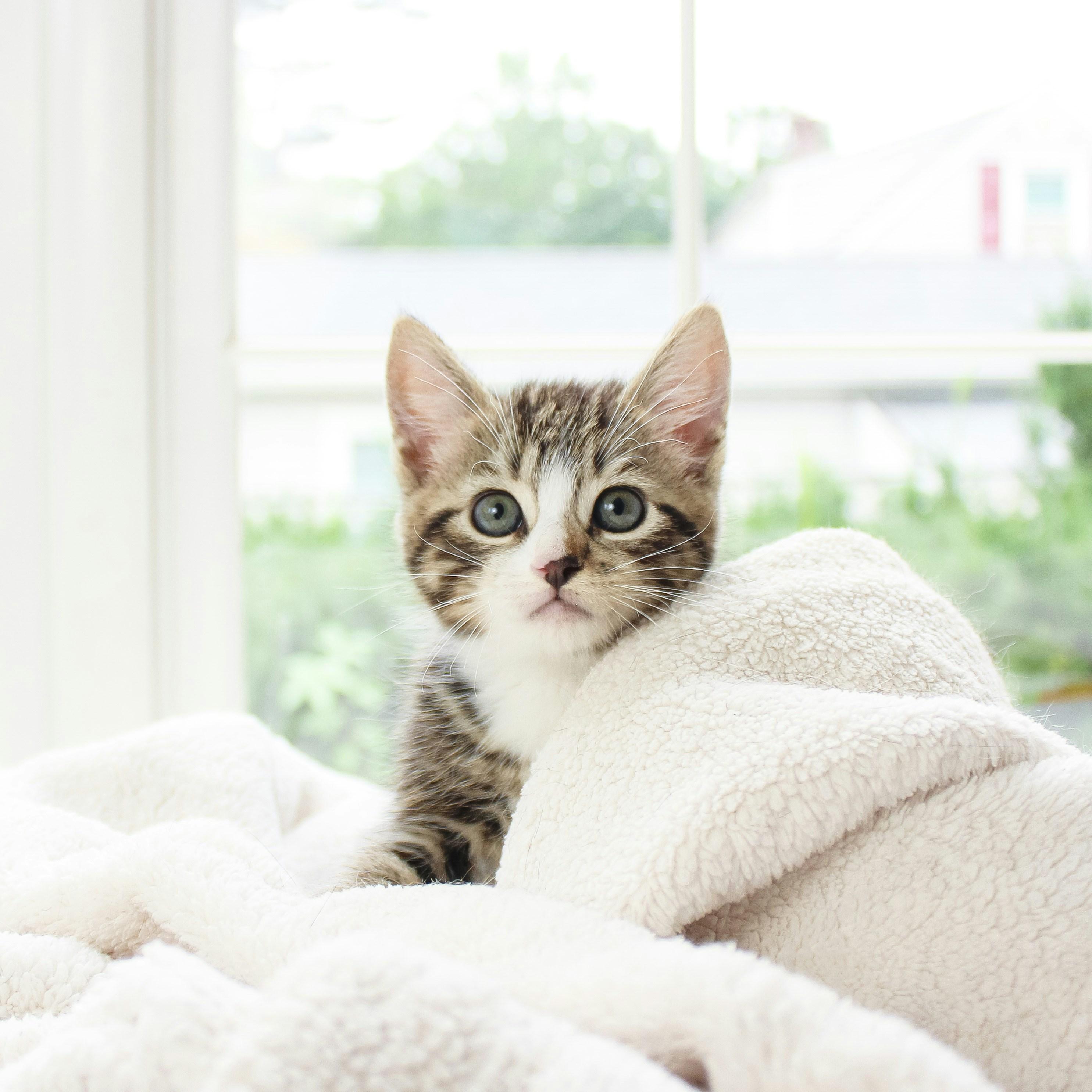
Nestled snugly in a blanket, a young kitten exudes a type of charm that speaks to the essence of feline nature. Its large, expressive eyes, framed by a coat of soft fur, hint at an untamed curiosity that defines this early stage of life. Kittens, much like human infants, are born into a world ripe for exploration, and their behavioral quirks reflect a blend of inherent instincts and learned experiences.
This particular kitten's wide-eyed stare is not merely adorable; it is a manifestation of an evolutionary survival mechanism. In the wild, juvenile animals exhibit traits that elicit nurturing behaviors from adults, ensuring they receive protection and care. The slightly elevated ears and poised posture suggest a keen awareness of its surroundings, hinting at what biologically drives cats to engage in play-fighting and pouncing. These seemingly innocuous activities serve as vital practice for developing advanced hunting skills.
Interestingly, the playful antics of such young felines can be explained through the lens of ethology—the study of animal behavior. Kittens often engage in mock battles that mimic predatory tactics essential for survival. This behavior isn’t frivolous; it hones their reflexes while also fostering social skills. The phenomenon of “social learning” among kittens is captivating, as they observe and imitate their mother’s actions.
In many ways, this kitten epitomizes the balance of exuberance and cautiousness. While it ventures into the unknowns of its environment, its natural wariness keeps it grounded. Reflecting on these behaviors, one can't help but marvel at the depth of instinctual drives present in even the smallest creatures. Studies show that domestic cats retain over 95% of their wild ancestry behaviors, a statistic that underscores the enduring nature of their evolutionary heritage. As you observe this tiny bundle of fur, remember that each twitch of its whiskers and flick of its tail are whispers of a complex world born from instinct and curiosity.
 French
 Thai
Thai
 English
 Spanish
 Portuguese
 Deutsch
 Turkish
 Dutch
Dutch
 Italiano
 Russian