


 About
About
 Terms
Terms
 Privacy
 Contact
 Invest
In the stark expanse of the Arctic, polar bears stride across a canvas of ice and snow. The sight of an adult bear alongside its cub is a poignant reminder of the enduring relationship between parent and offspring, one crafted through millennia of evolutio
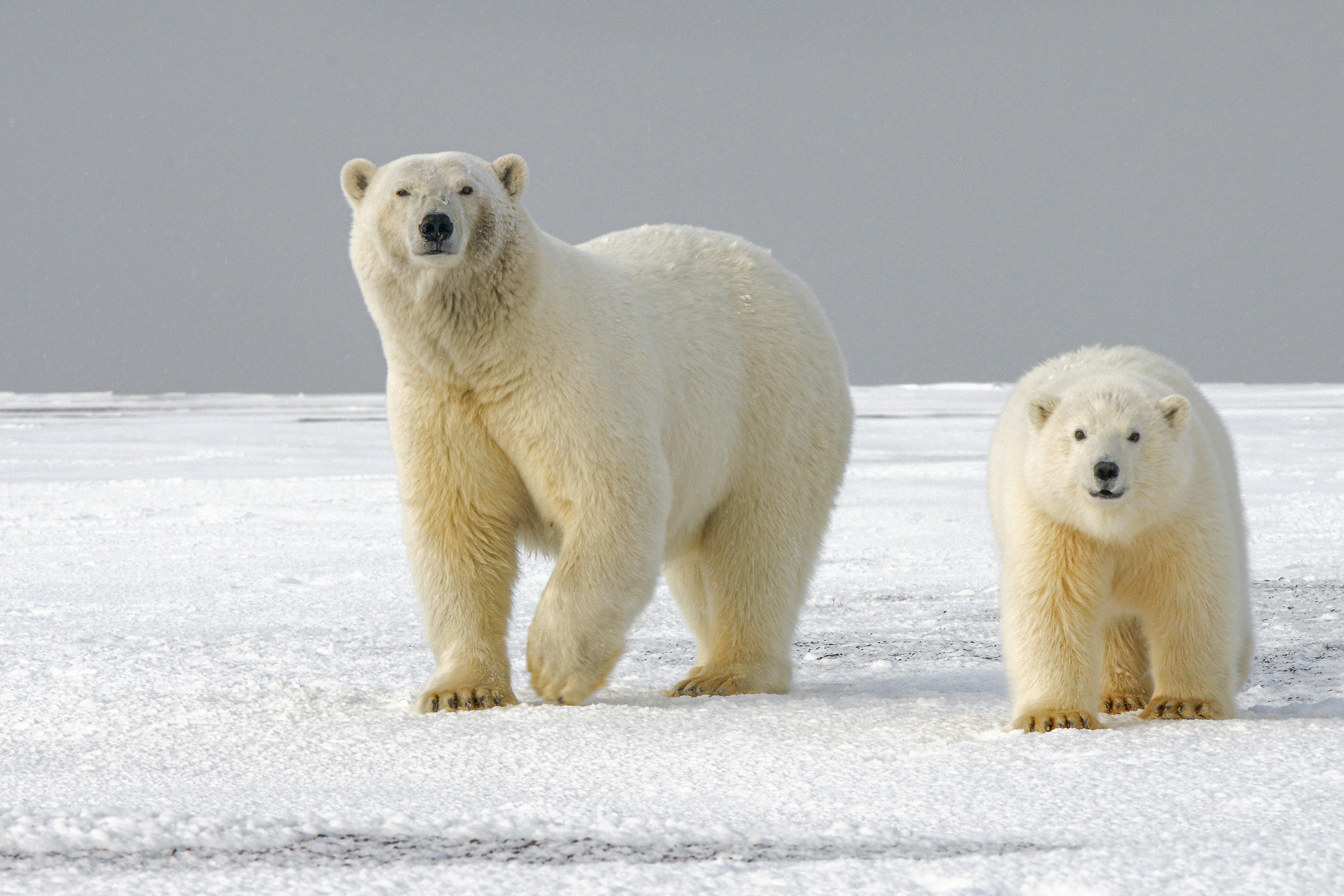
Polar bears, or Ursus maritimus, exhibit remarkable behavioral adaptations. Their translucent fur, appearing white against the winter backdrop, provides excellent camouflage for stalking seals. Beneath their thick fur lies a layer of fat, crucial for insulation in frigid temperatures that can plummet to minus thirty degrees Fahrenheit. This adaptation echoes a prevailing theme in animal behavior—the importance of physical traits in species survival.
Cubs like the one beside the adult bear are born small and helpless, relying on their mothers for both nourishment and protection. This dependency lasts for over two years, a period during which their mother imparts essential survival skills. Observing a mother bear teaching her cub to hunt can be both captivating and amusing. Picture a flailing attempt at catching a seal, akin to a child trying to ride a bike for the first time—adorable, yet riddled with comic failures.
Moreover, polar bears are not just solitary hunters but also engage in playful behaviors that foster social bonds. Scientists have noted that these playful interactions may be critical for cognitive development, much like children developing problem-solving skills through play. As the ice melts due to climate change, these bears find their world rapidly shifting—a poignant reminder of the interplay between environment and behavior.
Interestingly, studies reveal that male polar bears can wander over 1,000 kilometers in search of mates, a testament to their expansive territorial instincts. As these magnificent creatures navigate their increasingly perilous habitat, we are reminded that the natural world is an ever-evolving tapestry woven with threads of challenge and adaptation.

 Thai
Thai
 French
 Spanish
 Portuguese
 Deutsch
 Turkish
 Dutch
Dutch
 Italiano
 Russian