


 New! Search Engine
 About
About
 Terms
Terms
 Privacy
 Contact
 Invest
The Adorable Complexity of Maternal Guidance
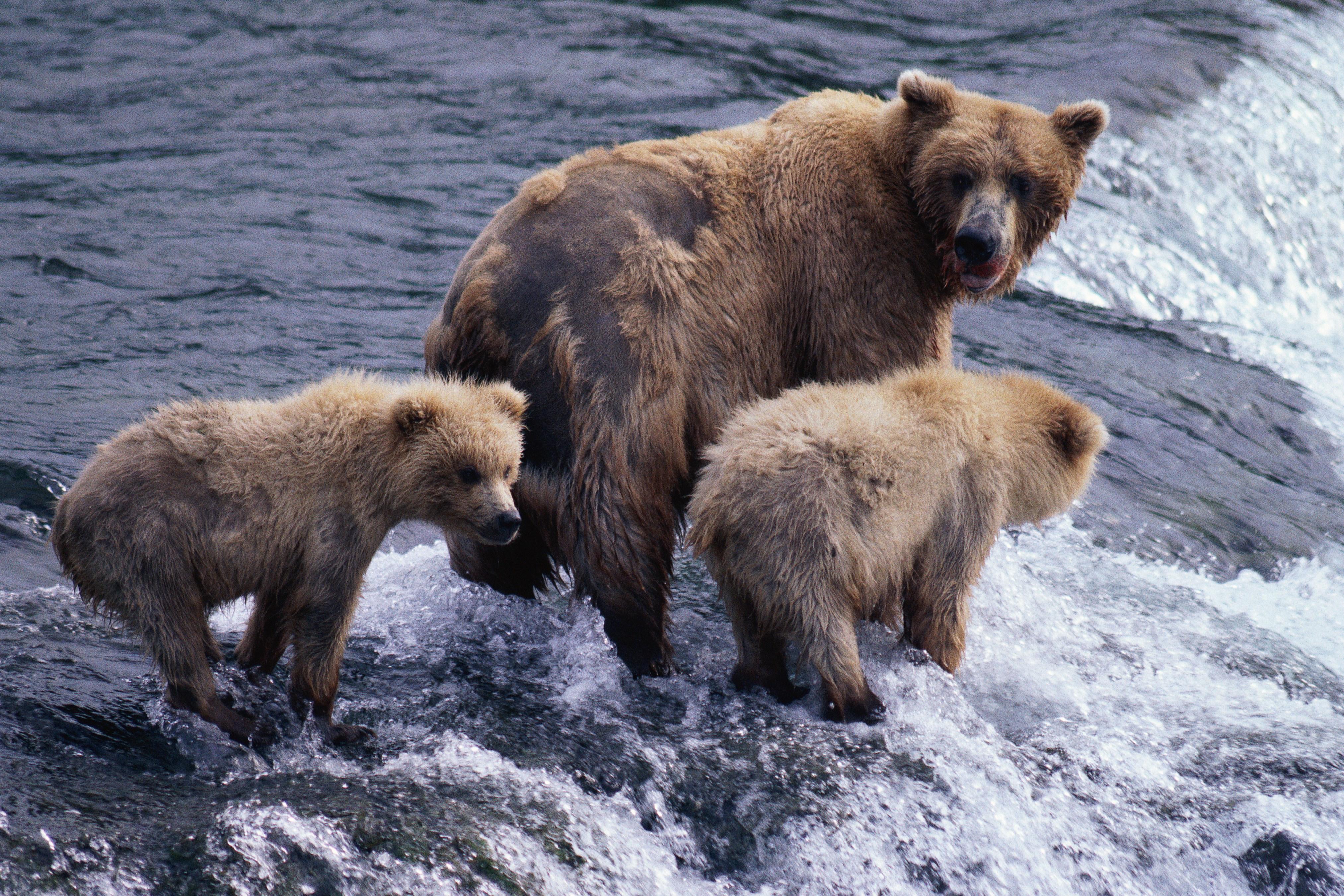
In the wild, few sights are as captivating as a mother bear leading her cubs through the rushing waters of a stream. This scene, while seemingly simple, unveils layers of biological behavior that are both complex and intriguing. The mother grizzly not only serves as a protector but also a teacher, instilling essential skills in her young as they navigate the watery terrain.
Bears, much like humans, engage in learning through observation and imitation. Cubs shadow their mothers, learning to fish and safely traverse slippery rocks—skills that will determine their survival in a world fraught with dangers. Interestingly, studies show that cubs raised in the presence of their mothers develop foraging and hunting skills more efficiently than those who are isolated. This maternal influence underscores a deeper connection between a mother and her offspring, marked by an intricate blend of nurturing and discipline.
As the trio stands amidst the bubbling current, one can't help but appreciate the humor in nature's design. The clumsy attempts of the cubs often lead to unintended splashes that echo a child's playful antics. That innocent exuberance serves a crucial evolutionary purpose, encouraging exploration while teaching the cubs about resilience and adaptability in the face of minor setbacks.
Amidst the tender moments and playful maneuvers, this dynamic not only showcases the bond between species but also highlights an astonishing statistic: mothers typically invest three years in raising their cubs before they venture out on their own. This prolonged care reflects a degree of evolutionary strategy that appears remarkably intentional. In the wild, nurturing behaviors are not just instinctual; they are essential for the survival of the next generation. The picture of this bear family serves as a powerful reminder of the intricate dance of life that unfolds in nature, where love and survival intertwine in ways we are just beginning to understand.
 English
 Thai
Thai
 French
 Spanish
 Portuguese
 Deutsch
 Turkish
 Dutch
Dutch
 Italiano
 Russian