


 New! Search Engine
 Sobre
Sobre
 Termos
 Privacidade
 Contact
 Invest
In the quiet embrace of night, the dynamics of lion behavior unfold like a masterfully choreographed play, revealing the intricate interplay of social bonds and instincts that define their existence. This gathering of lions, with their piercing eyes aglow
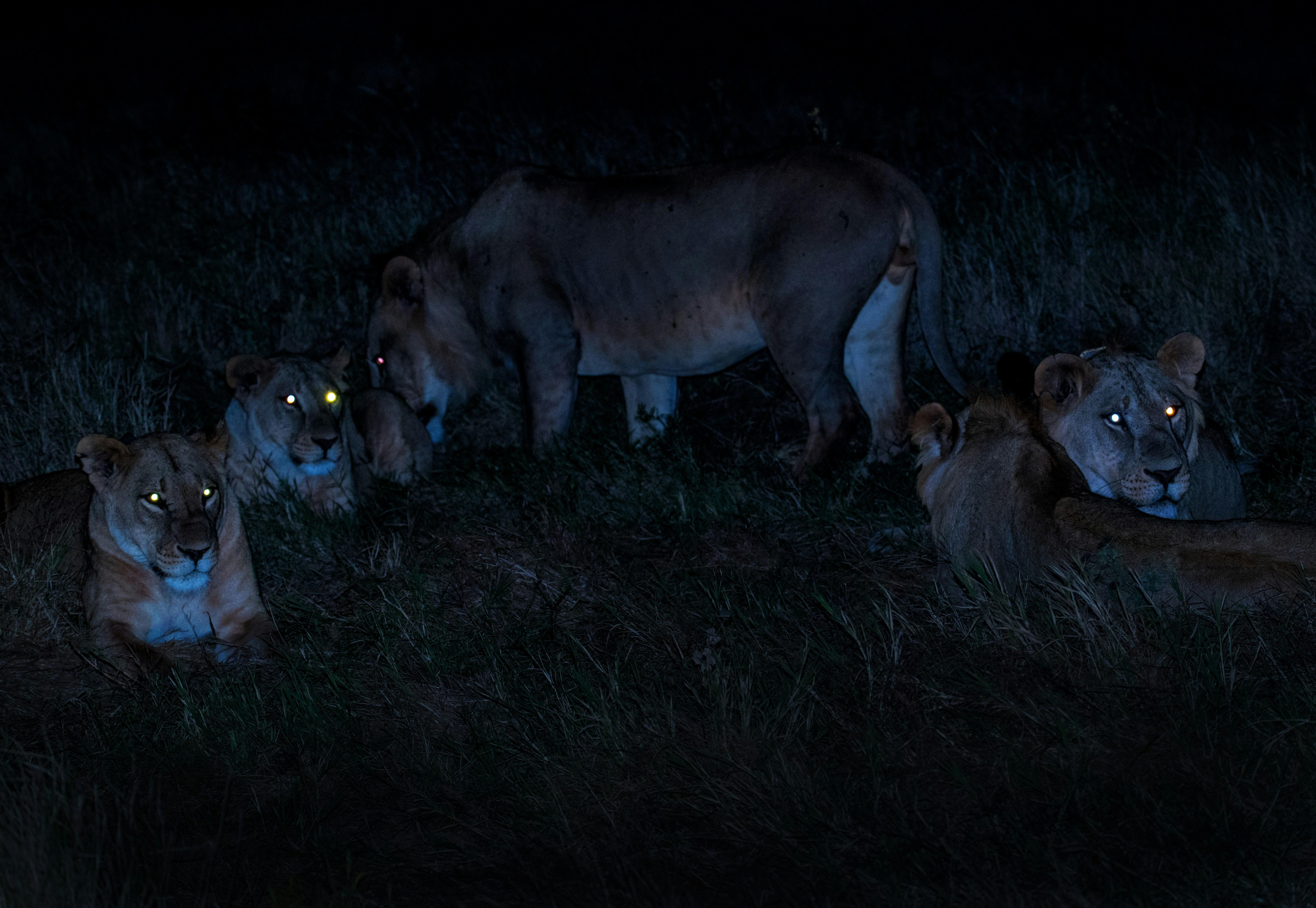
Lions are distinct among big cats, primarily for their social structure. Unlike solitary hunters such as tigers, these majestic creatures thrive in prides, often consisting of related females and their cubs, along with a coalition of males. The nocturnal setting heightens the significance of their interactions, as they rely heavily on communication and cooperation for survival. In the moonlit landscape, one can observe the quiet exchanges and subtle gestures that draw them closer together—an act of cohesion essential for hunting and protection.
Behind those illuminated eyes lies a visual adaptation that allows lions to see six times better in low light than humans. This evolutionary trait facilitates their hunting prowess, allowing them to stalk prey with unmatched stealth under the cover of darkness. The night is not merely a backdrop; it plays a vital role in the rhythms of their lives, allowing them to blend into the shadows while seeking sustenance.
As the group settles into a comfortable arrangement, it’s intriguing to consider how their behaviors reflect a balance of power and care. Males, often tasked with the protection of the pride, display both a fierce exterior and a capacity for gentleness, particularly toward the cubs. Social structures are complex; cooperation in hunting and mutual grooming establishes and reinforces bonds that are crucial for the pride's survival.
In a world where approximately 90% of lions live in protected areas, these gatherings highlight not only their resilience but also the challenges they face as habitats shrink and human encroachment increases. The delicate balance of their ecosystem hangs in the balance, mirroring the intricate web of behavior that defines these remarkable animals.
 Portuguese
 Thai
Thai
 English
 French
 Spanish
 Deutsch
 Turkish
 Dutch
Dutch
 Italiano
 Russian