


 New! Search Engine
 About
About
 Terms
Terms
 Privacy
 Contact
 Invest
Tidal Ecosystems: Nature's Resilient Canvas
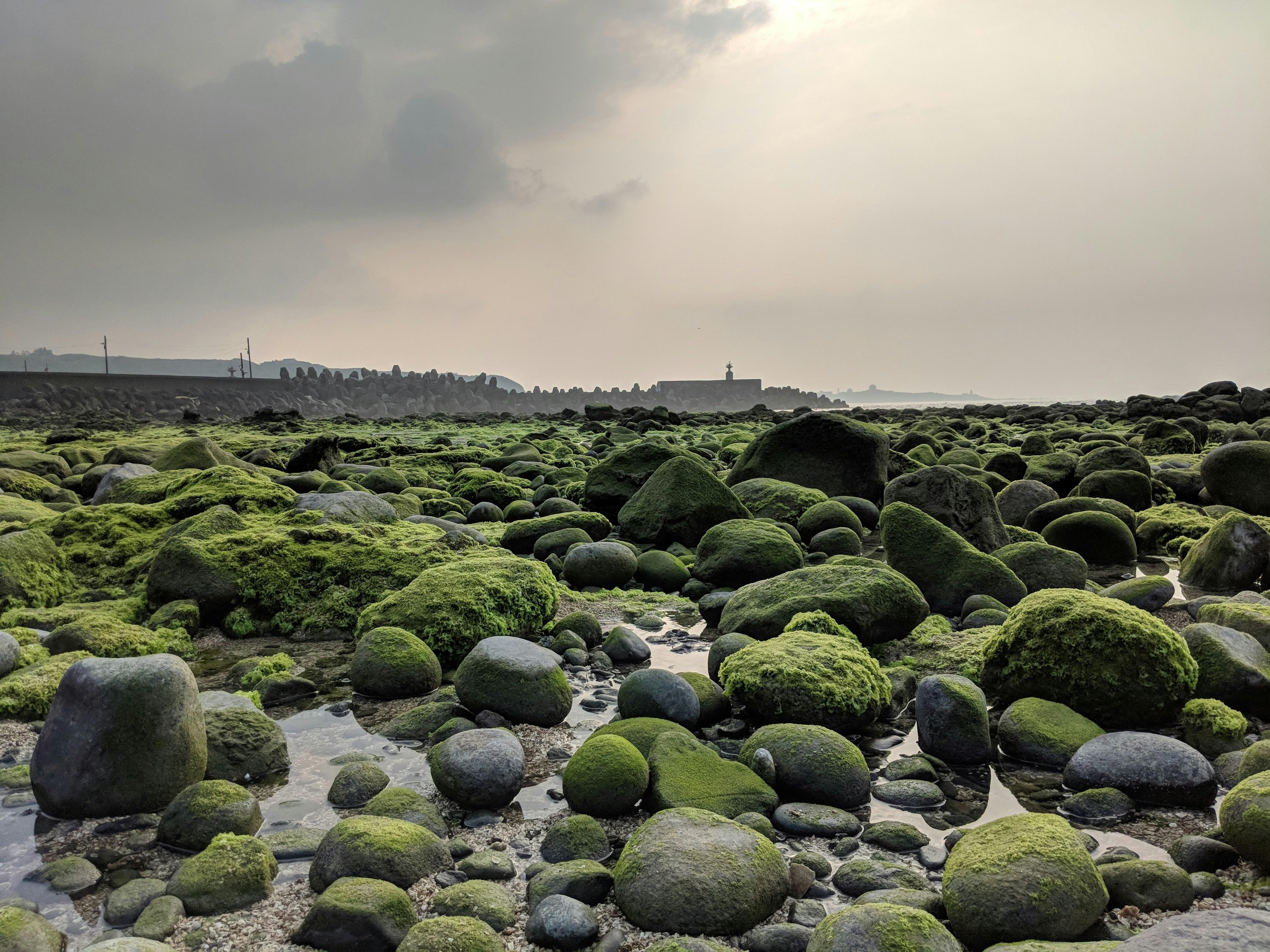
The rocky shoreline, shrouded in a blanket of vibrant green algae, lies at the intersection of land and sea, where the tides shape a dynamic world teeming with life. During low tide, the hidden wonders beneath the crashing waves are revealed, showcasing an intricate ecosystem balancing on the precipice of two contrasting environments. Here, life exemplifies resilience, as organisms adapt to the harsh realities of fluctuating water levels, salinity, and temperature variations.
The iridescent greens of the algae signify not merely a floral display, but a critical component of this habitat's production and stability. These microscopic powerhouses engage in photosynthesis, serving as the foundation for a web of life that would bring a pillar of nutrition to numerous coastal species. In a sense, the algae are the unsung heroes of the marine ecosystem—supporting everything from bustling barnacles to curious crabs that scuttle along the rocks, navigating their own survival strategies amid the ever-changing tides.
Moreover, the meandering pools of water collect during low tide—act as temporary sanctuaries for whispered secrets of the sea, where countless microorganisms play a dance of predation and symbiosis. Observing such ongoing interactions offers insight into a world where life continually negotiates limitations and resources, almost like a negotiation with nature itself.
As these diurnal rhythms continue, one can appreciate a notable statistic: tidal ranges can reach up to 50 feet in certain regions, crafting not just terrain but a stage for resilience and adaptation. In this ecological theatre, life perpetually thrives and evolves, reminding us of the beautiful complexity inherent in every ripple of water and moss-covered stone.
 English
 Thai
Thai
 French
 Spanish
 Portuguese
 Deutsch
 Turkish
 Dutch
Dutch
 Italiano
 Russian