


 New! Search Engine
 About
About
 Termini e Condizioni
 Privacy
 Contact
 Invest
Silicone-Based Catheters Market to Reach US$ 354.81 Million by 2034, Registering 6.8% CAGR (2026–2034)
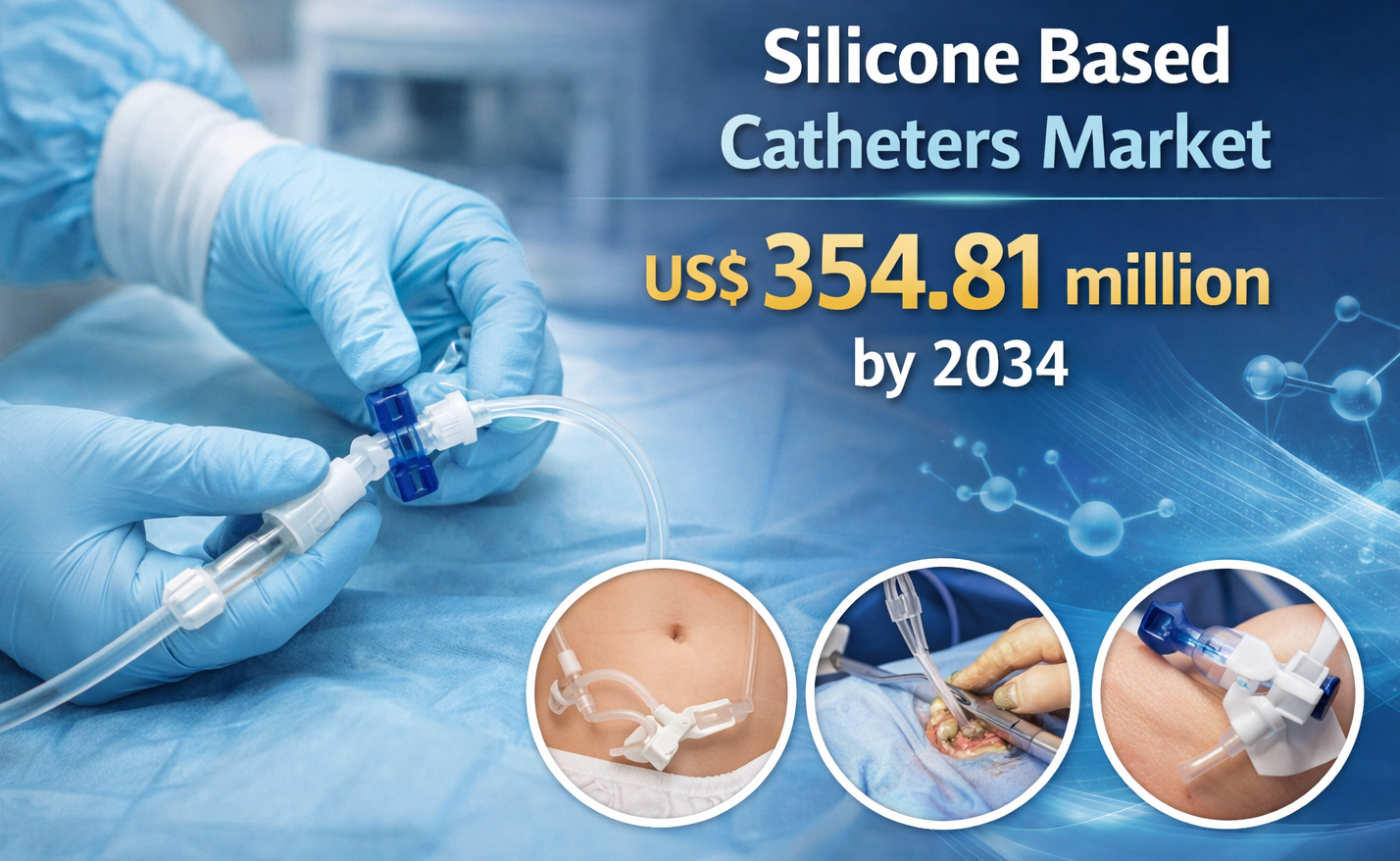
Silicone-based catheters are medical devices primarily made from 100% silicone, a biocompatible, hypoallergenic material ideal for patients with latex allergies or sensitivities, offering superior softness, flexibility, and smoothness for easier urethral insertion and reduced irritation during intermittent or long-term use such as Foley catheterization.
Silicone Based Catheters Market Growth and Overview
The global silicone-based catheters market is poised for substantial growth, with market size expected to reach US$ 354.81 million by 2034, up from US$ 196.27 million in 2025, registering a CAGR of 6.80% during 2026–2034. The market expansion is driven by the increasing prevalence of chronic diseases, the rising number of surgical procedures, and the growing geriatric population, all of which contribute to higher demand for safe and reliable catheterization solutions.
Silicone catheters are preferred over traditional latex-based products due to their superior biocompatibility, flexibility, hypoallergenic properties, and reduced risk of irritation and encrustation. These characteristics make silicone ideal for both short-term and long-term catheterization, particularly in patients requiring chronic care. Technological innovations, such as antimicrobial coatings and advanced balloon designs, are further enhancing patient safety and comfort, driving adoption in hospitals, clinics, and home care settings.
Market Analysis
Silicone-based catheters are essential medical devices used across a range of procedures, particularly urinary catheterization, central venous access, and other interventional procedures. The market is strongly influenced by the global push to reduce Catheter-Associated Urinary Tract Infections (CAUTIs). Hospitals continue to dominate as the primary end-user segment. However, the trend toward home-based care and self-catheterization is creating new growth opportunities for user-friendly and safe silicone catheter solutions.
The market growth is largely fueled by several factors:
- Growing prevalence of chronic diseases and surgical procedures: Increasing incidences of urological, cardiovascular, and neurological disorders drive frequent catheter use.
- Increasing geriatric population: Age-related conditions such as urinary retention and incontinence significantly boost demand for long-term silicone catheter solutions.
- Superior biocompatibility of silicone: Reduced irritation and lower risk of complications make silicone the material of choice for both indwelling and long-term use.
Download PDF Copy- https://www.theinsightpartners.com/sample/TIPRE00028381
Market Opportunities
- Technological advancements in coatings: Development of antimicrobial and hydrophilic-coated silicone catheters reduces infection risk, encouraging adoption of premium products.
- Rising adoption of home healthcare services: Growing preference for home-based care and outpatient procedures expands opportunities for self-catheterization devices.
- Development of specialty catheters: Pediatric-specific catheters and those designed for complex interventional procedures represent niche growth opportunities.
Market Segmentation
The silicone-based catheters market is segmented by application, usage, tip, product type, and geography:
- By Application:
- Urinary Tract Infection / CAUTI
- Surgery on Contiguous Structures of Genitourinary Tract
- Prostate Gland Surgery
- Spinal Cord Injury
- By Usage:
- Male
- Female
- Pediatric
- By Tip:
- Nelaton Tip
- Tiemann Tip
- By Product Type:
- Short-Term Foley Catheters
- Long-Term Foley Catheters
- By Geography:
- North America: US, Canada, Mexico
- Europe: UK, Germany, France, Spain, Italy, Rest of Europe
- Asia-Pacific: China, India, Japan, Australia, Rest of Asia-Pacific
- South & Central America: Brazil, Argentina, Rest of region
- Middle East & Africa: South Africa, Saudi Arabia, UAE, Rest of region
Key Players
The silicone-based catheters market is highly competitive, with several global players driving innovation and expanding market reach:
- Teleflex Incorporated
- B. Braun Melsungen AG
- ConvaTec Group Plc
- Ribbel International Limited
- Bactiguard
- BD (Becton, Dickinson and Company)
- Cook Medical LLC
- Angiplast
- Sterimed Group
Recent Developments
- In August 2025, Cook Medical received FDA approval for its Advance Evero™ 18 Everolimus-Coated PTA Balloon Catheter clinical study.
- In January 2025, B. Braun Medical Inc. launched the Clik-FIX® Epidural/Peripheral Nerve Block Catheter Securement Device.
- Teleflex Incorporated was awarded a supply contract by Vizient, Inc. in January 2025 for central venous and arterial catheters.
- In July 2024, ConvaTec launched GentleCath Air for Women with FeelClean Technology in multiple European countries.
- In September 2022, B. Braun acquired Clik-FIX catheter securement devices from Starboard Medical to expand its peripheral IV therapy offerings.
Future Outlook
The silicone-based catheters market is expected to witness steady growth in the coming decade, fueled by the rising demand for minimally invasive procedures, technological advancements, and the shift toward patient-centered home care. Innovations in antimicrobial coatings, hydrophilic catheters, and specialty designs will continue to drive adoption across diverse patient groups, including pediatric, geriatric, and chronically ill populations. Additionally, emerging economies in Asia-Pacific, Latin America, and the Middle East are likely to present significant growth opportunities, driven by increasing healthcare expenditure and awareness of catheter-related safety benefits.
Related Reports-
 Italiano
 Thai
Thai
 English
 French
 Spanish
 Portuguese
 Deutsch
 Turkish
 Dutch
Dutch
 Russian