


 New! Search Engine
 Über
Über
 Bedingungen
 Datenschutz
 Contact
 Invest
In the dance of urban life, human behavior often takes on masks—both literal and figurative. One intriguing manifestation appears when individuals don protective suits, a shield against perceived dangers, be it a pandemic virus or environmental threa
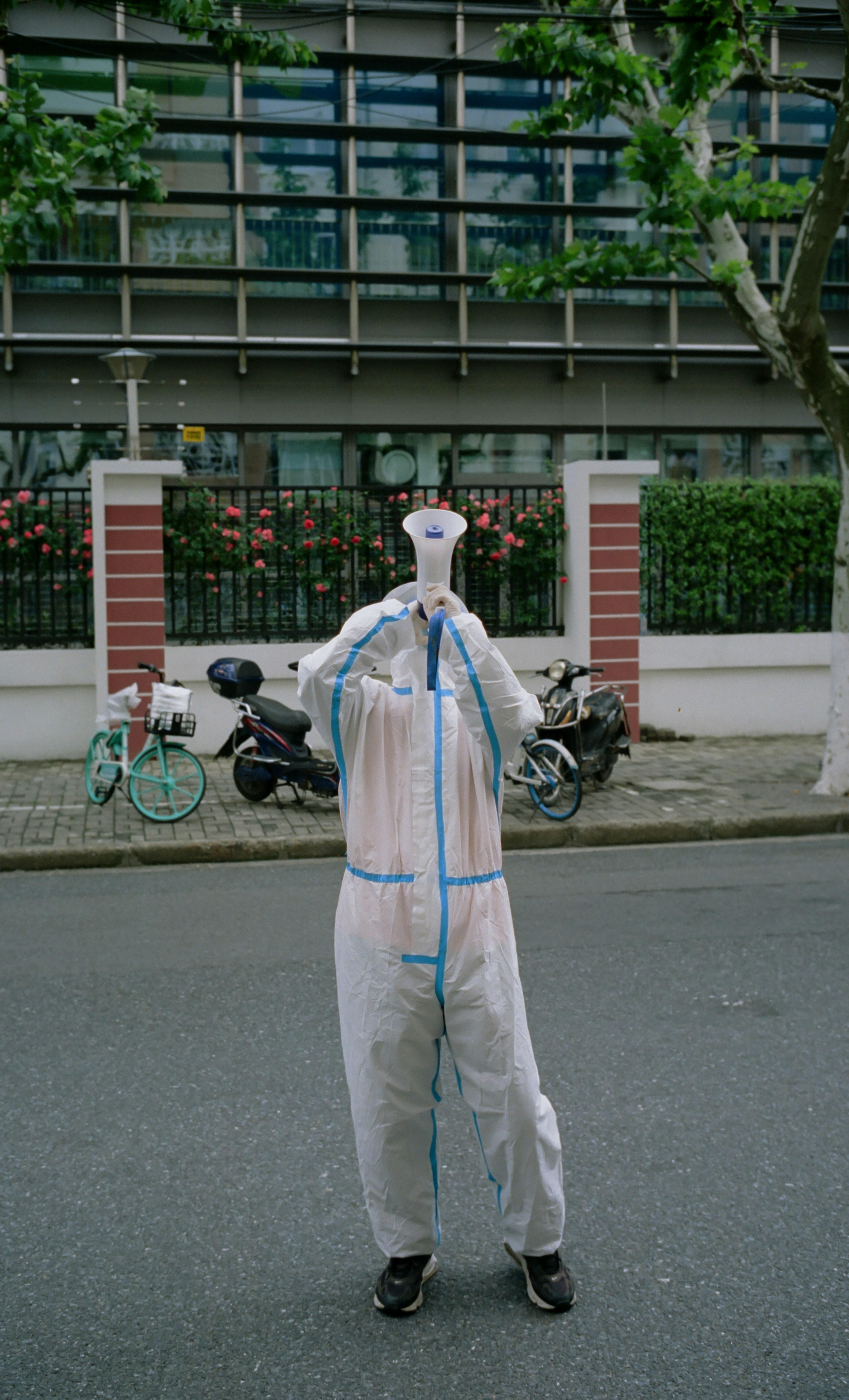
Our biological urge to protect ourselves drives this behavior, stemming from a deeply rooted evolutionary repertoire. Millions of years ago, early humans developed strategies to escape predators, adapt to climate shifts, and keep their kin safe. Fast forward to today, and we see that same instinct materializing in health measures, where individual actions impact community safety. Wearing protective gear during health crises is not merely an act of compliance; it is a manifestation of our innate survival strategies refined through millennia.
As society evolves, the contexts for these behaviors shift, often leading to moments of unintentional humor, such as someone waving a megaphone from the confines of an otherwise restrictive suit. This peculiar spectacle invites a chuckle, yet it also provokes contemplation about how we navigate fears through rituals and appearances.
According to recent studies, similar behaviors have been recorded during outbreaks, where compliance can heighten community resilience by 30% or more, illustrating the profound ripple effects of individual actions. Thus, our protective behaviors, although at times laced with irony, are critical threads in the complex tapestry of our biological survival and social cohesion.
 Deutsch
 Thai
Thai
 English
 French
 Spanish
 Portuguese
 Turkish
 Dutch
Dutch
 Italiano
 Russian