


 New! Search Engine
 Environ
 Conditions générale de vente
 Confidentialité
 Contact
 Invest
Majestic Movements: The Curious High-Wire Acts of Peafowl in Their Natural Habitat
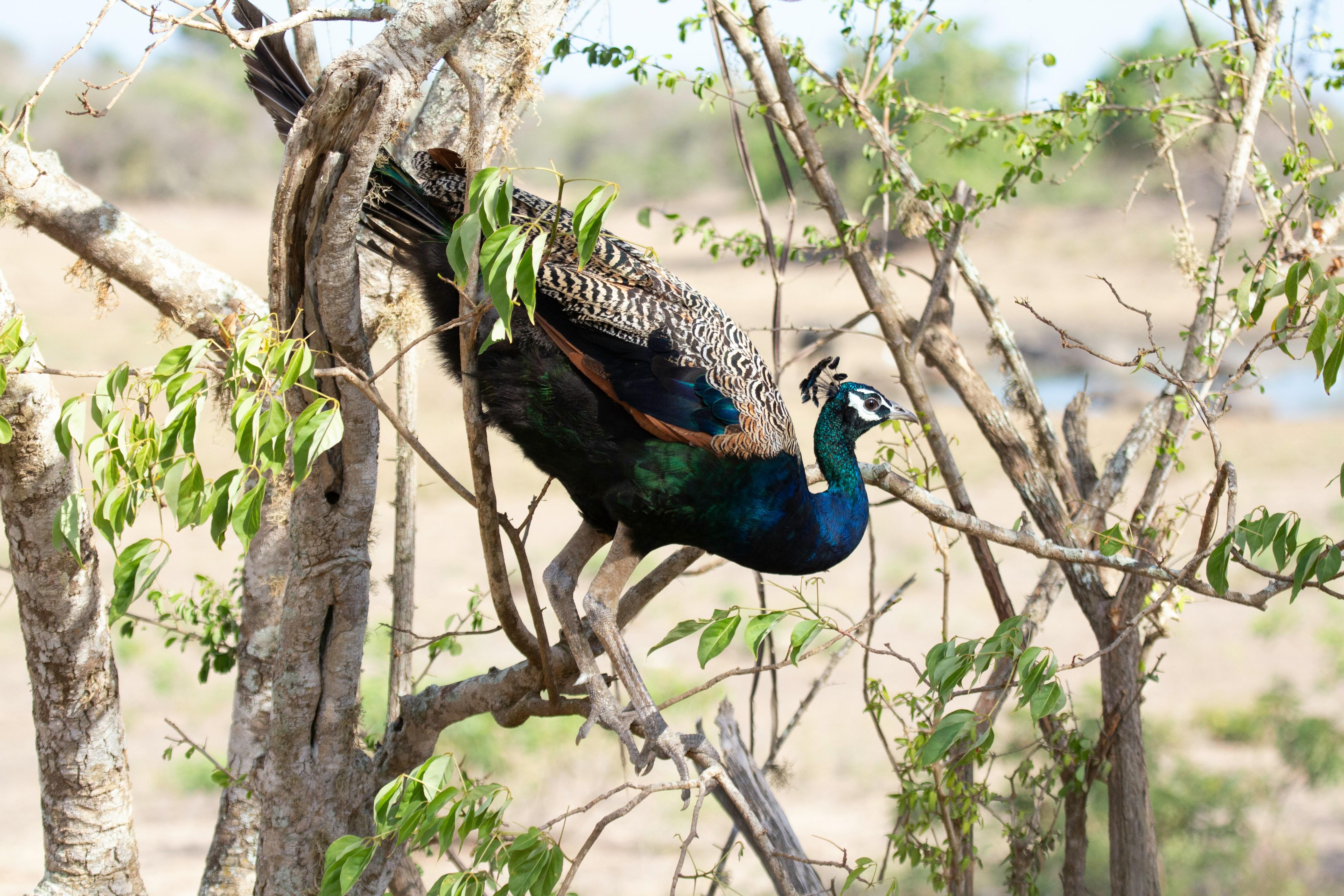
In a striking display, a peacock perched precariously among a cacophony of branches, a last-minute decision seemingly made just as it was about to venture from the safety of its leafy sanctuary. One might imagine it paused mid-leap, contemplating the intricacies of limb coordination, or perhaps engaging in a whimsical debate about whether this was the day to flaunt its iridescent tail, or, as it happened, to take a leap of faith. Observers may chuckle when considering the avian version of a morning pep talk, where self-encouragement meets the reality of a precarious nature.
Peafowl are more than just strikingly colorful birds; they possess complex social structures and unique behavioral intricacies. When a peacock stretches out its vibrant plumage, it’s not merely about aesthetics. Recent studies indicate that a mere 30% of peafowl engage in this “tail display” behavior at any given time, relying heavily on the reactions of those nearby. Interestingly, a lesser-known fact reveals that while perched, peafowl exhibit a vigilant behavior, scanning their surroundings for potential threats approximately every 15 seconds. This behavior underscores a natural instinct rooted in survival, blending beauty with a calculated understanding of risk. Furthermore, peahens particularly engage in sentry roles, often spending about 45% of their time in vigilance when in the presence of potential threats, a testament to their innate wisdom and shared responsibility in the flock.
Understanding such dynamics not only piques interest but also sheds light on the emotional realities of these stunning creatures. When in a tree, peafowl may oscillate between calm and alert states, revealing a delicate balance between their need for safety and their instinct to socialize. It’s a behavior that speaks to an emotional landscape rich with the nuances of fear, curiosity, and even confidence.
For those who may wish to mimic the peafowl's vigilant attitude, nurturing a connection with the outdoor environment while remaining observant offers clear benefits. Engaging with nature promotes well-being and mental clarity, much like the peafowl's own behaviors. A study published in the journal Nature reveals that simply observing wildlife can reduce stress levels by up to 20%, reminding us that we share this planet with fellow souls whose daily routines echo our own struggles and triumphs.
As the peacock prepares for its leap, perhaps it symbolizes a universal truth: even the most graceful among us must confront moments of uncertainty. Just as humans navigate life's twists and turns, so too do these magnificent birds, balancing acts high above the ground, navigating risks, and finding moments of tranquility—even amid the chaos of branches. In our quest for beauty and connection, we are reminded that every leap of faith, no matter how precarious, can lead to unexpected discoveries.
 French
 Thai
Thai
 English
 Spanish
 Portuguese
 Deutsch
 Turkish
 Dutch
Dutch
 Italiano
 Russian