


 New! Search Engine
 About
About
 Voorwaarden
 Privacy
 Contact
 Invest
Feline Vigilance: How One Cat’s Alertness in Winter Reveals Secrets of Survival
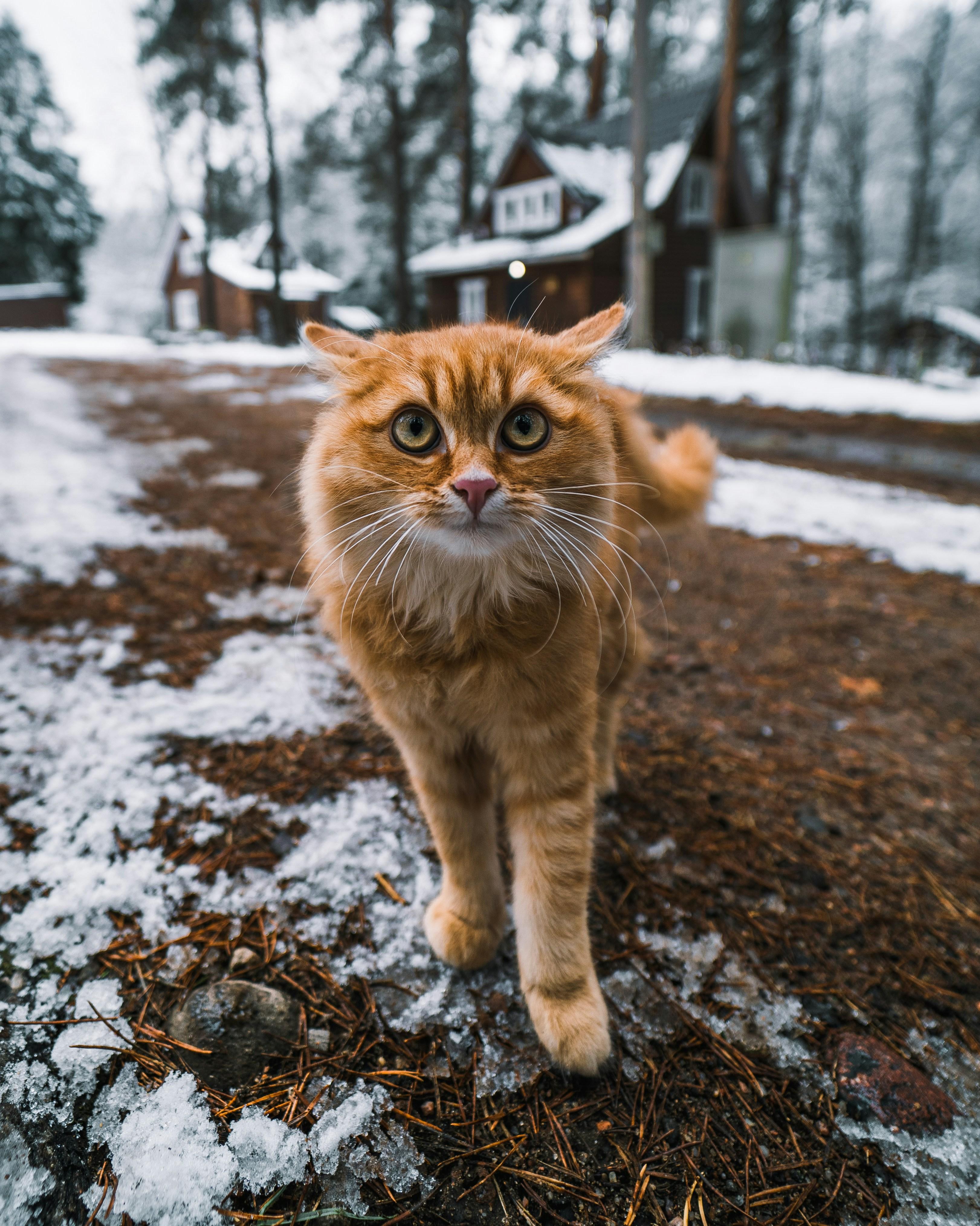
In the heart of winter’s embrace, a solitary orange feline strides purposefully across a snow-dusted path, eyes wide and taking in the world as if on a grand adventure. Every step seems calculated, an almost exaggerated level of attentiveness that might suggest it’s been rehearsing this scene in its mind. However, what remains hidden beneath this seemingly casual exploration is a life honed by instinct and need, a blend of confidence and caution that raises eyebrows and curiosity alike.
This cat, likely embodying traits of the Norwegian Forest breed, showcases a fascinating balance of behavior. As a member of a species known for its keen perceptual abilities, the average vigilance duration for cats can extend beyond 30 minutes when engaged in a new or unchanged environment. The elevated state of alertness is driven by a unique combination of instincts; cats are not only hunters but also prey, and in the wild, a moment of inattention can alter their fate. Recent studies indicate that up to 70% of cats will take up vigilant stances while exploring, reflecting a deeply ingrained survival strategy that persists even in the safety of human habitats.
Beyond the instinctual undercurrents, the emotional state of this cat can be interpreted through its behaviors. Its status as an apex predator, albeit a small one, is coupled with a vulnerability that may lead to fluctuations in stress hormones, with levels rising by as much as 60% when faced with potential threats. Therefore, what appears as mere observation is, in fact, a vigilant assessment of safety in an intricate dance between apprehension and exploration.
To enhance the wellbeing of a feline like our snowy friend, it is essential for caretakers to provide enriching environments that cater to instinctual behaviors. For instance, incorporating vertical spaces for climbing and perches allows for natural surveillance, aligning with the cat's desire for both vantage points and security. Research has shown that providing such environments can reduce stress levels by nearly 30%, underscoring that mental stimulation is just as crucial as physical exercise. Furthermore, routine changes can help facilitate smoother adjustments—varying the location of feed or play areas may encourage curiosity while mitigating stress.
Reflecting on this cat's journey across a winter landscape evokes parallels to our own explorations in unfamiliar places. Amid life’s uncertainties, the blend of alertness and trust in one’s environment resonates deeply. Just as the cat navigates its terrain with calculated steps, so too do we traverse the complexities of existence, seeking solace and safety in moments of vulnerability. In its vigilant gaze, one can find the profound reminder that every encounter, every step, is an act of courage worthy of appreciation.
 Dutch
Dutch
 Thai
Thai
 English
 French
 Spanish
 Portuguese
 Deutsch
 Turkish
 Italiano
 Russian