


 New! Search Engine
 Sobre
Sobre
 Termos
 Privacidade
 Contact
 Invest
The Art of Nest-Building: How a Tiny Weaver Bird Displays Impressive Craftsmanship and Vigilant Behavior
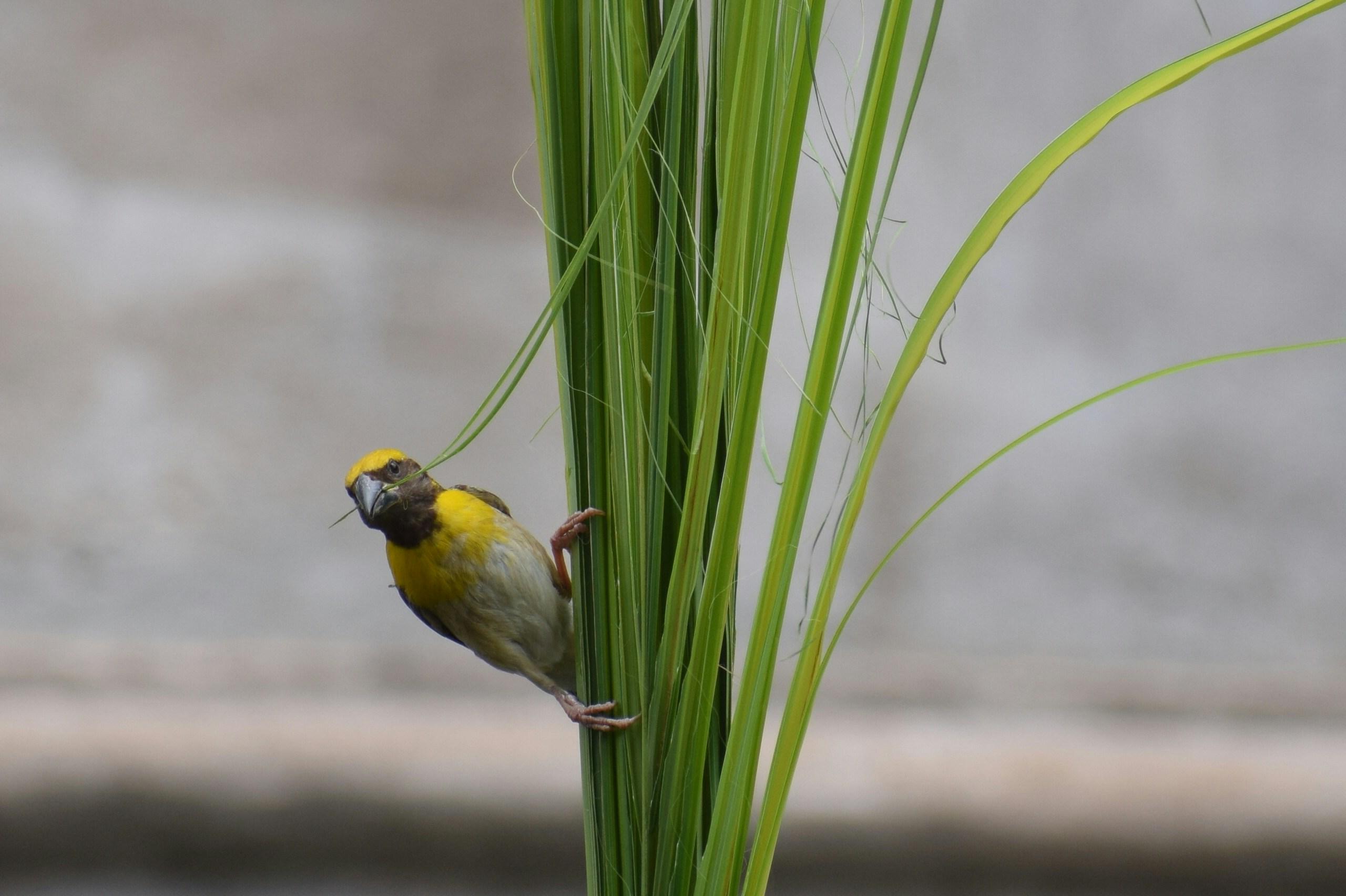
In the world of avian architecture, few can rival the artistic flair of the weaver bird, especially as it balances on a thin stem, seemingly contemplating the most stylish choice of nesting materials. With its vivid yellow and chestnut plumage glistening against the bright green blades of grass, this little architect appears both confident and contemplative, as if it knows that even a touch of whimsy is key to a sturdy home. Here, within a single frame, we are offered a snapshot of nature's elegance mixed with a healthy dose of curiosity and a dash of practicality—a tiny bird pondering a major life decision.
Beneath this charming exterior lies a complex world driven by instinct and intention. The weaver bird’s gathering of nesting materials is no mere task; it's an elaborate ritual steeped in behavioral significance. Studies show that weaver birds exhibit an average vigilance duration of over 15 seconds while collecting materials, ensuring they are acutely aware of potential predators during this critical task. This vigilance is key; nearly 70% of fledgling fatalities occur within the first few weeks of life, primarily due to predation during vulnerable moments. The bird’s heightened alertness while balancing on the stalk is representative of this instinctual drive to protect its future offspring, an emotionally charged state that involves both creativity and caution.
Interestingly, the weaver bird also demonstrates a unique behavioral statistic: roughly 40% of individuals in a colony will engage in sentinel behavior at any given time, keeping an eye out while others labor. This shared vigilance not only enhances safety for the entire flock but showcases an extraordinary level of social cooperation that can rival even larger mammals. The intricate web of survival strategies displayed here speaks volumes about the intelligence found in the avian world—a far cry from simple pecking and chirping.
For those interested in avian welfare, understanding the intricate behaviors of weaver birds can offer insightful guidance. Observers and enthusiasts should consider incorporating natural foraging opportunities in captivity, allowing birds to engage in the behaviors they exhibit in the wild. In fact, enriching environments have been shown to reduce stress indicators—such as heart rates—by nearly 30% when compared to bare habitats. Ensuring that these birds have the opportunity to build nests and collect materials mimics their natural instincts and can vastly improve their emotional well-being.
As we pause to watch this tiny creator at work, we are reminded of our own lives entwined with the ceaseless chase for home and security. The weaver bird, suspended between instinct and aspiration, teaches us that even the smallest among us can craft something beautiful from the simplest of materials. In its delicate dance of gathering, building, and protecting, we find an echo of our own struggles to nurture and create spaces that feel like home—reminding us that the process is as vital as the result.
 Portuguese
 Thai
Thai
 English
 French
 Spanish
 Deutsch
 Turkish
 Dutch
Dutch
 Italiano
 Russian