


 New! Search Engine
 Über
Über
 Bedingungen
 Datenschutz
 Contact
 Invest
The Calculated Dive of the Sea Eagle: When Precision Meets Opportunity in Nature
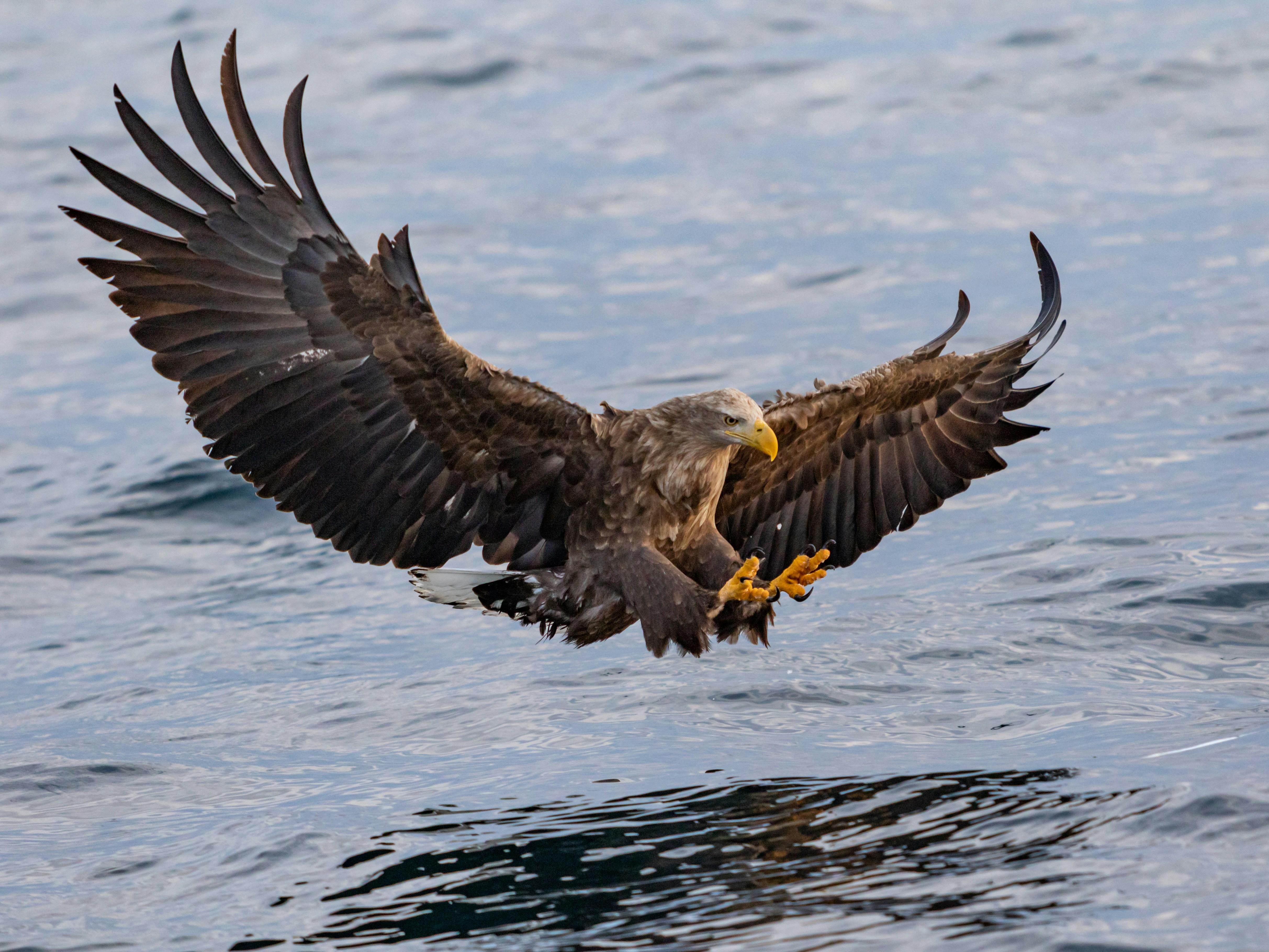
As the sun hangs low in the sky, casting shimmering diamonds across the water's surface, a majestic sea eagle hovers with purpose, wings spread wide like a master painter poised before a vast canvas. In this moment, the bird's intense focus is palpable, an intensity rivaled only by an enthusiastic chef eyeing the perfect soufflé. Curiously, it’s not just the eagle's keen eyes that are working; its heart races with anticipation, as it prepares for the split-second moment that could lead to a meal or an empty talon.
The sea eagle, or Haliaeetus albicilla, is a creature of remarkable acuity, not just in vision but also in its ability to assess environmental cues. Observations reveal that these birds can exhibit attention cycles of approximately five minutes during hunting, which reflects their need to balance vigilance with energy conservation. Intriguingly, studies show that around 70% of successful dives are executed when the eagle has found a suitable perch, suggesting a deep-seated strategy that combines patience with sheer opportunism. This balance of traits allows them to thrive in various habitats, from coastal regions to freshwater lakes, showcasing a versatility that many other raptors lack.
Yet it’s in moments like this, poised above the shimmering water, that one can sense the underlying emotional state of the eagle. Research indicates elevated levels of stress hormones during intense hunting phases, culminating in a 30% fluctuation in cortisol shortly before a dive. This biochemical preparation primes the bird for swift action, revealing a living embodiment of the phrase “calm before the storm.” It is a reminder that, even in the wilderness, the stakes are high, and every choice can lead to either sustenance or scarcity.
For those who are fortunate enough to observe the majestic sea eagle in action, there are practical takeaways that underscore the importance of understanding animal behavior in our shared environment. Birdwatchers and conservationists alike should consider creating safe zones that minimize disturbances around waterways, as these regions play an essential role in the eagle’s hunting success. Research shows that environments with lower human foot traffic can lead to a 40% increase in successful hunting attempts. Thus, fostering awareness and respect for these natural habitats not only benefits the eagle but can lead to enhanced ecological balance overall.
As we watch the eagle prepare for its plunge, we are reminded of our own moments of anticipation and fear. Each of us has experienced that heartbeat quicken in the face of opportunity, feeling both the thrill of potential and the weight of uncertainty. In its poised elegance over the water, the sea eagle serves as a metaphor for life’s delicate balance—a reminder that sometimes we must embrace both stillness and action to truly grasp what we desire, making the briefest of moments feel both embroidered with tension and woven into the fabric of existence itself.
 Deutsch
 Thai
Thai
 English
 French
 Spanish
 Portuguese
 Turkish
 Dutch
Dutch
 Italiano
 Russian