


 New! Search Engine
 Sobre
Sobre
 Termos
 Privacidade
 Contact
 Invest
Penguins in Line: The Curious Vigilance of King Penguins in the Wild
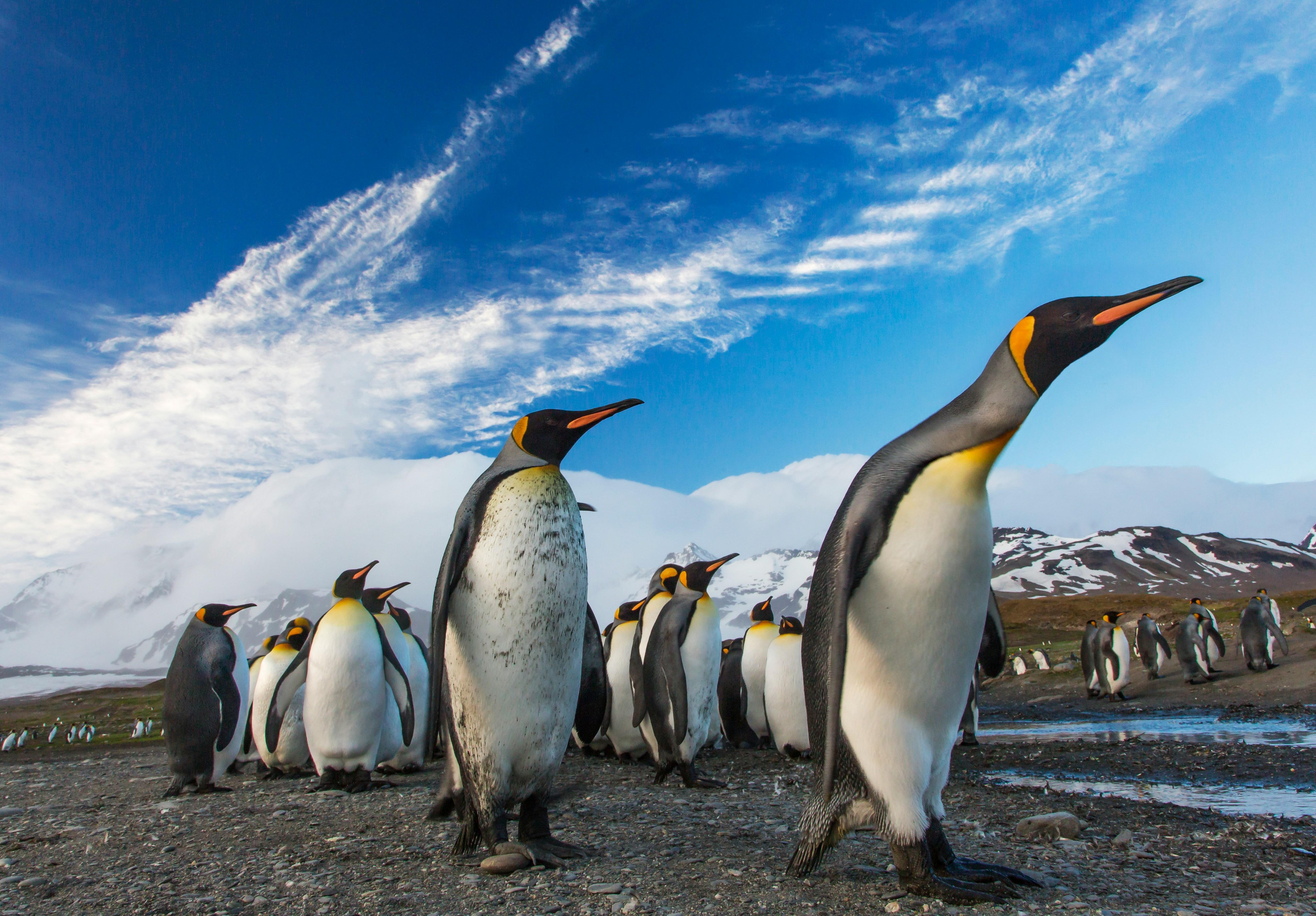
On a brisk day in the windswept expanses of the sub-Antarctic, a huddle of king penguins stands stark against the vibrant blue sky, puffed up like plump sentinels guarding a frosty kingdom. They sway gently in the cold breeze, an unintentional ballet of patience and poise, while one particularly regal individual raises its head, channeling its inner monarch as if pondering the complexities of its chilly realm. It’s a moment both absurd and profound: a creature adapted to frigid extremes assumes a posture of royalty, evoking a twinge of admiration.
Amidst the delightful chaos of these feathered aristocrats lies a fascinating layer of behavioral insight. King penguins exhibit a remarkable average vigilance duration of approximately 26 seconds when foraging, a format of attention meticulously fine-tuned by the need to ward off predators and coordinate social dynamics. These creatures frequently alternate between socializing and scanning the horizon—an impressive feat of multitasking. Interestingly, studies have shown that about 30% of these vigilant birds will take on sentinel roles, standing sentinel while others forage, a cooperative strategy that maximizes survival.
Driven by an innate sense of belonging and protection, the emotional state of these birds fluctuates with the rhythm of their environment. During periods of heightened vigilance, increased stress hormone levels can fluctuate, compelling them to remain on high alert. This balance of attentiveness is critical: while community living provides essential warmth against harsh conditions, it also necessitates a collective eye on potential threats, showcasing a sophisticated interplay of social cooperation and individual survival.
For those observing these remarkable creatures, understanding their behavioral dynamics can enhance connections with local wildlife. Providing environments that mimic their natural habitats—plentiful food sources and appropriate social structures—is crucial. Specifically, studies indicate that king penguins thrive in groups of at least 200 during breeding seasons, which fosters natural behaviors and supports emotional well-being. In captivity or conservation settings, replicating such social structures can lead to reduced stress indicators and improved overall health.
As we turn our gaze from the regal stance of the king penguins beneath the endless sky, we are reminded of our own interconnectedness in the tapestry of existence. Just as these penguins rely on each other for survival, our lives are enriched through community, companionship, and shared moments of vigilance. They teach us that in the vastness of life’s icy challenges, there is power in standing tall together.
 Portuguese
 Thai
Thai
 English
 French
 Spanish
 Deutsch
 Turkish
 Dutch
Dutch
 Italiano
 Russian