


 New! Search Engine
 О нас
О нас
 Условия использования
 Конфиденциальность
 Contact
 Invest
The Joy of the Pack: How Social Bonds Drive Dog Happiness with 80% Playtime Engagement
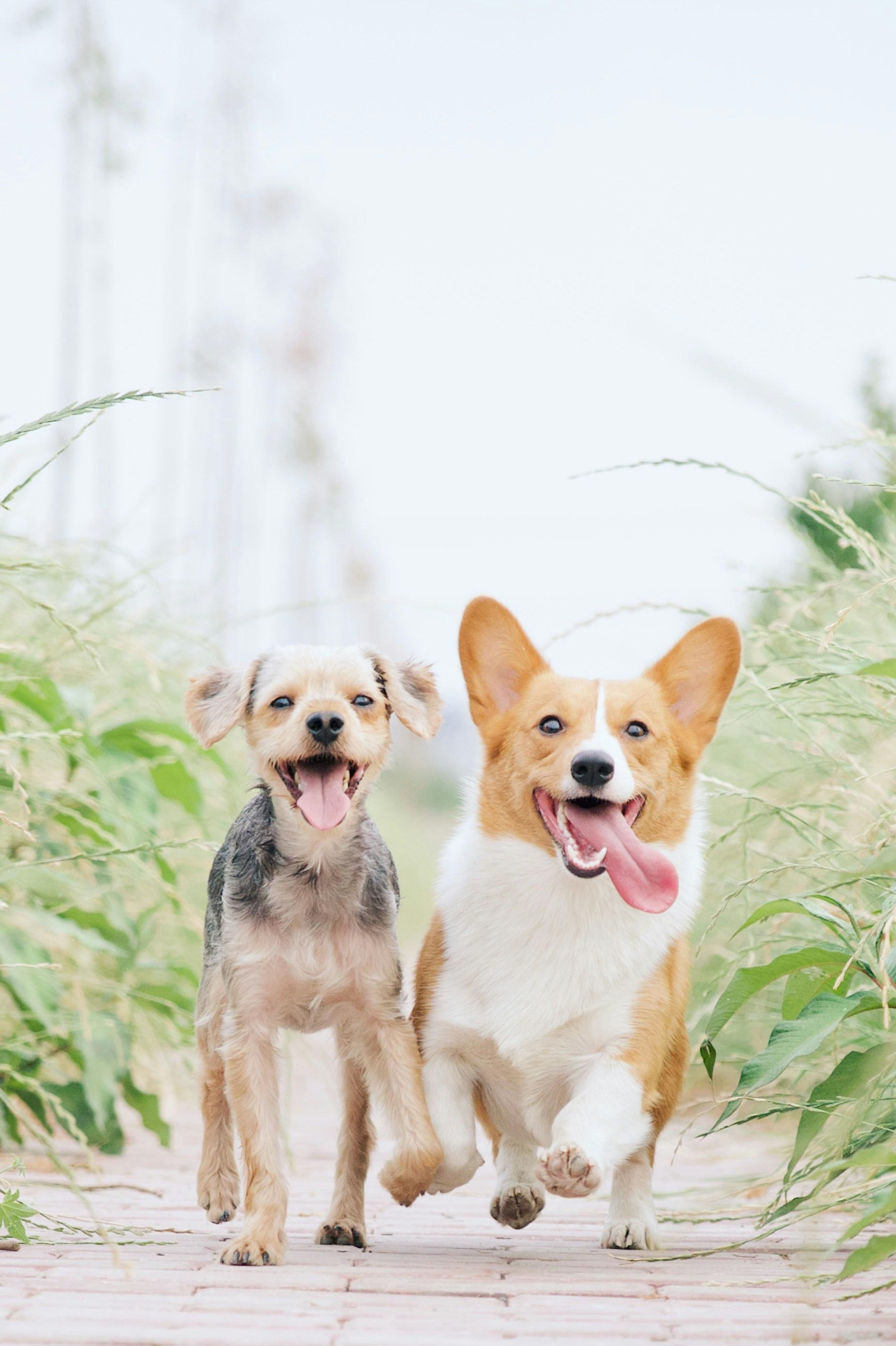
As two dogs sprint through a sunlit path, ears flapping like sails in the breeze, one might imagine they’ve just received an unexpected invitation to a canine carnival. Their unrestrained joy transcends simple play; it resonates with the deeper rhythms of dog behavior. Observing them closely, one might notice the distinctive curly tail of the smaller dog, a testament to its euphoric state, and the exuberant smile of the corgi, whose loyalty appears to propel each leap forward. Here, in this playful moment, lies more than just eye-catching cuteness—it's a masterclass in social bonding.
Dogs are not mere companions; they are social creatures whose emotional landscapes are rich and complex. Research indicates that dogs can spend up to 80% of their waking hours engaged in play and social behaviors, a statistic that highlights the critical role social interactions play in their psychological well-being. Among dog packs, the average vigilance duration—how long they remain alert to their surroundings—can be as brief as 11 seconds while in the company of friends. This low vigilance suggests security derived from social bonds, allowing them to immerse fully in moments of joy. Their behavior reflects not merely a desire for fun; it reveals a fundamental need for connection and affirmation within their social group.
In a world increasingly marked by isolation, understanding the psychological needs of dogs can inform how we care for them. The key lies in fostering environments that encourage play and social interaction. For instance, regular off-leash playdates can improve not only physical vitality but also reduce stress hormone levels. Studies show that dogs engaging in regular social interactions experience a significant decrease in cortisol, the stress hormone, by up to 30%. Such environments don’t just nurture joy; they fortify mental health—both for dogs and their owners.
To ensure your dog thrives in social settings, consider initiating more group play activities. A doggie playdate should strive to include at least three canine companions, as this enhances engagement and replicates the social structures dogs have evolved with. Observing your dog's play styles can offer enriching insights; many dogs engage in “greeting ceremonies,” a mix of sniffing, tail wagging, and playful bowing that fosters comfort and camaraderie with one another. Prioritizing these interactions can alleviate anxiety and bolster self-confidence, creating a win-win scenario for your furry friend.
In the end, as we watch these two dogs running side by side—one carefree, the other joyfully pouncing on blades of grass—we are reminded of the simple yet profound connections that enrich our lives. The unconditional joy embedded in their playful antics speaks to a universal truth: deep relationships forge our happiest moments. In a world that often hastens by, let us cherish these living reminders that sometimes, sheer joy is best experienced in the company of friends, reminding us that love and laughter are the true essence of a fulfilling life.
 Russian
 Thai
Thai
 English
 French
 Spanish
 Portuguese
 Deutsch
 Turkish
 Dutch
Dutch
 Italiano