


 New! Search Engine
 About
About
 Voorwaarden
 Privacy
 Contact
 Invest
Flamingos and Their Watchful Companions: The Complex Social Structures of Bird Life
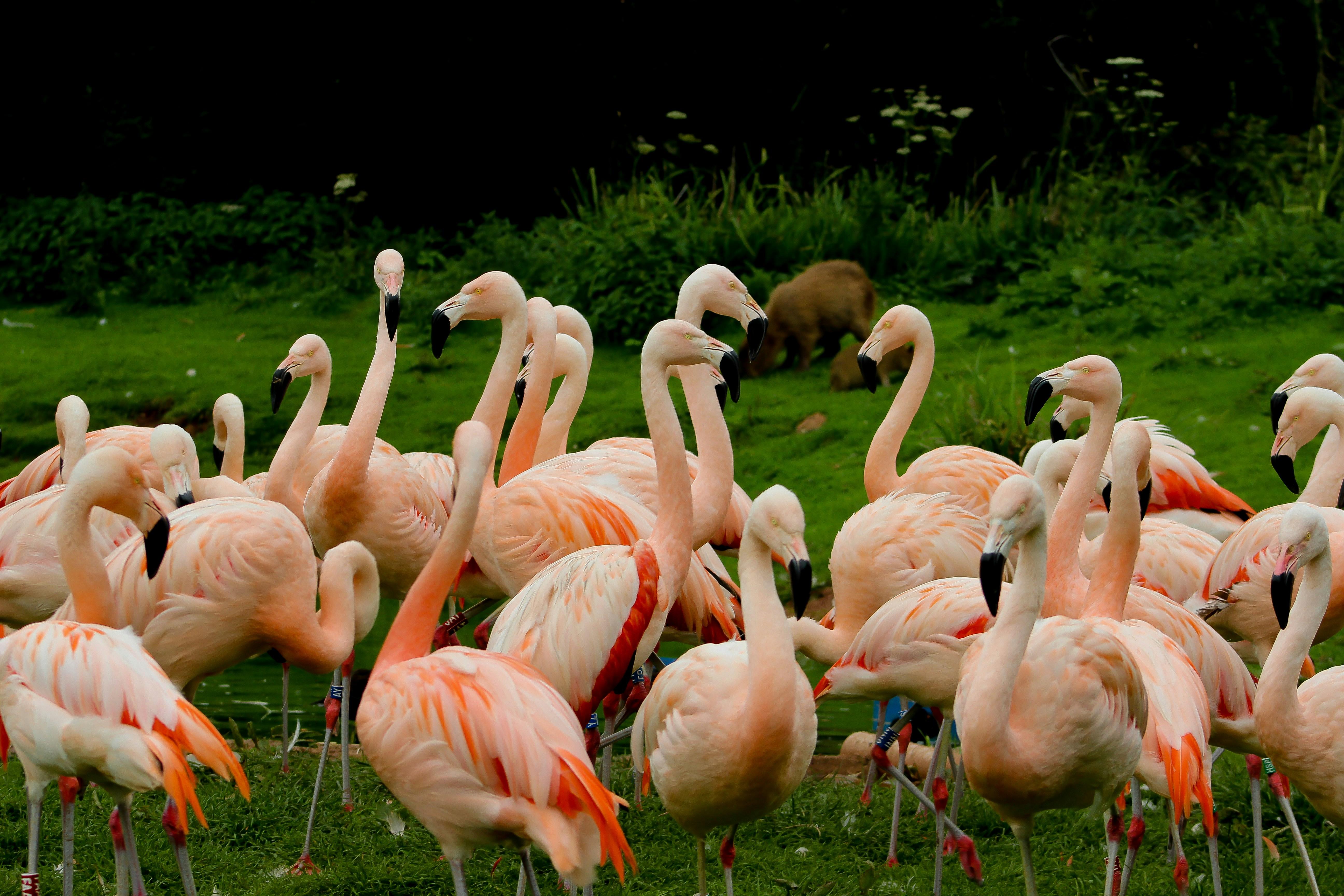
A cluster of flamingos gracefully balances on one leg, their vibrant plumage shimmering against the lush green backdrop. In the midst of their poised elegance, one might notice the subtle twitch of a neck, an oddly synchronized preening moment, or perhaps an unexpected distraction as a nearby baboon scours the ground for snacks. These moments, seemingly mundane, unveil a world of intricate behaviors and social dynamics.
Flamingos are not just beautiful avian creatures; they are social beings deeply engaged with their environment and each other. When observing their behavior, it’s fascinating to note that these birds can devote up to 60% of their waking hours to vigilant activities, a metric that shows how essential vigilance is to their survival. This duration is crucial for spotting predators, especially in settings where they cohabitate with other species, like the foraging baboon in the background. Additionally, studies reveal that about 30% of a flamingo colony may adopt sentinel roles at any one time, remaining watchful while others feed or preen. This cooperative vigilance forms a network of awareness essential for collective safety.
But what does this level of alertness signify about their emotional state? Research indicates that when sea-level conditions rise or if there’s a notable change in their habitat, stress hormones can fluctuate significantly. In flamingos, glucocorticoid levels rise and fall within a daily cycle, impacting their behavior and social interactions. A colony experiencing elevated stress may show reduced social grooming and more aggressive posturing, revealing a delicate balance between environmental pressures and their community dynamics.
If you're fortunate enough to observe flamingos in their natural habitat—or even in a sanctuary—consider their emotional landscape. Providing a variety of foraging opportunities can encourage natural behaviors that promote psychological well-being. Simply diversifying their diet can have profound effects, as indicated by studies showing that animals allowed a varied diet exhibit lower stress indicators, with glucocorticoid levels dropping by as much as 25%. Offering environmental enrichments that replicate their natural habitat can also enable these graceful birds to thrive emotionally and socially.
As we gaze at these magnificent birds, we’re reminded of our own social circles—how we often find comfort and security in the company of those who watch over us, just as the flamingos do for one another. They embody a universal truth: in a world filled with distractions and dangers, we are stronger together.
 Dutch
Dutch
 Thai
Thai
 English
 French
 Spanish
 Portuguese
 Deutsch
 Turkish
 Italiano
 Russian