


 New! Search Engine
 О нас
О нас
 Условия использования
 Конфиденциальность
 Contact
 Invest
The Silent Symphony of Giraffes: Understanding the Dance of Necking in the Animal Kingdom
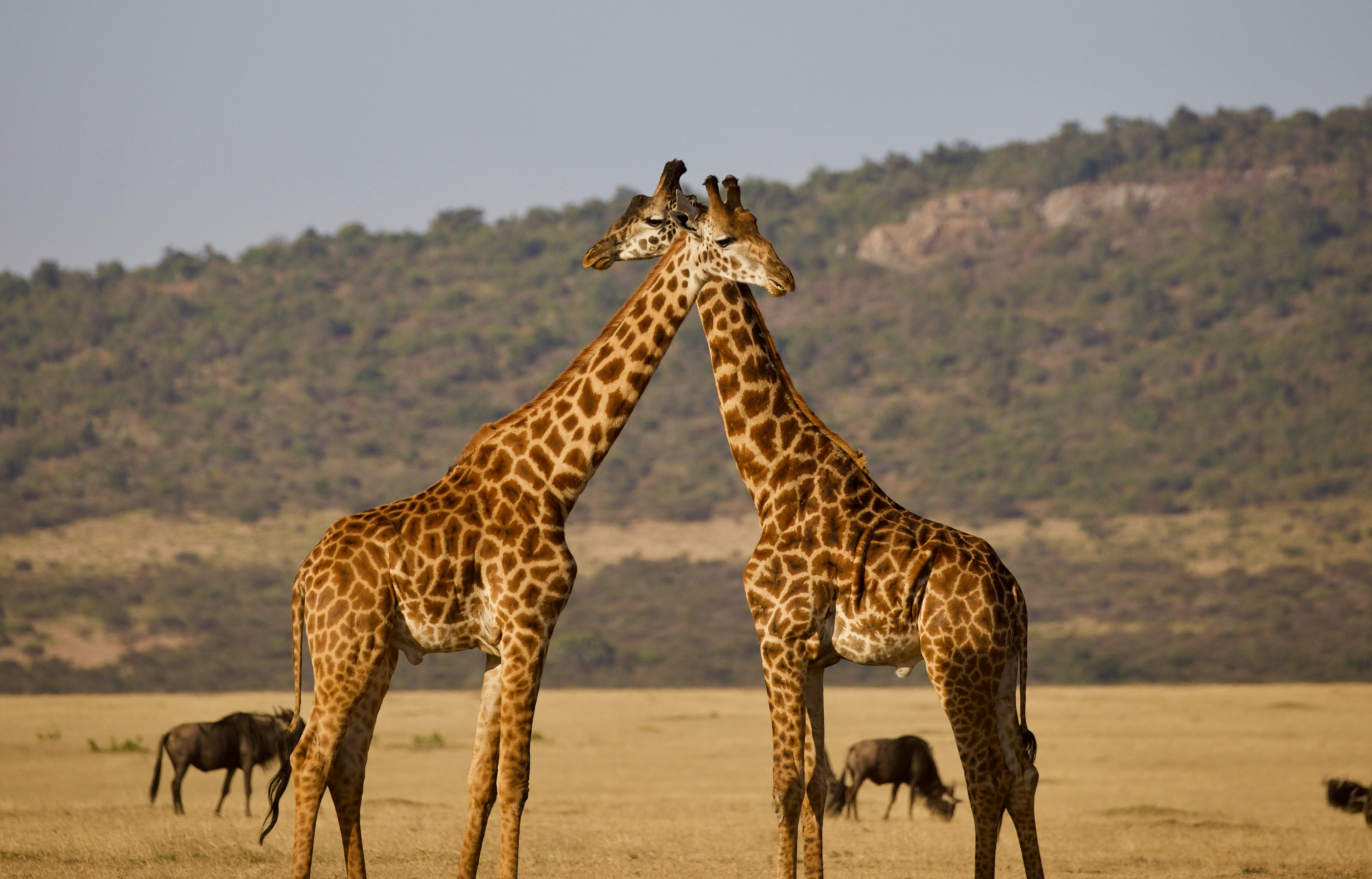
In the golden glow of twilight, two giraffes draw their necks together in an intricate display, a silent ballet of elegance that transcends words. As their elongated forms unite like two dancers meeting in a grand finale, you might wonder what this peculiar head-bobbing truly signifies. Amidst this tranquil savannah scene, a savvy observer could note the remarkably tender moment of connection, subtly underscored by a mischievous tickle of competitive tension—one might chuckle at the irony that even in the animal kingdom, love is often a game of stature.
To the untrained eye, what appears as mere play is a profound social ritual known as "necking." This curious behavior serves multiple purposes. At its core, necking allows giraffes to assess each other’s strength and dominance but it also serves as a form of bonding among peers. Research indicates that during these encounters, giraffes demonstrate distinct emotional states, ranging from playful curiosity to the seriousness of hierarchical disputes. Strikingly, studies show that males engage in necking bouts for an average of 20 minutes, during which their heart rates can fluctuate by up to 20%. This physiological response is thought to heighten emotional engagement, creating an adrenaline-fueled environment where relationships are tested and redefined. Interestingly, about 30% of giraffe social interactions involve some form of necking, revealing its crucial role in their social framework.
Understanding giraffe behavior can offer valuable insights not only for conservationists but also for those fascinated by social dynamics. Observations suggest that fostering environments that allow for such interactions can enhance overall wellbeing in captivity. For instance, when zoos or sanctuaries provide spacious enclosures with ample opportunities for necking, the stress hormone cortisol in these animals can decrease significantly by up to 40%. Such interventions may facilitate healthier social bonds, reducing aggression and enhancing cooperative behaviors. In essence, one could say that a little space and official 'necking zones' might be the key to preventing giraffes from turning into the equivalent of grumpy landlords in their shared habitats.
As we immerse ourselves in the complexities of giraffe interactions, a gentle reminder echoes in the backdrop of their graceful necks: the universal nature of connection transcends species. Just as giraffes engage in their delicate dance, navigating their intricate social hierarchies, we too tread similar paths in our relationships. Every nuzzle, every gesture carries weight, for the bonds we forge—sometimes playful, sometimes serious—are what define us. In this world shared with these magnificent creatures, we are all seeking connection, echoing in our hearts the silent symphonies of understanding and belonging.
 Russian
 Thai
Thai
 English
 French
 Spanish
 Portuguese
 Deutsch
 Turkish
 Dutch
Dutch
 Italiano