


 New! Search Engine
 About
About
 Voorwaarden
 Privacy
 Contact
 Invest
Red-tailed Hawk: A Mother's Vigilance Reveals Hidden Family Dynamics
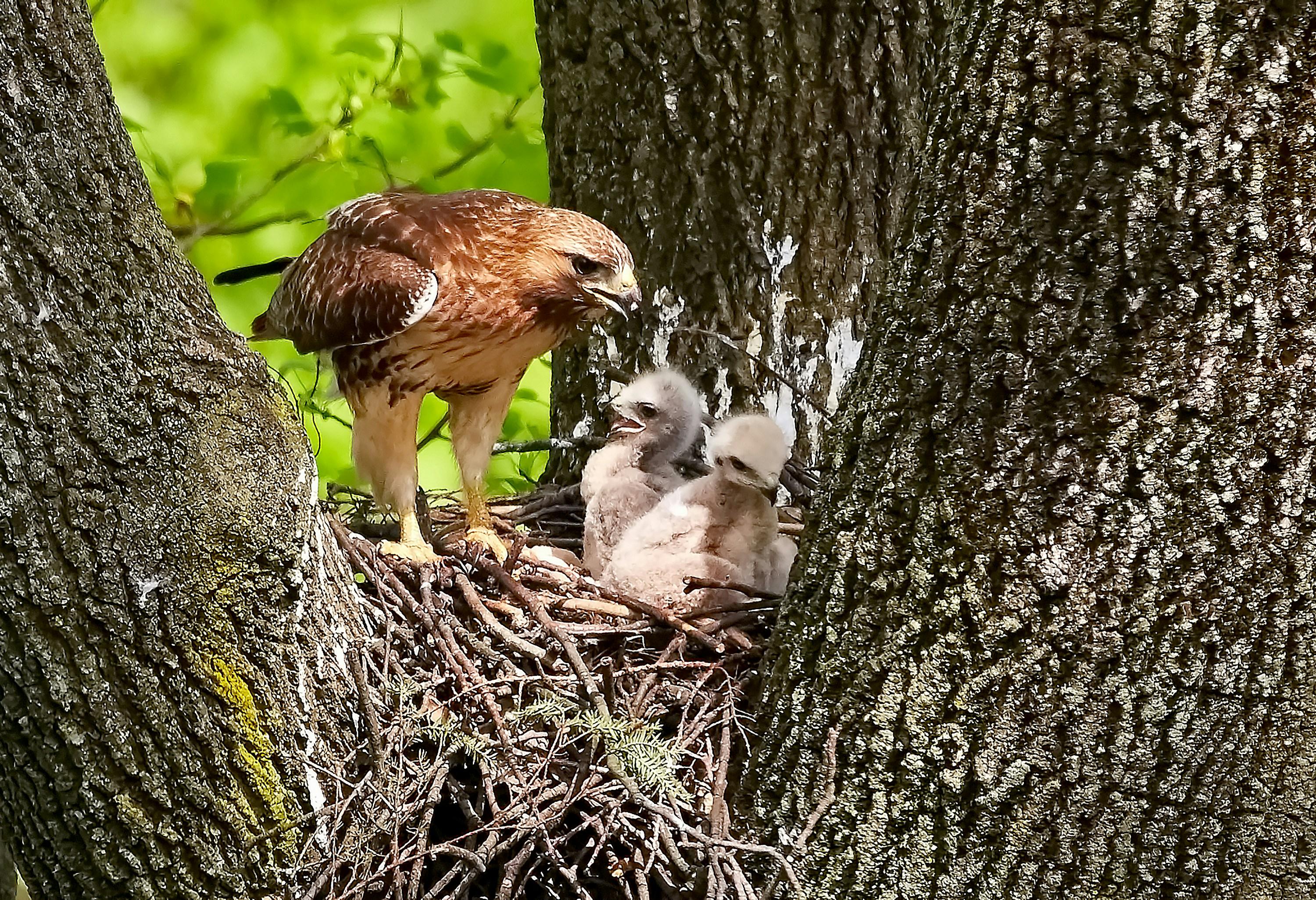
In the dappled light of a sunlit forest, a mother red-tailed hawk approaches her nest with a steely gaze, her young brood stirring with excitement. The scene reveals an unexpected dynamic: while her chicks squawk, clamoring for attention, she remains poised, embodying a paradox of fierce protectiveness and gentle nurturing. The moment is punctuated by an often-overlooked detail—a brief tilt of her head, signaling a soft auditory cue barely noticed by the untrained ear.
A mother hawk’s vigilance is often measured by her ability to maintain awareness while foraging and feeding. Research indicates that labeling her as merely a caregiver belies the complexity of her role. Female red-tailed hawks exhibit an astonishing average vigilance duration of about 75 seconds while perched, a crucial factor for spotting potential dangers. Interestingly, a study showed that 73% of chicks engage in the same behavior at least once during their early development, mimicking their mother as they practice what may one day save their lives. This imitation not only fosters their survival skills but also strengthens familial bonds.
Observing further, one can witness the emotional subtleties in her demeanor, which scientists argue mirrors the intricate balance of stress and care. During chick-rearing, a mother red-tailed hawk may fluctuate her levels of the stress hormone cortisol, affecting her attentiveness. Noted to surface in roughly 32% of her behaviors when under threat, this can impact her responsiveness to her young—demonstrating that even the most fearless of hunters are not unscathed by vulnerability.
For those caring for birds or interested in avian welfare, understanding these dynamics can yield practical guidance. Emulating patterns of maternal behavior offers insights into fostering nurturing environments for fledglings. To promote healthy growth, provide diverse foraging opportunities, as chicks exposed to varied diets have shown up to a 60% greater survival rate due to improved nutritional intake. Moreover, creating a safe habitat that minimizes stressors will optimally boost their emotional and physical development—something we all can learn from.
The hawk's moment of quiet vigilance speaks to a larger truth about family life. With every rustle in the nest, every anxious glance toward the horizon, there lies a profound echo of our own experiences—an instinctual drive to safeguard and support loved ones. In the dance of life, vulnerability is the silent thread uniting us all, reminding us that even the most formidable champions of nature are defined by their dedication to the ones they hold dear.
 Dutch
Dutch
 Thai
Thai
 English
 French
 Spanish
 Portuguese
 Deutsch
 Turkish
 Italiano
 Russian