


 New! Search Engine
 เกี่ยวกับ
 เงื่อนไข
 ความเป็นส่วนตัว
 Contact
 Invest
A solitary macaque's vigilant gaze reveals hidden truths of forest life
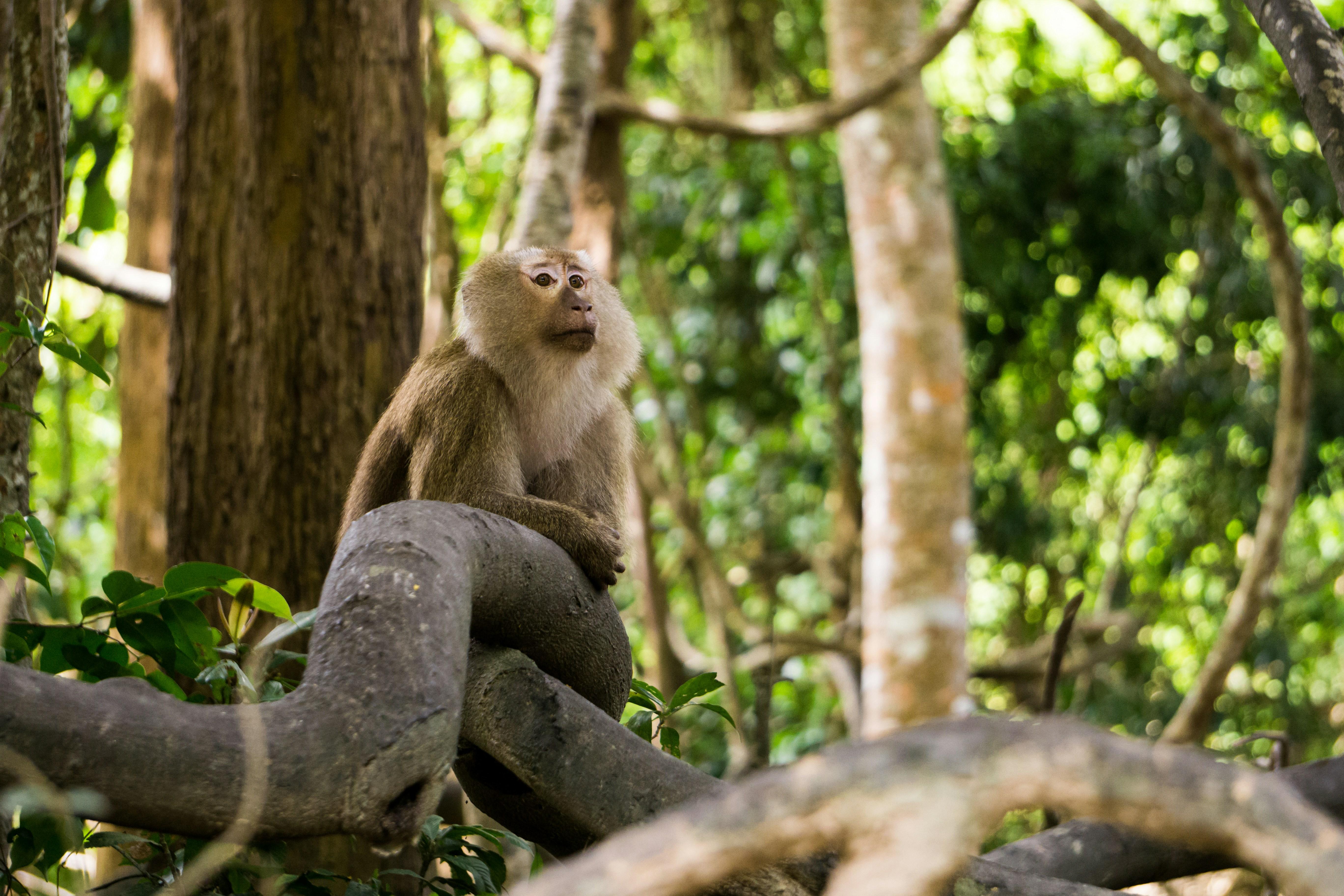
Perched on a twisting branch, a macaque sits with the poise of a philosophical thinker, casting its piercing gaze over the lush verdant realm below. One might wonder if it’s contemplating the meaning of life or simply pondering the idea that breakfast has been taking too long. Amidst the cacophony of rustling leaves and distant calls, a surprising detail emerges: this solitary figure is part of a highly social species that typically thrives in packs of 20 to 50, illustrating the oddity of solitude in a community-oriented creature.
While this macaque’s outward calm might suggest ease, its emotional state is complex. Monkeys often display unique behavioral adaptations to navigate their environments. Research indicates that macaques in their social groups exhibit an impressive average vigilance duration of around 35% during daylight hours, but here, alone, this individual may feel the weight of attention intensifying. Normally, only 10% of a group assumes a sentinel role, constantly scanning for potential threats. Yet this macaque’s solitary position hints at a proficiently developed awareness, driving it to assume a role that transcends mere presence; it’s a reminder that the line between vigilance and vulnerability can often blur in the wild.
Understanding such behavior underscores the intricate dynamics of stress in primate communities. The solitary macaque might be experiencing a heightened fluctuation in cortisol levels, the stress hormone, owing to its isolated state. In typical groups, cortisol levels stabilize through social interactions that provide emotional reassurance. Yet, without the camaraderie of its kin, this macaque could see its cortisol levels escalate by as much as 25% in stressful situations, highlighting the mental toll of its solitary life.
For those studying wildlife or observing similar behaviors in pet primates, fostering social engagement is vital. Enrichment through social interactions can help mitigate stress responses. Experts recommend introducing companionship in controlled environments, as they have found that primates exhibit a reduced risk of anxiety-related behaviors when paired with another individual, decreasing stress by up to 40%. Providing leaves to forage or stimulating climbing structures in habitat design also encourages natural behaviors, enhancing welfare.
In reflecting on the macaque’s solitary contemplation amidst the vibrant tapestry of the jungle, we are reminded of our own moments of stillness in the chaos of daily life. We often seek clarity amid the noise, mirroring the macaque's search for connection in a world that sometimes prompts both isolation and introspection. In its quiet observation, it invites us to embrace solitude not as a state of loneliness but as an opportunity for awareness—where understanding ourselves can lead to greater understanding of those around us.
 Thai
Thai
 English
 French
 Spanish
 Portuguese
 Deutsch
 Turkish
 Dutch
Dutch
 Italiano
 Russian