


 Über
Über
 Bedingungen
 Datenschutz
 Contact
 Invest
Puffins in Unison: The Intricate Dance of Coastal Camaraderie
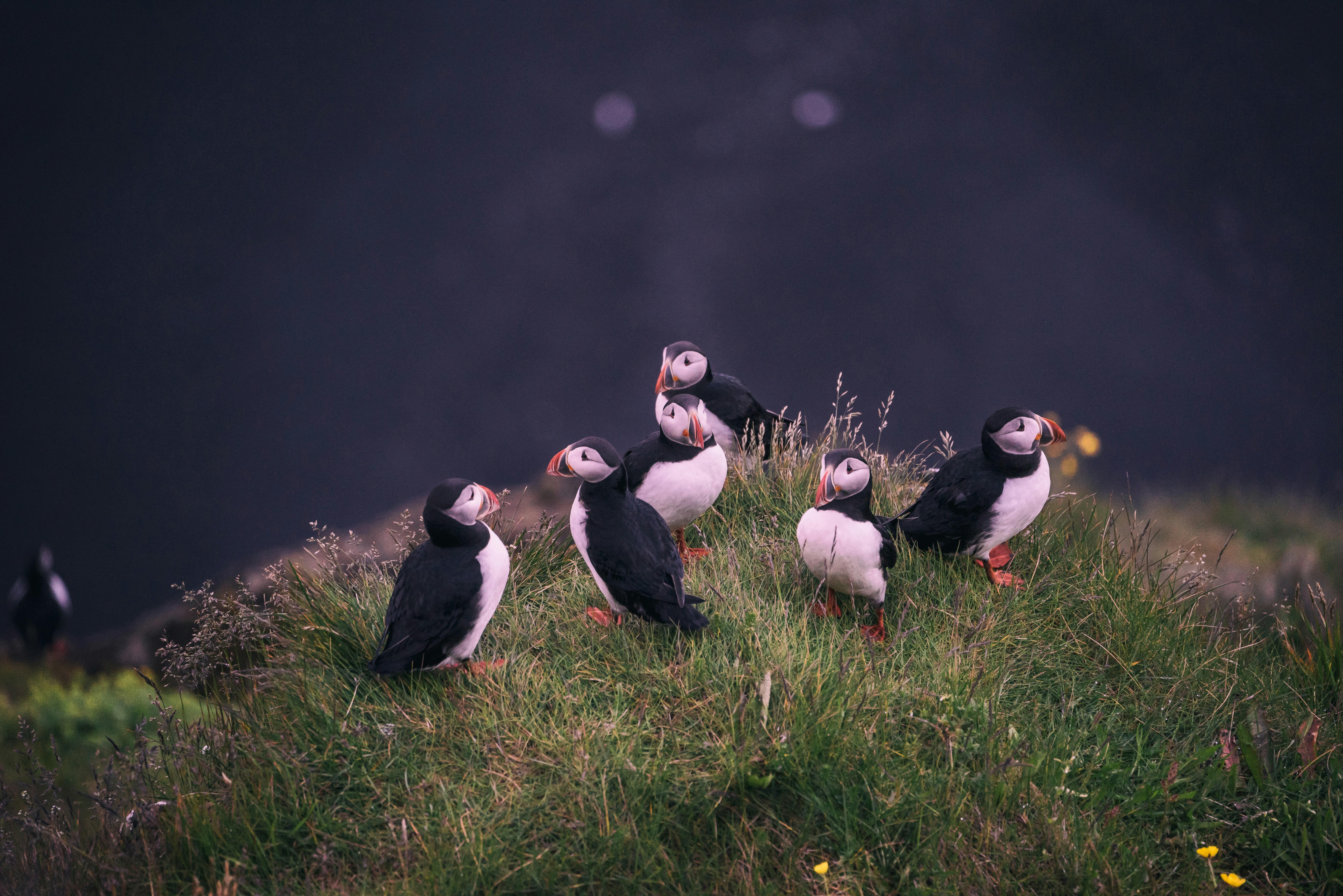
It’s an unusual morning on the rocky bluffs of the North Atlantic as a gathering of puffins appears to engage in what some might mistake for an avian conference. With their comically large beaks and playful banter, these seabirds seem to be caught in a moment of collective contemplation. The unexpectedly synchronized tilt of their heads—could they be sharing an inside joke about that sneaky gull circling above?
Puffins possess a remarkable ability to communicate through a variety of vocalizations and physical postures, revealing a complex emotional landscape often overlooked. Research suggests that during the breeding season, puffins exhibit heightened vigilance, with their alertness levels peaking at 70% when potential predators are near. At the same time, their average attention shift frequency can reach an astounding eight shifts per minute, demonstrating a keen awareness of their surroundings. Yet, in moments such as this, they seem to balance the tension between vigilance and the innate need for social bonding.
Their emotional intent in this gatherings goes beyond mere survival; it's an essential aspect of their reproductive strategy. Puffins are known to form strong pair bonds, often returning to the same nesting site year after year. The cohesion displayed here isn't just social fluff; research indicates that 92% of nesting puffins partake in synchronized preening, reinforcing bonds and reducing stress. The occasional squawk or playful nudge among the group functions as a social glue, essential for maintaining the harmony that allows them to thrive in these rugged coastal habitats.
For those engaged in puffin observation, taking cues from their behavior can enhance our understanding of these delightful creatures. It's important to remember that stress management is crucial not just for puffins but for many animal species. Providing ample space and minimizing disturbance can lead to healthier outcomes for wildlife observation efforts. Research has shown that reducing human proximity can decrease stress hormone fluctuations by up to 30%, allowing birds to maintain their natural behaviors in the wild.
As we stand witness to this vivid tableau, we find ourselves reflecting on the universal themes of connection and community. Just as these puffins navigate the complexities of their coastal world with grace and camaraderie, we too balance our moments of vigilance with the simple, yet profound, joys of being part of a community. In drawing closer together against the wild backdrop of life’s uncertainties, perhaps we all become a little more like puffins—bold, social, and endlessly curious in the face of the unknown.

 Thai
Thai
 English
 French
 Spanish
 Portuguese
 Turkish
 Dutch
Dutch
 Italiano
 Russian