


 New! Search Engine
 About
About
 Termini e Condizioni
 Privacy
 Contact
 Invest
Great Egrets Engage in an Elegant Display of Vigilance: Insights into Avian Attention Cycles
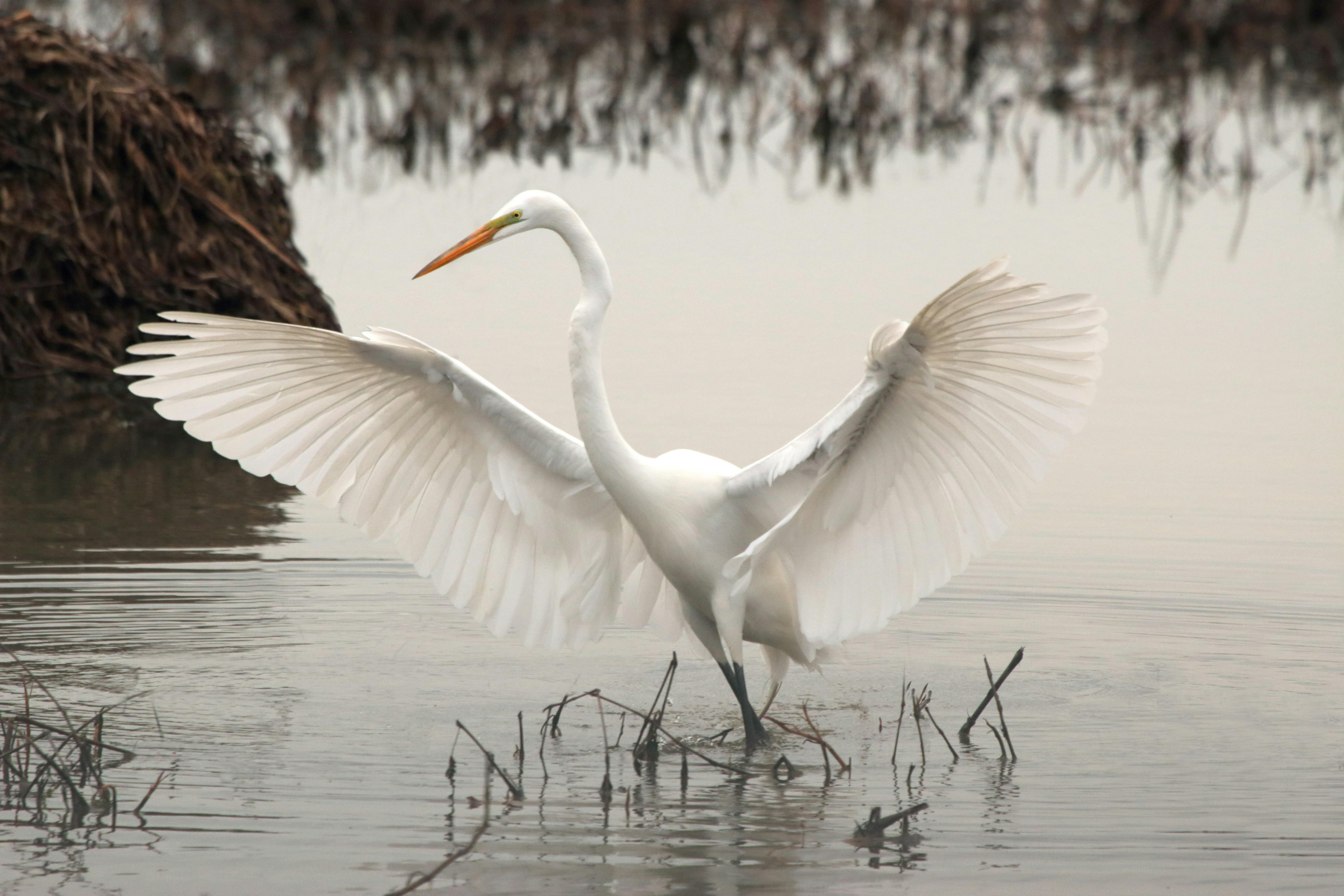
In the soft light of dawn, a great egret unfurls its magnificent wings, almost as if practicing for an avian ballet. This graceful pose, a snapshot of serenity, belies the underlying tension that governs its world. Intriguingly, while its wings extend majestically, one can’t help but notice a subtle flick of its head—a reminder that beauty often coexists with constant vigilance. With a splash of water glimmering behind it, this moment encapsulates the delicate balance these birds maintain between poise and precaution amid everyday threats.
Vigilance, a critical component of a bird's survival strategy, is highlighted in the behavior of the great egret. This elegant bird can allocate up to 57% of its observation time to scanning its environment for potential predators or rival foragers. Surprisingly, during these periods of alertness, egrets exhibit a higher frequency of attention shifts—up to six times in a minute—allowing them to keep track of a multitude of moving parts in their watery domain. With their keen eyesight, they can detect even minute disturbances in water, identifying a potential meal or a neighboring competitor. This careful watchfulness is complemented by their remarkable ability to remain motionless for extended periods, with average durations reaching nearly three minutes before they resume their fishing endeavors. Such strategies enhance their overall efficiency and survival chances in the wild.
To nurture and support the welfare of these magnificent birds, it’s essential to foster environments that reduce stressors typically associated with human encroachment. Great egrets require ample space to forage, thrive, and nest, with recommended buffer zones of at least 200 meters from their nesting sites to decrease disturbances. Engaging in mindful land management practices that maintain natural habitats can greatly aid in creating a sanctuary for these stunning creatures. Furthermore, researchers have found that egrets experience significant fluctuations in stress hormone levels—up to 170% increase during critical nesting periods—underscoring the need for intact ecosystems devoid of human interference.
In witnessing the great egret amidst its graceful performance, one cannot help but reflect on the universal pursuit of balance in our own lives. Just as this magnificent bird rhythmically stretches its wings whilst remaining alert to the nuances of its surroundings, we too navigate the tightrope of vigilance and grace in our daily journeys. The delicate interplay of relaxation and alertness resonates deeply, reminding us that beauty flourishes in spaces where caution and wonder coexist, inviting us to embrace both the stillness and movement in our lives.
 Italiano
 Thai
Thai
 English
 French
 Spanish
 Portuguese
 Deutsch
 Turkish
 Dutch
Dutch
 Russian