


 New! Search Engine
 About
About
 Voorwaarden
 Privacy
 Contact
 Invest
Canine Calm Meets Feline Frenzy: A Study of Inter-Species Dynamics
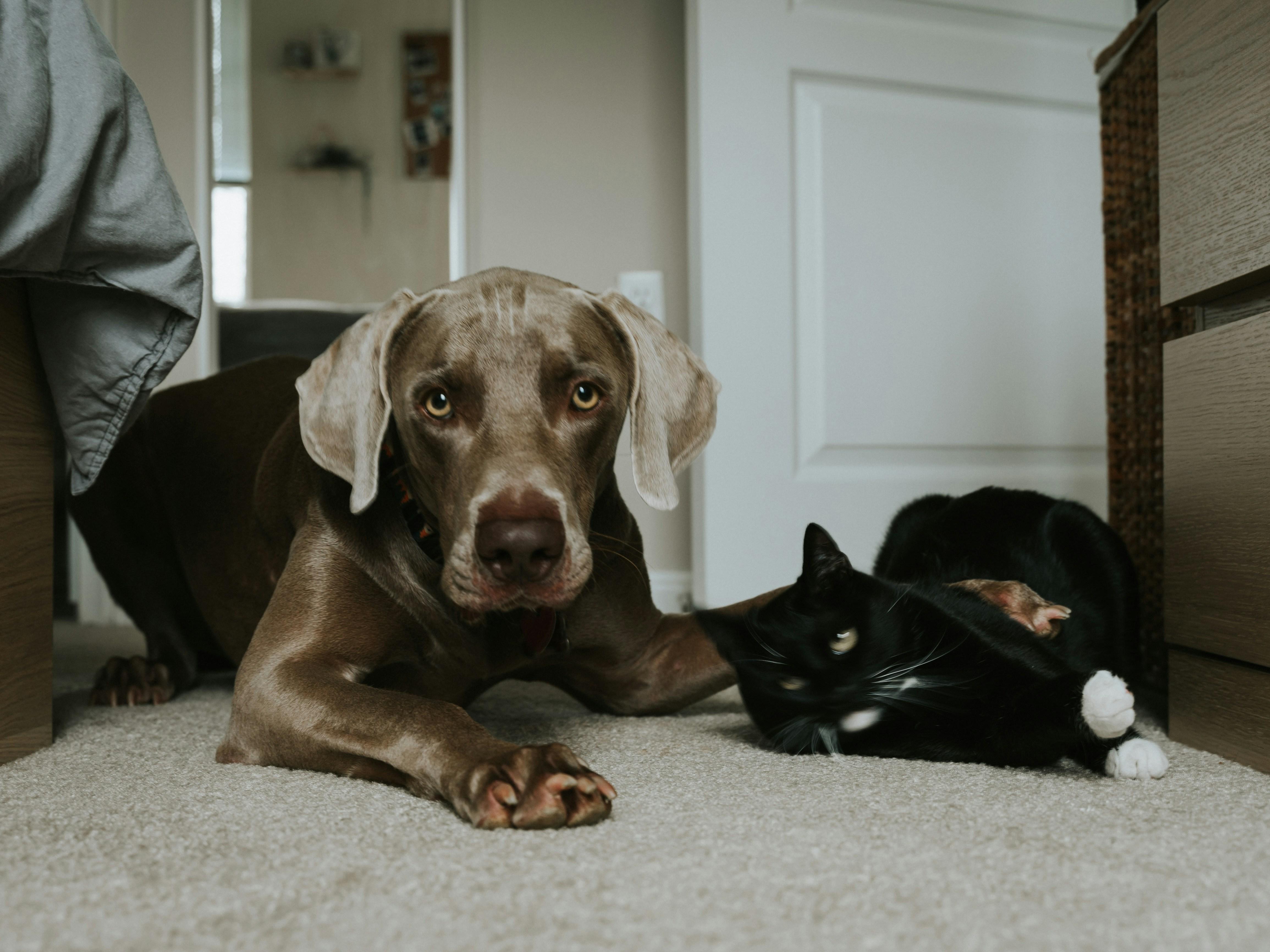
In a quiet corner of the home, a regal Weimaraner sprawls lazily, eyes half-closed yet penetratingly observant, while a frisky black cat careens through the scene like an exuberant shadow. Just as the dog considers his next nap, the cat launches into an impromptu twist, showcasing skills that would make any circus performer green with envy. It’s a moment that distills the essence of domestic companionship, but lurking beneath this charming tableau lies a fascinating interplay of instincts and emotional cues.
The dog, with a gaze both watchful and relaxed, exhibits a behavioral state indicative of secure attachment—a phenomenon well-documented in canine science. Research shows that dogs experience a relative vigilance period averaging just five minutes before they shift focus to relaxation or social interaction. With a vigilance rate that has been recorded at around 70%, this Weimaraner exemplifies the breed's trait of being a loyal sentinel, always attuned to its surroundings and the antics of its feline counterpart. Meanwhile, the cat basks in the freedom of self-expression, embodying the playful carefree spirit of its kind, which has been associated with an attention shift frequency of nearly 12 times per minute in active play.
These two animals, though different in species, navigate their shared space with a fascinating combination of awareness and nonchalance. The dog’s relaxed demeanor acts as a stabilizer, allowing the cat to engage in risky, yet harmless play. This companionship reflects an emotional interplay where the dog’s calmness provides a safe backdrop for the cat’s bursts of energy. Interestingly, studies suggest that such interspecies interactions can help ease anxiety, with pets experiencing a decrease in stress hormone fluctuations by up to 20% when interacting positively with another species.
Observing this dynamic prompts us to reconsider the environment we create for our pets. Providing spaces where they can safely interact with one another is crucial. Think plush, textured areas that encourage exploration and interaction without the risk of injury—like soft carpets or dedicated play zones. Humans can enhance these shared experiences by introducing toys that cater to both species' instincts; for example, feather teasers that appeal to felines while engaging watchdog instincts in canines. Ensuring that both pets feel secure can mitigate conflicts, reducing heightened stress behaviors that emerge during periods of competition.
As we reflect on this extraordinary moment, one can’t help but find resonance in the juxtaposition of their lives. These two animals, navigating the complexities of coexistence, echo human experiences of friendship amid stark differences. It reminds us that in a world bustling with unpredictability, stability and playfulness can coexist beautifully. The Weimaraner and the cat serve as a gentle reminder that understanding, patience, and the willingness to embrace diversity are the heartbeats of meaningful companionship, bridging spans of instinct and behavior in ways that speak to our shared longing for connection.
 Dutch
Dutch
 Thai
Thai
 English
 French
 Spanish
 Portuguese
 Deutsch
 Turkish
 Italiano
 Russian