


 New! Search Engine
 About
About
 Terms
Terms
 Privacy
 Contact
 Invest
The Complex Inner Life of a Lion: Exploring How 70% of Time Spent Resting Influences Social Dynamics
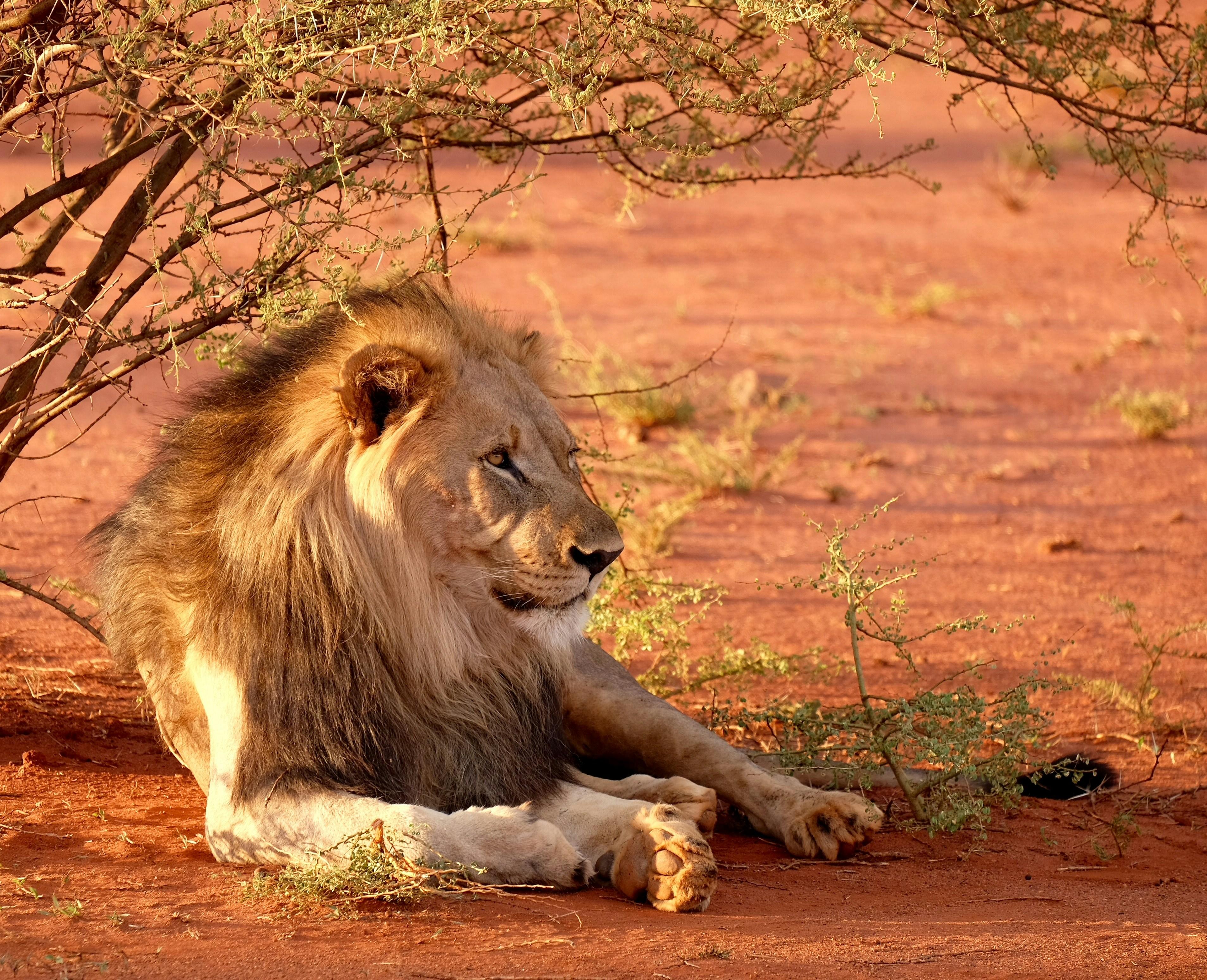
Beneath the dappled shade of an acacia, a lion reclines, exuding an air of regal indifference that belies the intricacies of his existence. His eyes, half-closed and contemplative, seem to reflect the soft orange glow of the setting sun, while a delicate tendril of grass brushes against his paw—perhaps he’s contemplating the meaning of life or simply wondering if it's time for dinner. He epitomizes the kingly laze, yet, in this moment, it's the barely perceptible twitch of his tail that tells an unexpected story: lions communicate more than we realize, and even in stillness, their thoughts might stir like the desert wind.
This lion's languid posture signals not just relaxation but also the underlying emotions that govern his day-to-day interactions. Interestingly, research indicates that lions can spend up to 70% of their lives resting. While this may appear as sheer leisure, it’s essential for physiological recovery and thermal regulation in their often harsh habitats. But what’s more fascinating is that during these episodes of rest, lions are highly aware of their surroundings. Studies show that vigilance can fluctuate significantly; lions can shift their attention as often as 20 times in an hour when in a relaxed state. This blend of rest and alertness enables them to uphold a delicate balance between energy conservation and readiness for the unexpected, a skill critical to their survival.
To foster a harmonious living space for our own lives, whether as caretakers of animals or even just as observant humans, we might take a cue from this lion's behavior. Individuals, like lions, require ample rest not just for physical recuperation, but for emotional and mental well-being. A balance of downtime, particularly in environments that push our limits—be it stressful jobs or personal challenges—can enhance creativity and resilience. In fact, research from the University of Michigan indicates that people who take breaks for mindfulness activities improve their overall cognitive flexibility by up to 40%, potentially allowing us all to navigate our own social landscapes with greater ease.
As the sun sinks lower, painting the sky with pastel hues, this solitary lion remains a witness to the rhythm of life around him. In his quietude lies a universal truth about existence: sometimes, the most profound lessons come not from action, but from stillness, prompting us to embrace the art of being. In that precious moment of reflection, we may find that understanding and connection are as vital as any roar.
 English
 Thai
Thai
 French
 Spanish
 Portuguese
 Deutsch
 Turkish
 Dutch
Dutch
 Italiano
 Russian