


 About
About
 Terms
Terms
 Privacy
 Contact
 Invest
The Science of Playfulness in Canine Companions
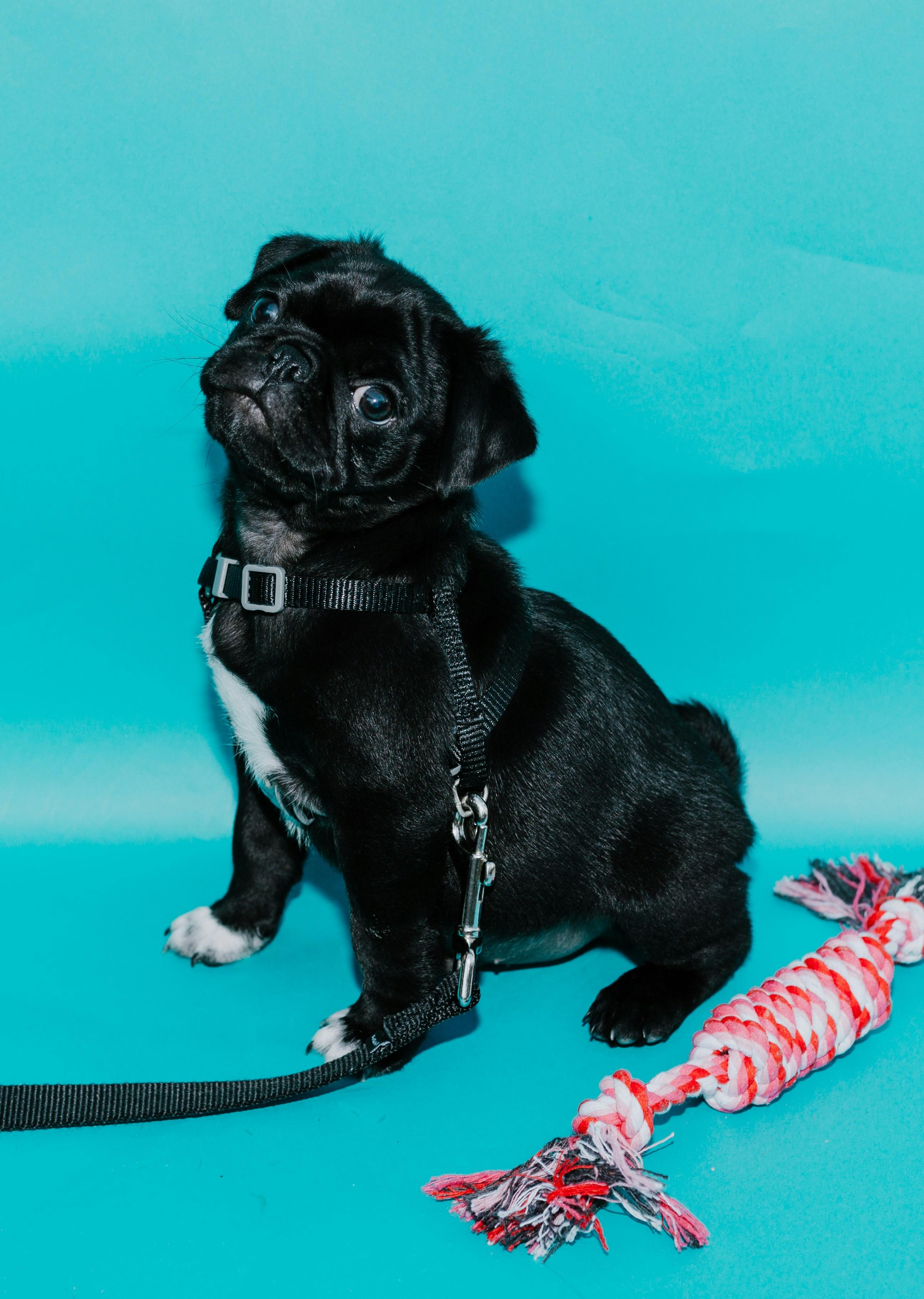
In the vibrant world of canine behavior, few sights are as endearing as a puppy filled with zest for life, ready to pounce on anything that moves—or, in this case, something that’s just lying there, like a rope toy. The playful demeanor of this black pug, with its quizzical tilt of the head, is not merely a charming quirk; it signals the profound evolutionary advantages of play in dogs.
Puppies engage in play to develop essential skills. Just as human children learn social dynamics through games, puppies refine their hunting instincts and social interactions while frolicking with their peers or, more frequently, with their toys. This adorable excursion—where each leap might resemble an aerial ballet—is rooted in their biology. The limbic system, responsible for emotions and instincts, activates during these playful bursts, releasing a cocktail of chemicals that enhance mood and social bonds.
Interestingly, studies reveal that playfulness can serve as an indication of overall health. A lively puppy, eager to chase and tug, often reflects not only good genetics but also a positive environment. The energy expended in playful antics is akin to a fitness routine: it contributes to muscle development, agility, and cognitive function. Researchers note that puppies who play robustly are often better adjusted adults, adept at forming relationships with both humans and fellow canines.
As this little pug sits with its tail curled and eyes wide, it offers a glimpse into the world of biological behavior that transcends mere cuteness. In fact, approximately 70% of a dog’s daily activity should ideally be play. It’s a reminder that within the simple act of play resides a complex interplay of instincts, emotions, and social structure, proof of how enjoyment can be intricately woven into the fabric of survival.

 Thai
Thai
 French
 Spanish
 Portuguese
 Deutsch
 Turkish
 Dutch
Dutch
 Italiano
 Russian