


 About
About
 Terms
Terms
 Privacy
 Contact
 Invest
The Charm of Canine Expression
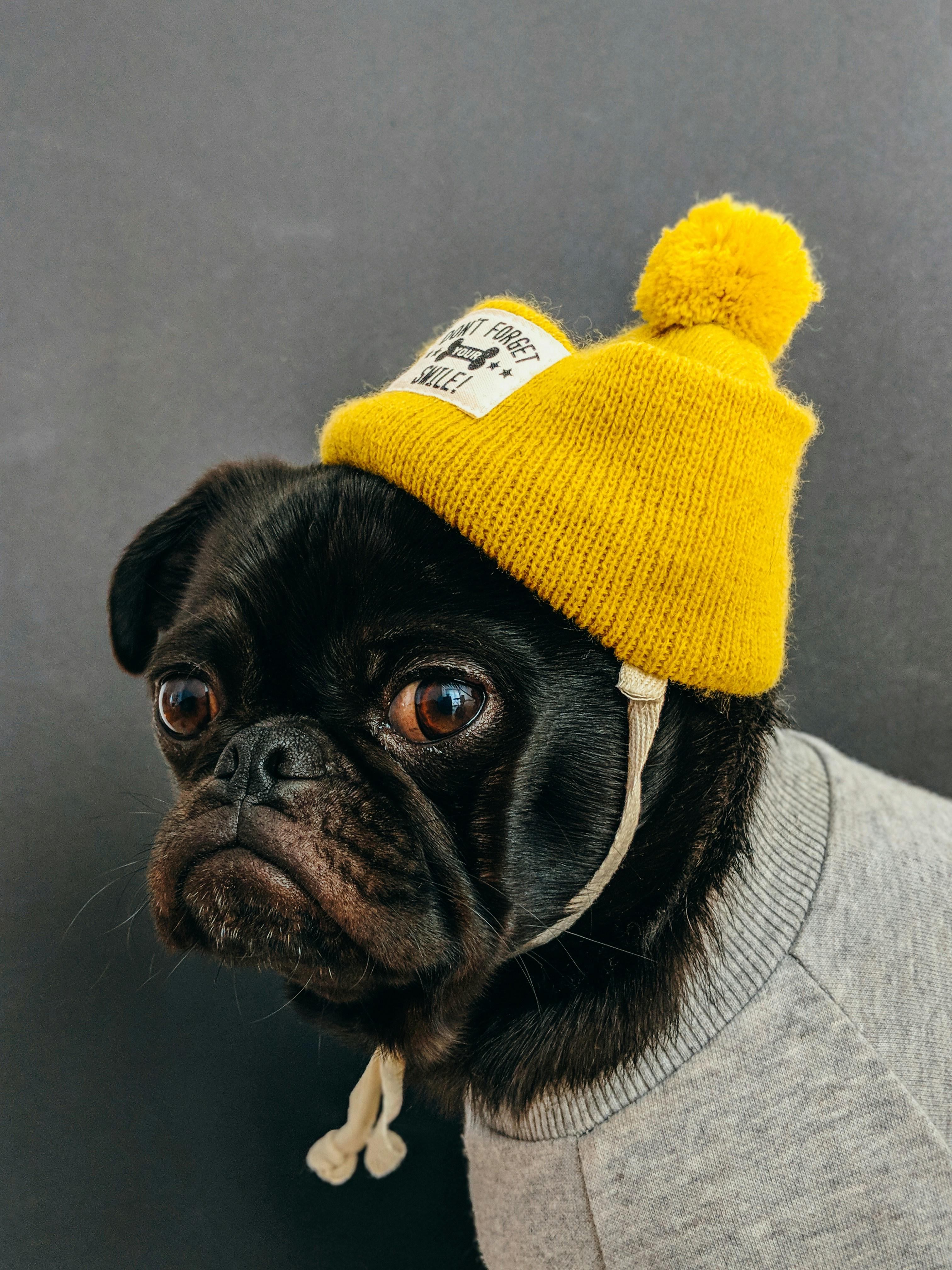
In the bustling world of pet ownership, few spectacles are as captivating as that of our furry companions donning apparel. Consider, for example, a pug nestled in a snug, gray sweater, sporting a sunny yellow beanie that proclaims an intriguing message: “Don’t forget to smile!” Beyond the enchanting visual, this scene offers a glimpse into biological behaviors that reveal much about canine nature.
Dogs, particularly breeds like pugs, have evolved not just to accompany humans but also to understand and express emotion. Their hefty bodies and prominent facial features lend themselves to what scientists refer to as "facial feedback." A dog's ability to communicate its feelings through facial expressions has striking similarities to our own. In turn, humans have become adept at interpreting these signals. This reciprocal understanding strengthens the bond between species, a relationship built upon co-evolution and mutual reliance.
Humor emerges naturally when we witness a creature wearing such playful garb. While dogs don’t don outfits for warmth like we do, their attire often elicits smiles from humans—an unintentional yet delightful side effect that benefits both parties. Each chuckle shared reminds us of the joy inherent in companionship. Furthermore, the simple act of dressing a dog can serve as a demonstration of human creativity and affection, translating our feelings into pleasing experiences for these animals.
In the end, the act of wearing a beanie may seem trivial, but it raises pertinent questions about emotional expressions across species. Studies show that dogs thrive in environments rich in social interaction, where both verbal and non-verbal cues become paramount. They are not just pets; they navigate their world through a complex web of understanding that continues to flourish, emphasizing that even the smallest moments can have a ripple effect in the grand scheme of biological behavior.

 Thai
Thai
 French
 Spanish
 Portuguese
 Deutsch
 Turkish
 Dutch
Dutch
 Italiano
 Russian