


 About
About
 Voorwaarden
 Privacy
 Contact
 Invest
The Playful Instincts of a Kitten
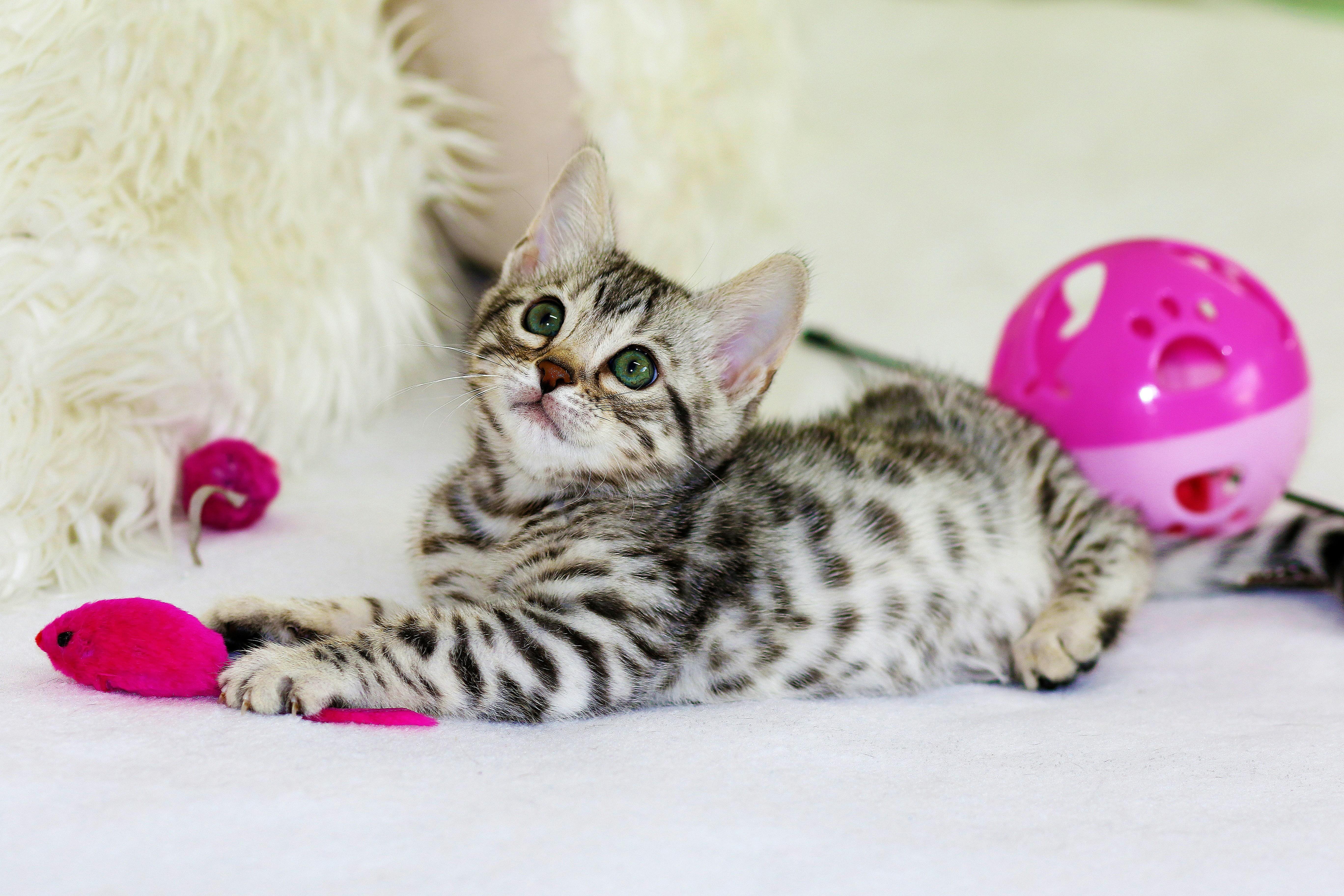
In a sunlit corner of a cozy room, a young kitten embodies the essence of playful exploration. With its striking green eyes wide in curiosity, every flick of its paw at the vibrant pink toy mouse offers a glimpse into the complex world of feline behavior. Scientific observations reveal that such playful antics are not mere entertainment, but a crucial aspect of development and survival in the wild.
From birth, kittens are hardwired to engage in play, which serves as a practice ground for honed hunting skills. This instinctual behavior reflects a deep evolutionary heritage. While the toy mouse might not provide a meal, the chase mimics the swift movements of prey. Furthermore, studies show that play helps enhance physical coordination and social skills. The kitten's enthusiastic batting and pouncing are not just adorable; they are integral to the acquisition of necessary survival skills.
Interestingly, playful behavior is not uniformly aggressive. It blends a sense of curiosity with an innate awareness of risk, keeping the young feline vigilant against its surroundings. The way this little creature stops mid-pounce to scan the environment showcases a behavior observed across many species: balance between impulse and caution. This adaptive trait illustrates the fine line between play and predation, ensuring survival through practice.
As the kitten prepares to leap once more, observers can find humor in the earnestness of its pursuit, a reminder that learning often comes wrapped in moments of joy. Each playful swipe may not lay claim to a real mouse, but each session carves pathways into understanding. In a world where nearly 85% of a cat's waking hours are spent in slumber or play, this irresistible frolic serves a purpose far grander than mere amusement; it lays the groundwork for a master hunter of tomorrow.
 Dutch
Dutch
 Thai
Thai
 English
 French
 Spanish
 Portuguese
 Deutsch
 Turkish
 Italiano
 Russian