


 About
About
 Voorwaarden
 Privacy
 Contact
 Invest
A Curious Encounter Under the Mistletoe
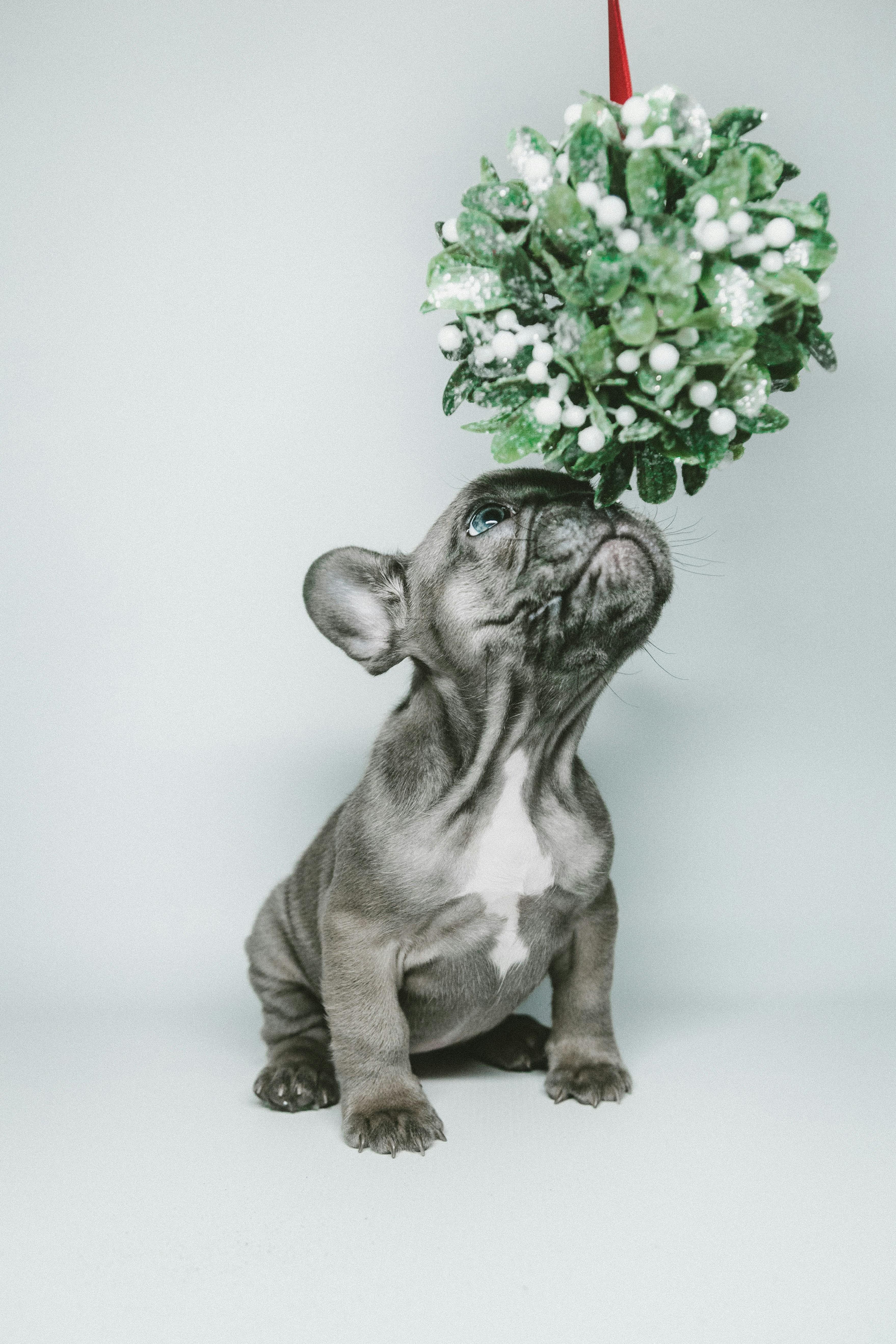
In a moment captured under the whimsical guise of holiday cheer, a puppy gazes curiously at a sprig of mistletoe. This scene, both heartwarming and humorous, reveals the fascinating interplay of instinct and learning that defines canine behavior. Dogs, descendants of wolves, have evolved their remarkable abilities to read human emotions and cues, allowing them to thrive in social environments.
As this puppy observes the hanging greenery, one can’t help but wonder about its thought process. The 12 million scent receptors in a dog's nose unlock a world of information that is invisible to the human eye. Unlike humans, who might see a mere decoration, a dog perceives a kaleidoscope of scents, each telling a story. For instance, the lingering scent of pine mingling with the subtle scent of berries might trigger memories of outdoor adventures or familial connections—fascinating layers of behavior rooted in their ancestry.
Puppies are not only learning the physical environment around them; they are also absorbing social dynamics. The innocent curiosity often leads them to mimic behaviors they observe from humans and other animals. This stage of exploration highlights their adaptive nature, and perhaps in this puppy’s gaze, we can find hints of strategy. Is it contemplating how to engage, play, or perhaps earn affection?
From a scientific standpoint, playful exploration is key to canine development, fostering intelligence and social skills necessary for communication with humans. Reflecting on this solitary moment, one might consider that roughly 75% of dog owners believe their pets understand their emotions. Here lies a soft truth: in the language of love, the depth of connection between a dog and its human is often painted in simple gestures of shared experiences. Through gentle curiosity, both species navigate the nuances of companionship, illustrating a complex world where science meets the tender heart of nature.
 Dutch
Dutch
 Thai
Thai
 English
 French
 Spanish
 Portuguese
 Deutsch
 Turkish
 Italiano
 Russian