


 Sobre
Sobre
 Termos
 Privacidade
 Contact
 Invest
The Art of Fishing: Bears at the Water’s Edge
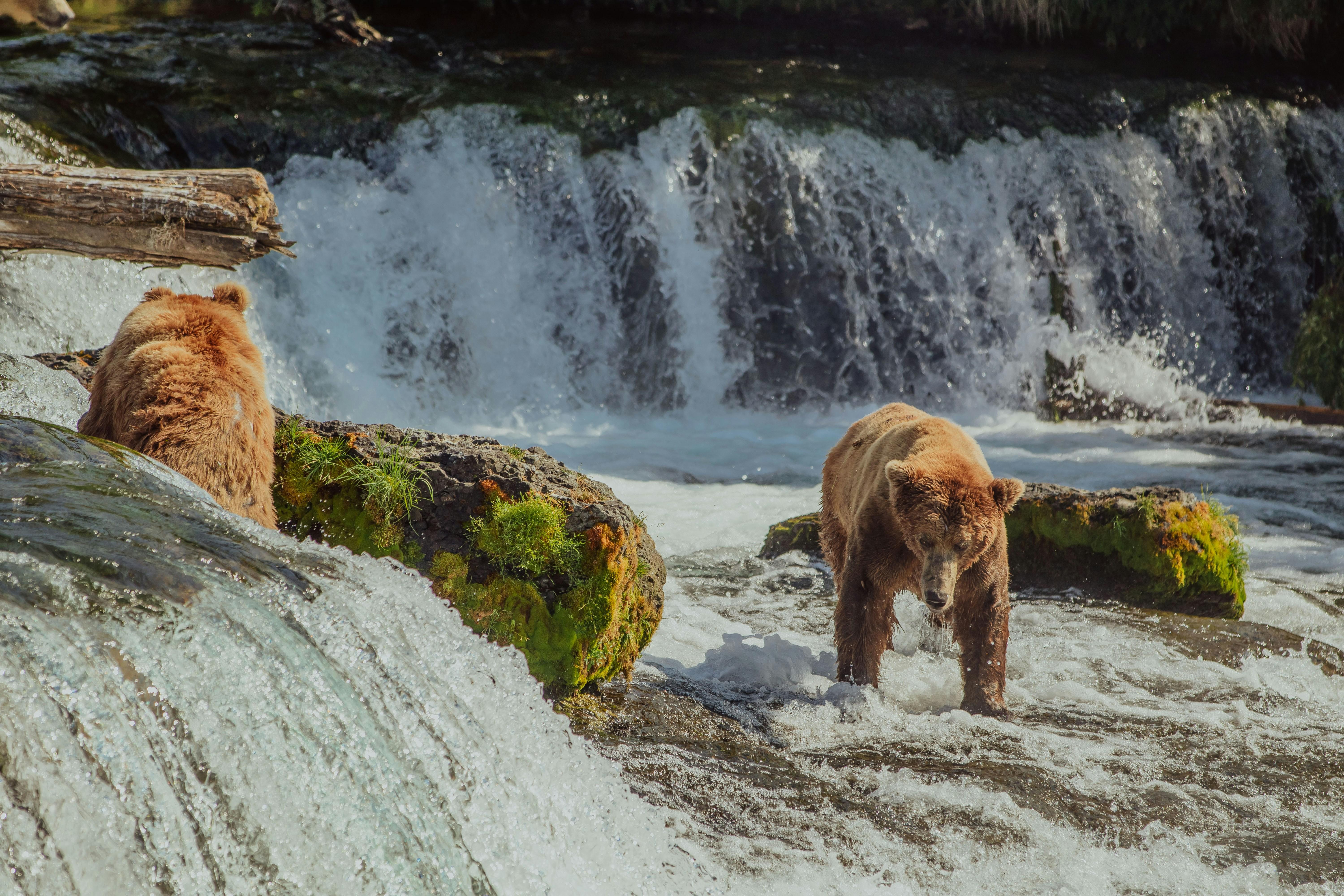
In the serene yet turbulent embrace of cascading waters, two brown bears embody nature’s instinctual artistry. The symphony of the flowing river juxtaposed with the vigorous splashes of the bears captures a timeless dance of survival. This revered scene unfolds as these apex predators navigate the unpredictable dynamics of their environment, showcasing the elegance inherent in their hunting techniques.
Brown bears are not just the largest terrestrial carnivores; they are also remarkable strategists. As they seek solace near the rushing waters, their keen eyes survey the surface, waiting for silver flashes of salmon swimming upstream. The bears’ fishing prowess is distinguished by their ability to pounce with remarkable precision, often timed to the rhythm of the water’s flow. It’s no mere luck; it’s a calculated response honed through generations of evolutionary refinement. Observing a bear execute a perfect catch is akin to witnessing a masterpiece—each movement purposeful, each pause laden with anticipation.
Besides the thrill of the hunt, this behavior reveals deeper insights into ecological interactions. The bears play a vital role in nutrient cycling; their fishing exploits contribute to local ecosystems as salmon carcasses decompose, enriching the soil and supporting broader biodiversity. It’s a reminder that the life cycle often hinges on a delicate balance of predator and prey, a relationship vital to ecological health.
Reflecting on this scene, one realizes that the bears are not just mindless hunters; they are emblematic of nature’s intricate design. With an astounding estimated population of around 50,000 brown bears in North America alone, each individual embodies centuries of adapted behavior—skills that reveal the captivating interplay between instinct and the environment. In a world often impatiently racing forward, these bears remind us of the beauty found in patience and precision, and the extraordinary stories played out at the water’s edge.
 Portuguese
 Thai
Thai
 English
 French
 Spanish
 Deutsch
 Turkish
 Dutch
Dutch
 Italiano
 Russian