


 เกี่ยวกับ
 เงื่อนไข
 ความเป็นส่วนตัว
 Contact
 Invest
The Curious Bond of Comfort: How Babies Engage with Their World
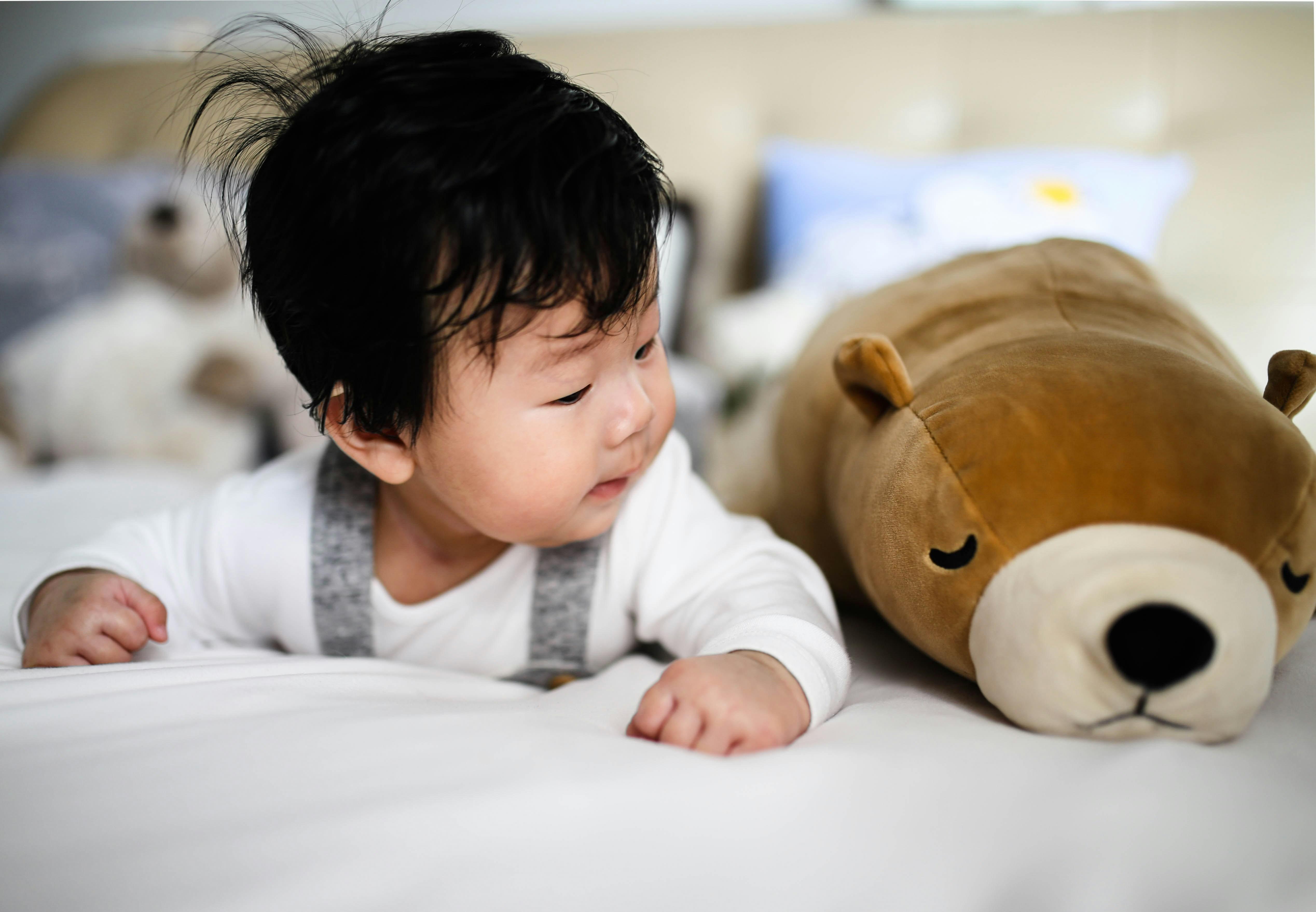
In the intimate moments of childhood, the bond between infants and their surroundings reveals a fascinating narrative of biological behavior. Observing a baby interacting with a plush bear not only highlights their tactile explorations but also showcases a deep-rooted need for comfort and connection. During this early stage of life, infants are instinctively drawn to soft objects, mimicking the nurturing environments of their caregivers. The warm, inviting texture of a stuffed animal offers a sense of safety, allowing them to explore their world without fear.
Delving deeper, one can appreciate the science behind these behaviors. Research indicates that during the first year, babies develop attachments to inanimate objects as a proxy for emotional security. This attachment is not merely whimsical; it aids in cognitive development. These plush companions become a training ground for social-emotional skills, launching an exploration of empathy and companionship long before verbal communication begins.
When a baby reaches out, examining their fuzzy companion, they engage in a dialogue with their environment. Each touch is a question; each coo, a response. These interactions are vital, cultivating not just sensory awareness but also problem-solving skills. It’s as if each encounter with the plush bear is a mini-lesson in the vast universe around them.
Interestingly, studies reveal that 70% of children develop a favorite toy by age three, often indicating a blend of imagination and emotional development. This early fascination with such objects may reflect how humans innately seek comfort, a behavior that has evolutionary roots. Whether it’s a plush bear or an article of clothing, these attachments serve as anchors, grounding the child amid the whirlwind of new experiences.
Ultimately, the journey of a child as they navigate plush companions reflects our profound need for connection and understanding in an ever-changing world. The statistics underline a universal truth: comfort objects may well be the silent educators in the early chapters of our shared human experience.

 English
 French
 Spanish
 Portuguese
 Deutsch
 Turkish
 Dutch
Dutch
 Italiano
 Russian