


 About
About
 Termini e Condizioni
 Privacy
 Contact
 Invest
The Language of Play
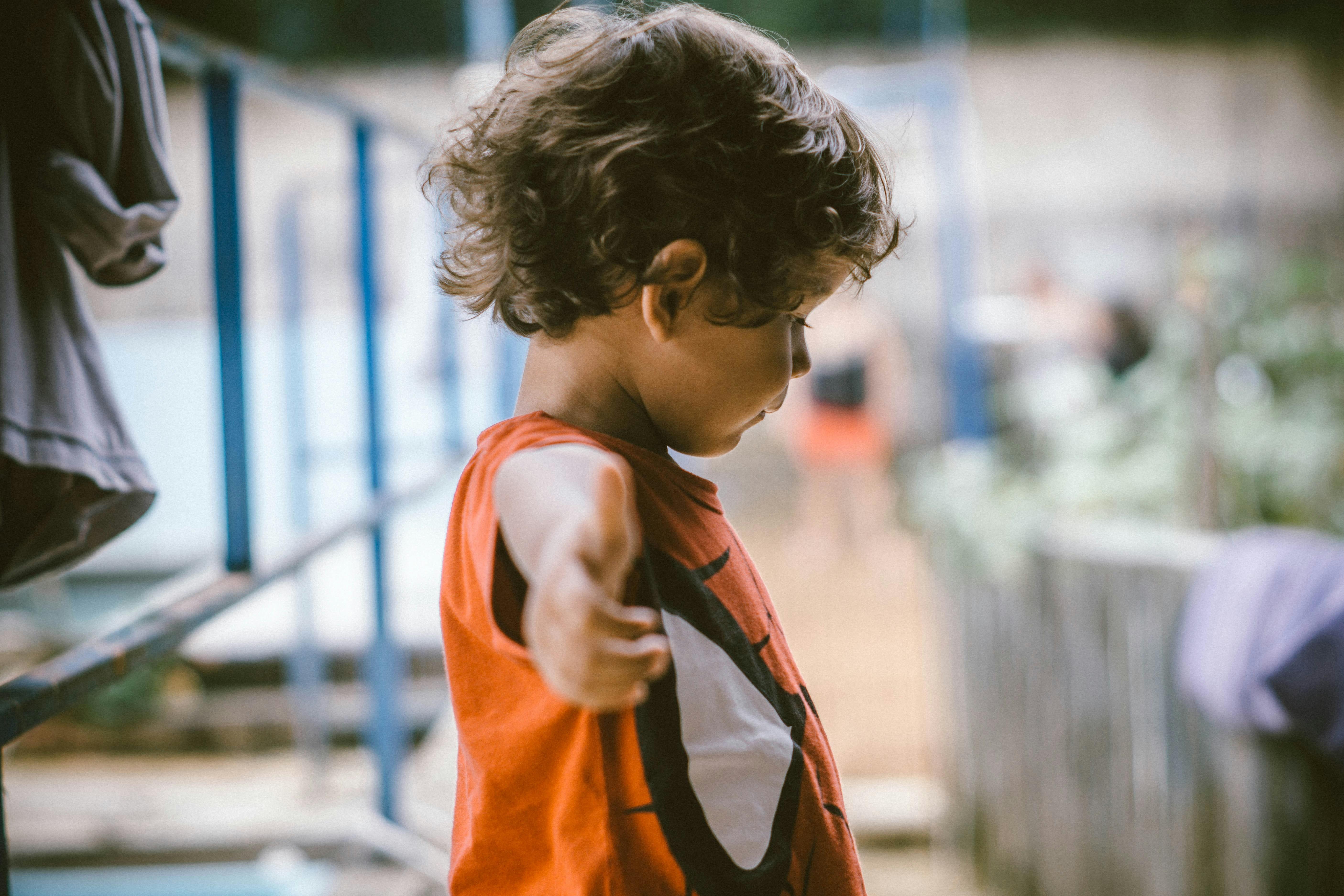
In the intricate tapestry of childhood, every gesture and expression serves as a thread weaving the narrative of growth and discovery. Observing a child play, you might notice the poised adaptability of their body, in this instance, arms outstretched in a moment of sheer focus. This seemingly simple action encapsulates not only the joy of imaginative play but also the profound biological imperatives that shape human behavior.
When children engage in role-play, such as pretending to be superheroes, they tap into the complex interplay between imagination and physicality. Neuroscientific studies reveal that this kind of play enhances cognitive development, promoting problem-solving skills and emotional resilience. Each stretch of the arm and furrowed brow indicates a budding understanding of agency and consequence in a world that can often feel overwhelmingly large.
The child’s posture tells more than mere intent; it reflects an innate instinct to explore boundaries and assert identity. From the simple act of extending a hand to the vast horizon of possibility, children are learning the essential skills of navigation—not merely through the physical world but also in social constructs. They grapple with rules, roles, and the constant negotiation of friendships, yielding valuable insights into cooperation and empathy.
As this young player imagines the thrill of flight, they mirror a fundamental biological truth: play is not just a diversion; it’s a rehearsal for life. In fact, research shows that play elements in environments can increase social cohesion, foster creativity, and even influence brain connectivity. After all, it is in these fleeting moments of pretend that the groundwork for future interpersonal dynamics is laid.
So, as we cherish these innocent moments, remember that play shapes the brain’s architecture, establishing neural pathways that will serve an individual well into adulthood. The science of play reveals that of the approximately 86 billion neurons in the human brain, many are wired through learning that occurs during these formative years, emphasizing the importance of nurturing environments that inspire this kind of imaginative exploration.
 Italiano
 Thai
Thai
 English
 French
 Spanish
 Portuguese
 Deutsch
 Turkish
 Dutch
Dutch
 Russian