


 About
About
 Terms
Terms
 Privacy
 Contact
 Invest
The Joy of Exploration: A Child's Perspective on Nature
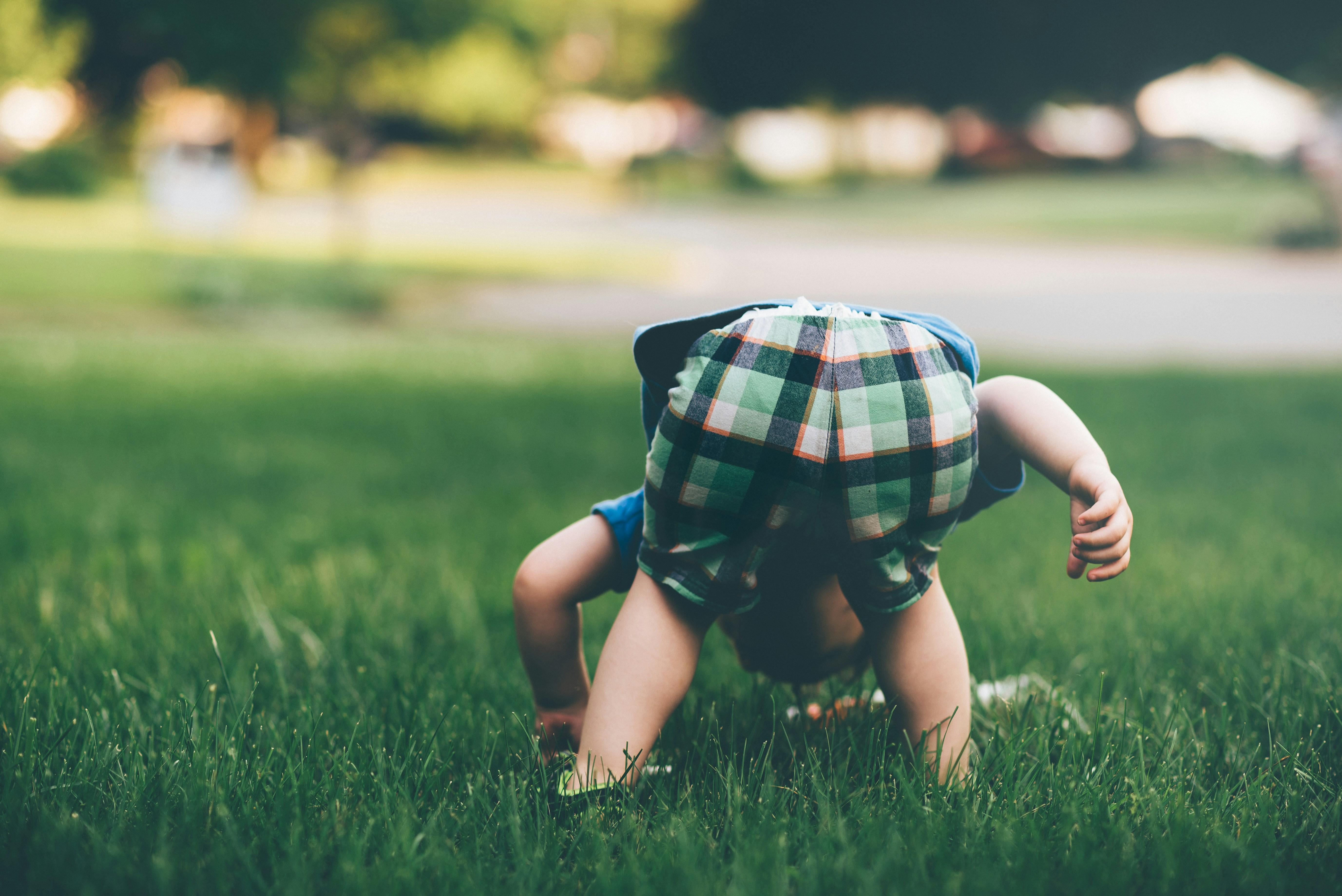
In a sun-drenched yard, the simplicity of childhood is on full display. A small figure, clad in plaid shorts, is engaged in the delightful task of exploring the world from a rather unconventional angle: upside down. This delightful scene highlights an intriguing aspect of biological behavior. Young children often take a hands-on approach to learning, embracing an instinctual curiosity that rivals that of many animal species.
A critical evolutionary advantage is embedded in such play. Children, much like young animals, instinctively immerse themselves in their surroundings to gather information. They touch, taste, and manipulate objects, all contributing to their cognitive development. This exploratory behavior serves to build neural connections, a phenomenon called synaptogenesis, which is most active in early childhood. While adults often forget the wonder of getting close to the ground, children revel in it, not just for its proximity to interesting objects but as a way to engage their senses fully.
Consider also the act of getting dirty. While parents might wince at the stained shorts, from a biological perspective, this exposure to nature is beneficial. It introduces young immune systems to a variety of microbes—an essential component in developing a robust immune response. This interaction with nature isn't merely recreational; it's a fundamental underpinning of human health and development.
The child's current posture—knees bent and hands splayed—is reminiscent of many animal species that forage for food close to the ground. It's a subtle reminder that our biological blueprints are more alike than we often realize. Children and animals alike thrive when they get down to the nitty-gritty of life.
As we watch this moment unfold, consider that childhood exploration is not merely a phase; it’s a crucial chapter in the story of human development. With roughly 70% of a child's immune response shaped in the first few years of life, the tug-of-war between dirt and cleanliness has profound implications. Indeed, in a world where the desire for pristine surroundings often overshadows the benefits of engagement, perhaps we should occasionally embrace a bit of chaos and curiosity.

 Thai
Thai
 French
 Spanish
 Portuguese
 Deutsch
 Turkish
 Dutch
Dutch
 Italiano
 Russian