


 เกี่ยวกับ
 เงื่อนไข
 ความเป็นส่วนตัว
 Contact
 Invest
The Fascinating World of Polar Bear Playfulness
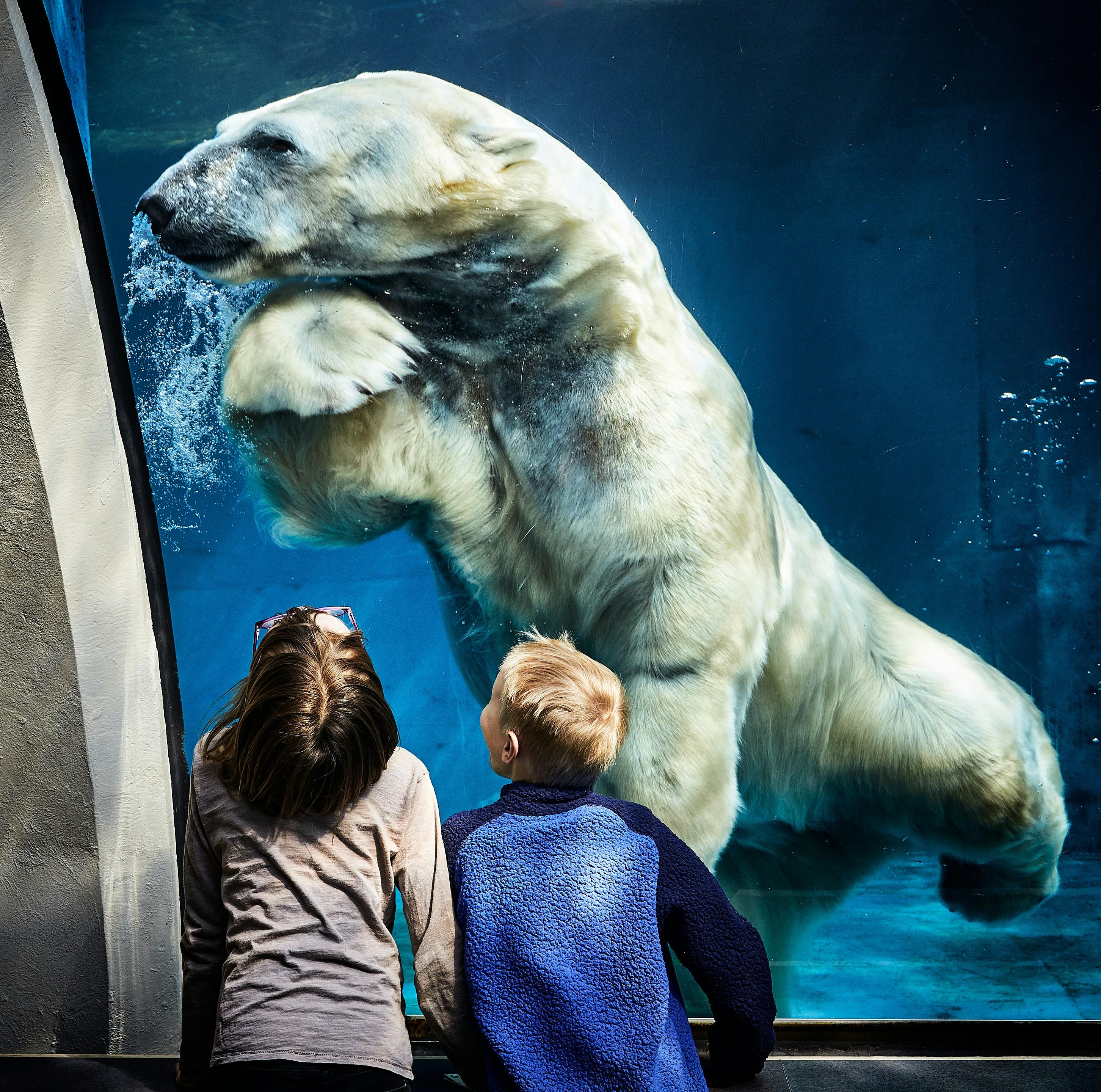
In the icy realms of the Arctic, polar bears reign supreme, not just as solitary hunters but as playful giants of the sea. These magnificent creatures offer a window into the interconnectedness of wildlife and human emotion, particularly through the innocent curiosity exhibited by children watching them. Gazing through glass, two young spectators reflect an awe that marries their childhood wonder with the raw, captivating behavior of one of nature’s apex predators.
Polar bears, primarily known for their formidable size and hunting prowess, possess a surprisingly intricate social life marked by play. This behavior is not merely about fun; it serves crucial purposes for survival. Young cubs engage in playful sparring to hone their combat skills, vital for their success in a world where food is a constant chase. Adult bears partake in playful behavior as well, not just to establish dominance but to reinforce social bonds and share learned skills—much like how humans bond and learn through play.
The fluidity with which the polar bear glides underwater highlights another fascinating aspect of their biology. Their thick layers of blubber and specialized limbs allow them to move gracefully, a stark contrast to the heavy weight they carry on land. Through the glass, children witness the charisma of these creatures, as they tumble and twirl, demonstrating skills that are as much about joy as they are about survival.
Watching this interaction between children and polar bears reminds us of the often-overlooked elements of nature. In a world where 80 percent of polar bear habitat is on the brink due to climate change, these moments become poignant reminders of the urgency for conservation. Every playful splash or curious gaze connects us to a broader narrative of survival—one where playing and learning bridge the realms of instinct and intelligence. As these young admirers gaze mesmerized, they unknowingly become ambassadors for a species that defines the delicate balance of our ecosystem.

 English
 French
 Spanish
 Portuguese
 Deutsch
 Turkish
 Dutch
Dutch
 Italiano
 Russian