


 About
About
 Termini e Condizioni
 Privacy
 Contact
 Invest
Frolicking Freedom: The Joyful Gambol of Young Sheep
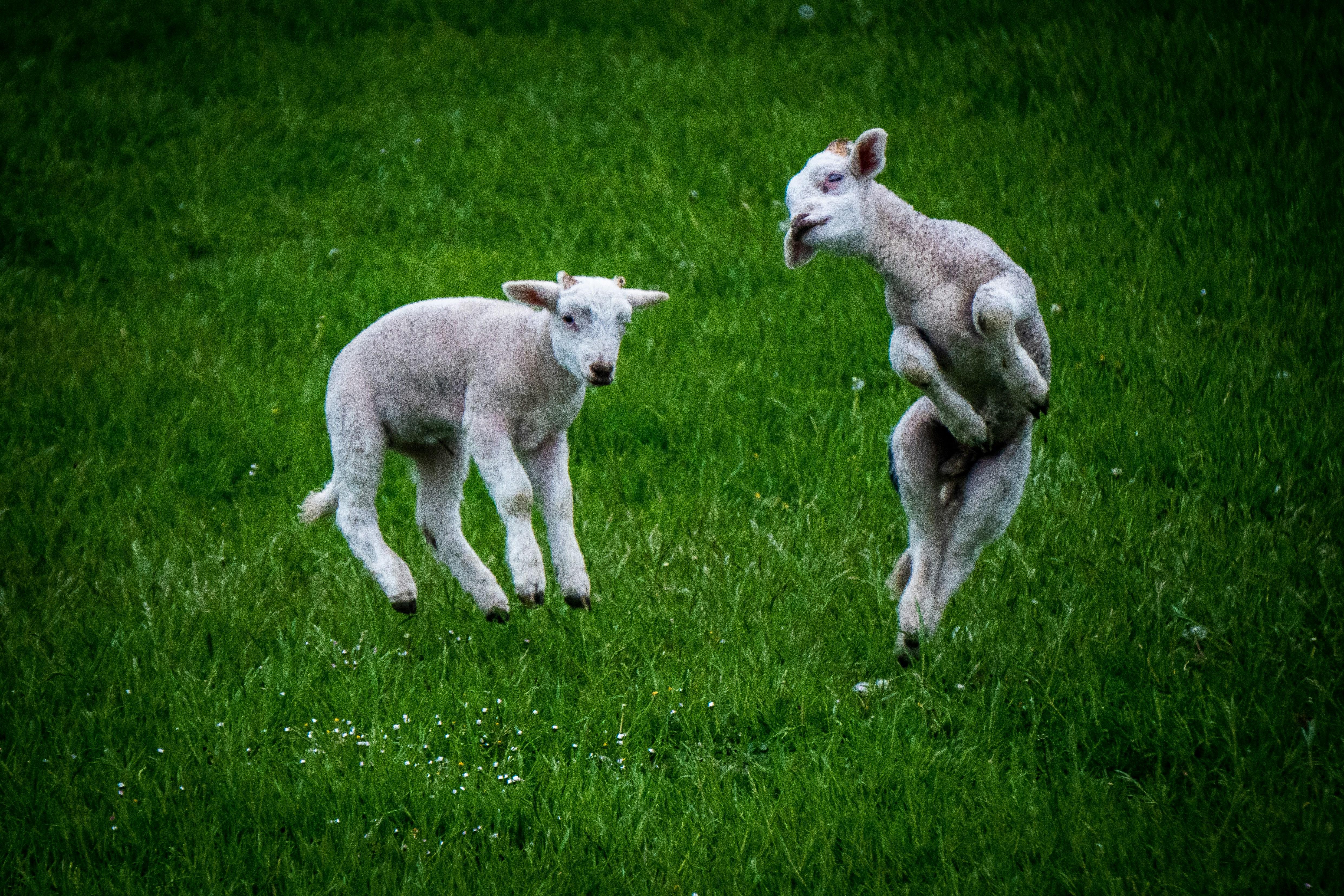
In the rolling green pastures, two lambs embody the spirit of youth with a display of playful exuberance that captivates the observer. Their unrestrained leaps and bounds are more than mere play; they are a vital part of their development. This instinctual behavior, often referred to as "play behavior," serves multiple purposes in the lives of young animals.
As these lambs spring into the air, their movements facilitate the honing of physical coordination and strength. Jumping helps build muscle and improve balance, sharpening their agility for when they need to escape predators in the wild. Interestingly, play is not just a simple pastime; it’s an essential survival mechanism. Researchers have shown that animals engaging in play are often better equipped to handle real-world challenges. This sport of joy fosters resilience, adaptability, and social bonding.
But here lies a curious observation: why do they seem to bounce so exuberantly? The lamb on the right appears to be engaging in something akin to a joyful victory dance—a departure from mere instinct into the realm of joy itself. In their young minds, this joyful expression is not only delightful but also a crucial part of socialization. Young animals that play together form stronger social bonds, creating the networks necessary for survival and cooperation in their future lives.
The connectedness of play and development underscores the amusing paradox of nature—how survival instincts intertwine seamlessly with sheer delight. While we often perceive play as a break from life’s seriousness, in the animal kingdom, it is a critical rehearsal for future survival. Statistically, young mammals that engage in play exhibit a lower mortality rate than those that don’t, illustrating the profound impact of these carefree moments on their future lives. As we watch these lambs dance through the grass, we are reminded that joy is not just a feeling; it is fundamental to life itself.
 Italiano
 Thai
Thai
 English
 French
 Spanish
 Portuguese
 Deutsch
 Turkish
 Dutch
Dutch
 Russian