


 About
About
 Koşullar
 Gizlilik
 Contact
 Invest
Joy in the Journey
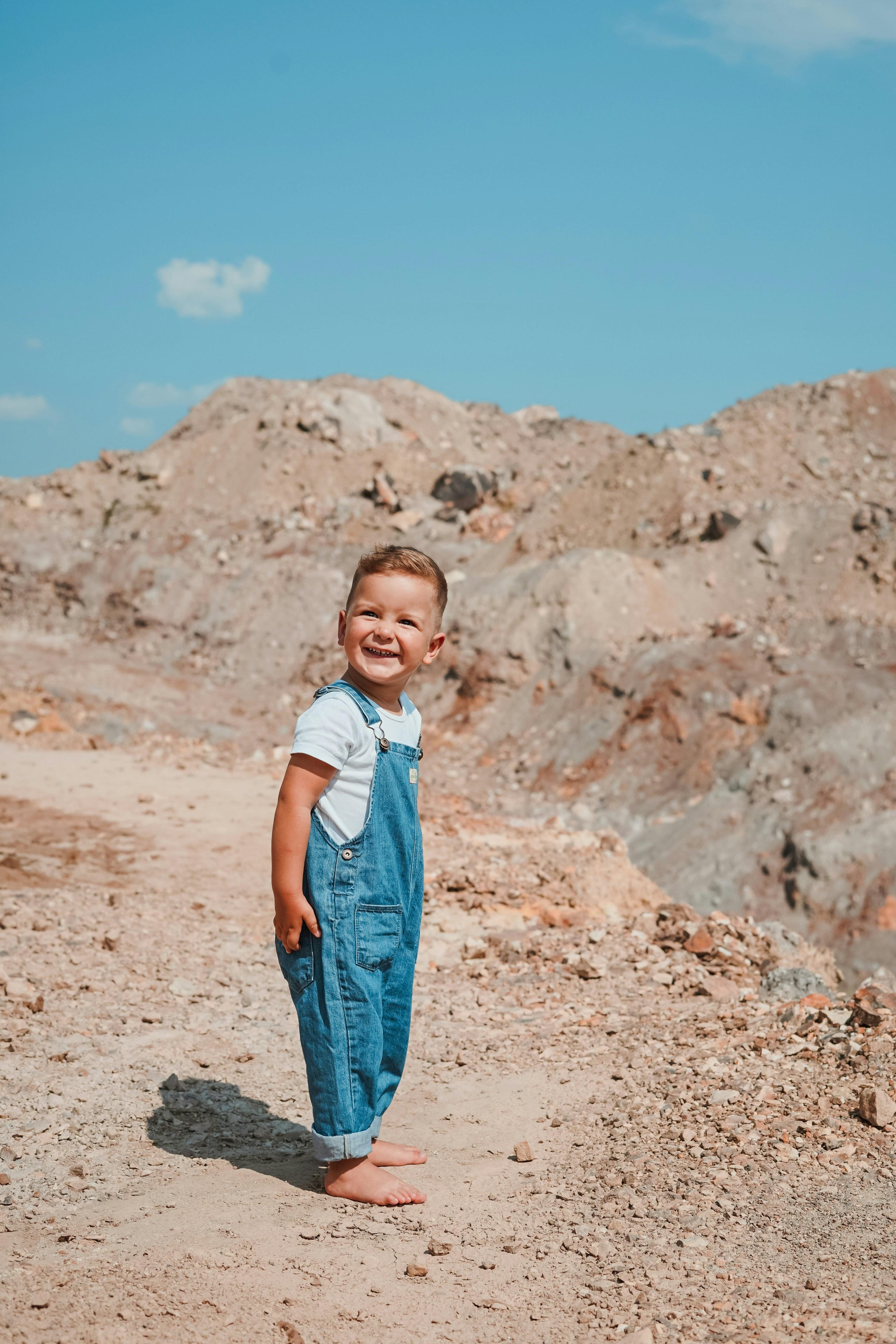
In the annals of biological behavior, few moments encapsulate the essence of discovery like the unfiltered exuberance of a child standing on the precipice of an adventure. The scene unfolds with a young boy, barefoot and grinning, perched on a rocky landscape that appears almost otherworldly. The surrounding terrain, marked by a palette of browns and earthy hues, evokes a sense of raw beauty and untouched wonder. Yet, it is the child’s delight that steals the spotlight—the way he gazes into the expanse speaks volumes about the human spirit’s innate curiosity.
From an evolutionary lens, such curiosity is not mere play; it’s a profound survival instinct. Children engage with their environment through exploratory behavior, honing vital skills that would have been essential for foraging and survival in ancestral contexts. This joyful exploration is a form of cognitive mapping, a foundational aspect of learning that aids in spatial awareness and problem-solving. The child’s smile is a testament to the happiness derived from discovery, an emotion that may well have deep roots in the neurological circuits developed to reward successful navigation of challenges.
Ironically, while adults often view rocky terrains as obstacles, to a child, they transform into mountain ranges of possibility. As he stands, his body language radiates confidence, embodying a natural buoyancy that invites laughter. It’s a reminder that perspective influences behavior; the same rocks that seem daunting to an adult are perceived as potential playgrounds to the imaginative mind of a child.
Looking deeper, studies suggest that children who engage with their environment show improved cognitive flexibility and emotional resilience. Such behaviors contribute not just to individual growth, but to a collective tapestry of experience and shared knowledge. As we reflect on this moment, it becomes clear: the simple act of exploration is not just physical movement; it’s a rich developmental journey that remains vital, regardless of age. In fact, participation in playful learning environments correlates with higher cognitive skills—approximately 20% more proficient in spatial awareness tasks—illustrating how foundational such behavior is to human evolution.

 Thai
Thai
 English
 French
 Spanish
 Portuguese
 Deutsch
 Dutch
Dutch
 Italiano
 Russian