


 Über
Über
 Bedingungen
 Datenschutz
 Contact
 Invest
The Enigmatic Gaze of the Wolf
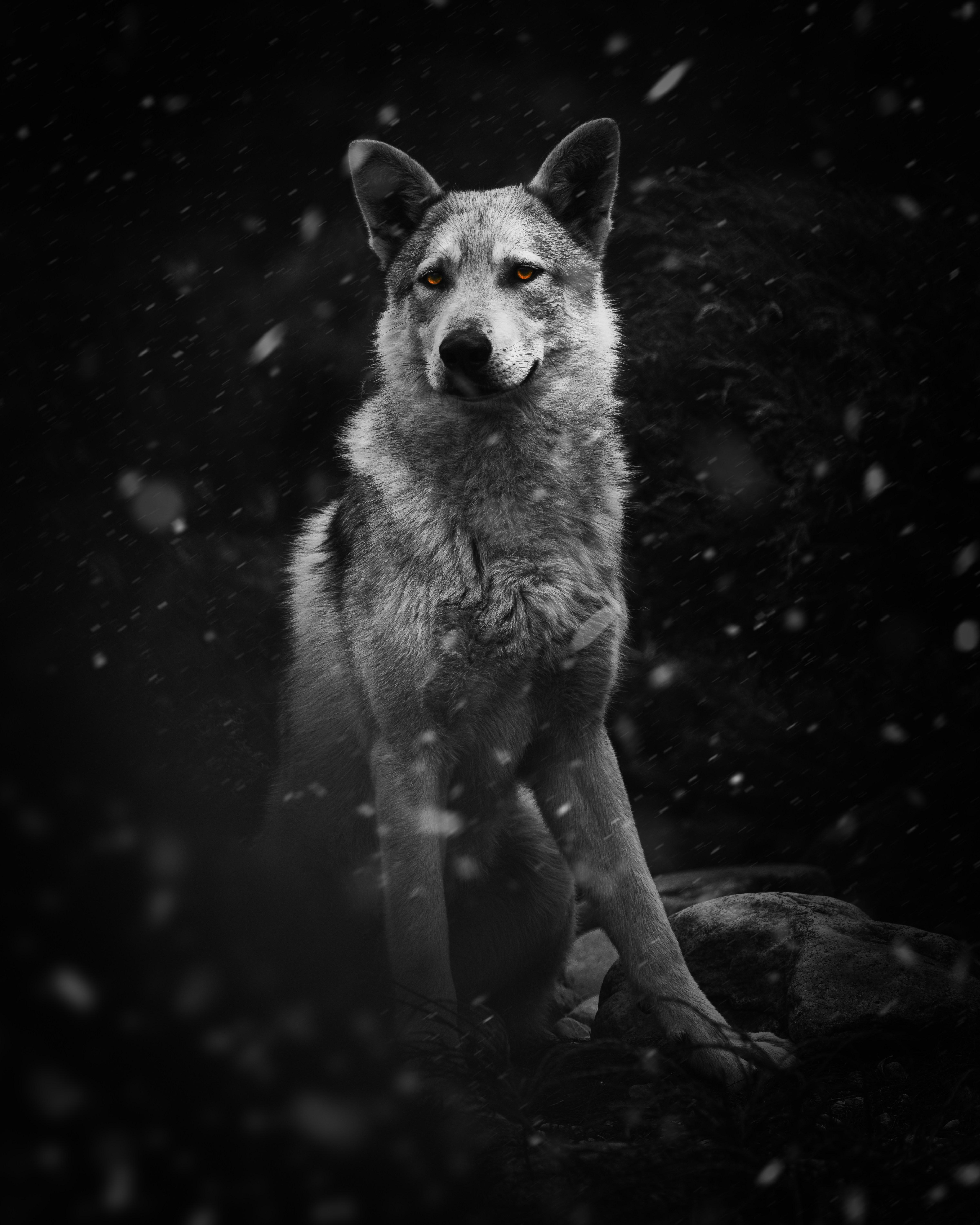
In the muted black and white of a snow-dusted landscape, the wolf embodies both grace and an air of mystery. As it sits poised, with keen amber eyes seemingly penetrating the shadows of the forest, one cannot help but reflect on the complex social structures that underpin its existence. Known for their packs, wolves are forged by cooperation. Each member plays a critical role—from hunting to nurturing pups—highlighting how collaborative behavior fosters survival in the wild.
Recent studies illuminate the nuances of wolf communication, revealing a rich tapestry of vocalizations, body language, and even facial expressions that guide their interactions. When a wolf tilts its head slightly, it’s not merely a sign of curiosity; it can signal submission or a willingness to engage with pack members. The subtlety of these gestures often goes unnoticed, much like the camaraderie forming in the backdrop of their arduous lives.
Wolves are also survivors of harsh environments, adapting to the challenges of their surroundings. They possess an extraordinary sense of hearing, capable of detecting sounds nearly a mile away, which aids in locating prey or signaling to their pack. This acute sensing elevates their hunting proficiency—an often underestimated trait. Interestingly, the success rates of pack hunts can soar to an impressive 80%, underscoring the power of teamwork in the natural world.
As we draw back from this moment, the image of the wolf serves as a haunting reminder of the delicate balance between an individual and the collective. In a world where loneliness can often seem palpable, perhaps there’s wisdom in the wolf’s way; they thrive not only by their instincts but through the bonds they forge—reinforcing the notion that we too are often defined by our connections.
 Deutsch
 Thai
Thai
 English
 French
 Spanish
 Portuguese
 Turkish
 Dutch
Dutch
 Italiano
 Russian