


 New! Search Engine
 About
About
 Koşullar
 Gizlilik
 Contact
 Invest
Curiosity in Every Step
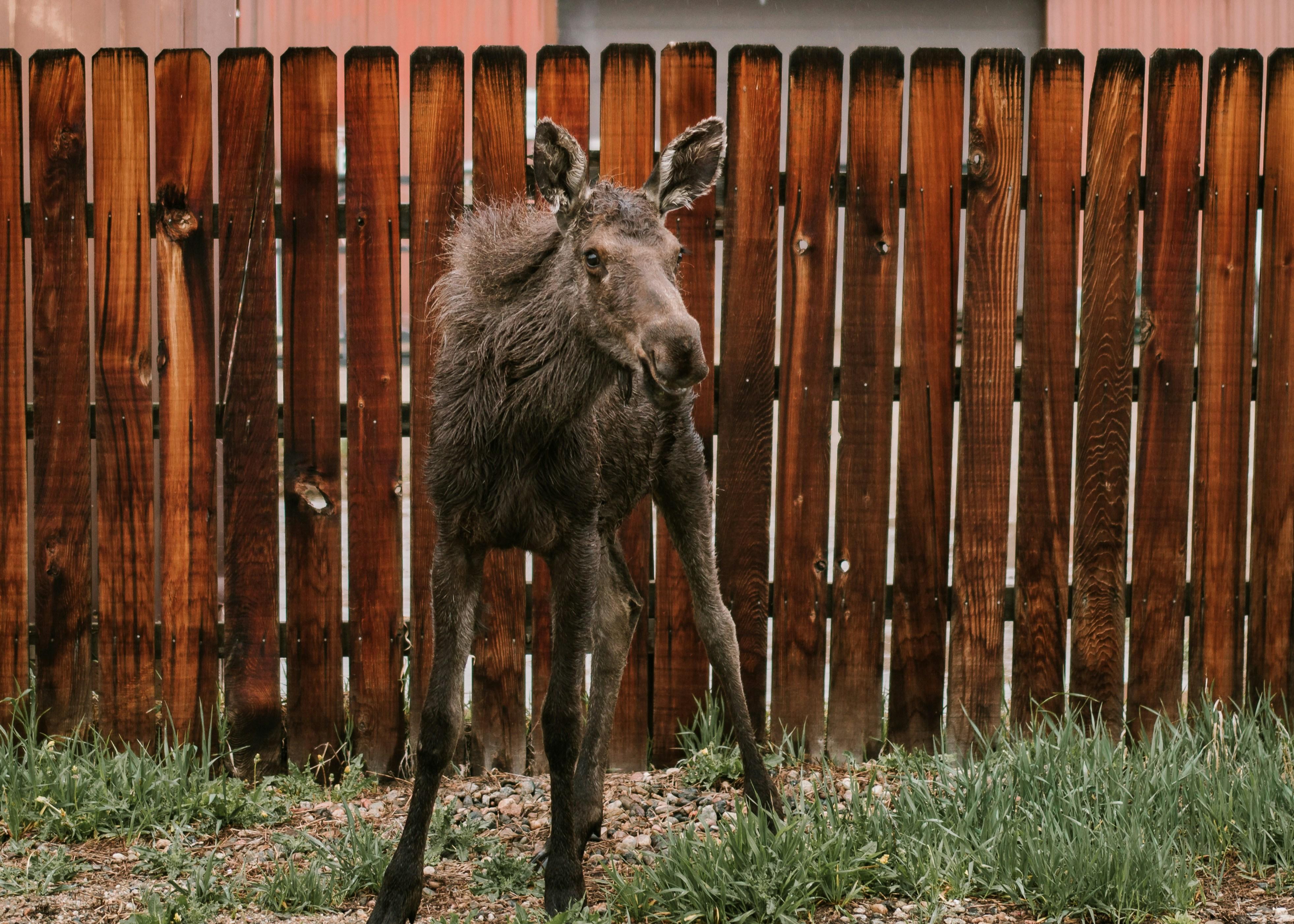
In the quiet moments of dawn, a young moose stands awkwardly against a wooden fence, embodying a blend of youthful curiosity and uncertainty. This scene serves as a compelling reminder of the complex behaviors observed in many young mammals. While instincts guide them, it is their exploration of the environment that shapes their social and survival skills.
Observations reveal that this period of development is critical for young ungulates. For instance, moose calves, like the one captured in this image, often engage in a seemingly clumsy trot as they navigate their surroundings. This behavior is not mere randomness; it’s an adaptation that enhances their awareness of predators. Such exploration allows them to both test their motor skills and learn to read their surroundings, becoming deft at recognizing potential threats.
Adding a touch of humor, one might liken their awkward movements to a toddler just learning to walk, a phase filled with bouts of uncertainty yet fundamental growth. Each wobbly step is a lesson in balance, just as each cautious glance around is a lesson in caution. Moose are born with the instinct to flee, but as they grow, their exploratory behavior builds confidence and independence—skills essential for their survival in often harsh habitats.
In terms of biological success, a remarkable statistic worth noting is that approximately 70% of moose calves survive to adulthood if they can navigate the challenges of their formative months. This number showcases the dynamic interplay between instinct and learned behavior, illustrating the importance of curiosity in the natural world. Whether a young moose or a human child, early experiences can significantly shape future interactions with the world.
 Turkish
 Thai
Thai
 English
 French
 Spanish
 Portuguese
 Deutsch
 Dutch
Dutch
 Italiano
 Russian