


 New! Search Engine
 About
About
 Voorwaarden
 Privacy
 Contact
 Invest
In the midst of a gathering, a small child stands with a serious demeanor, embodying a fascinating aspect of human biological behavior. Children are inherently social creatures, yet they often display a remarkable range of emotional responses in novel situ
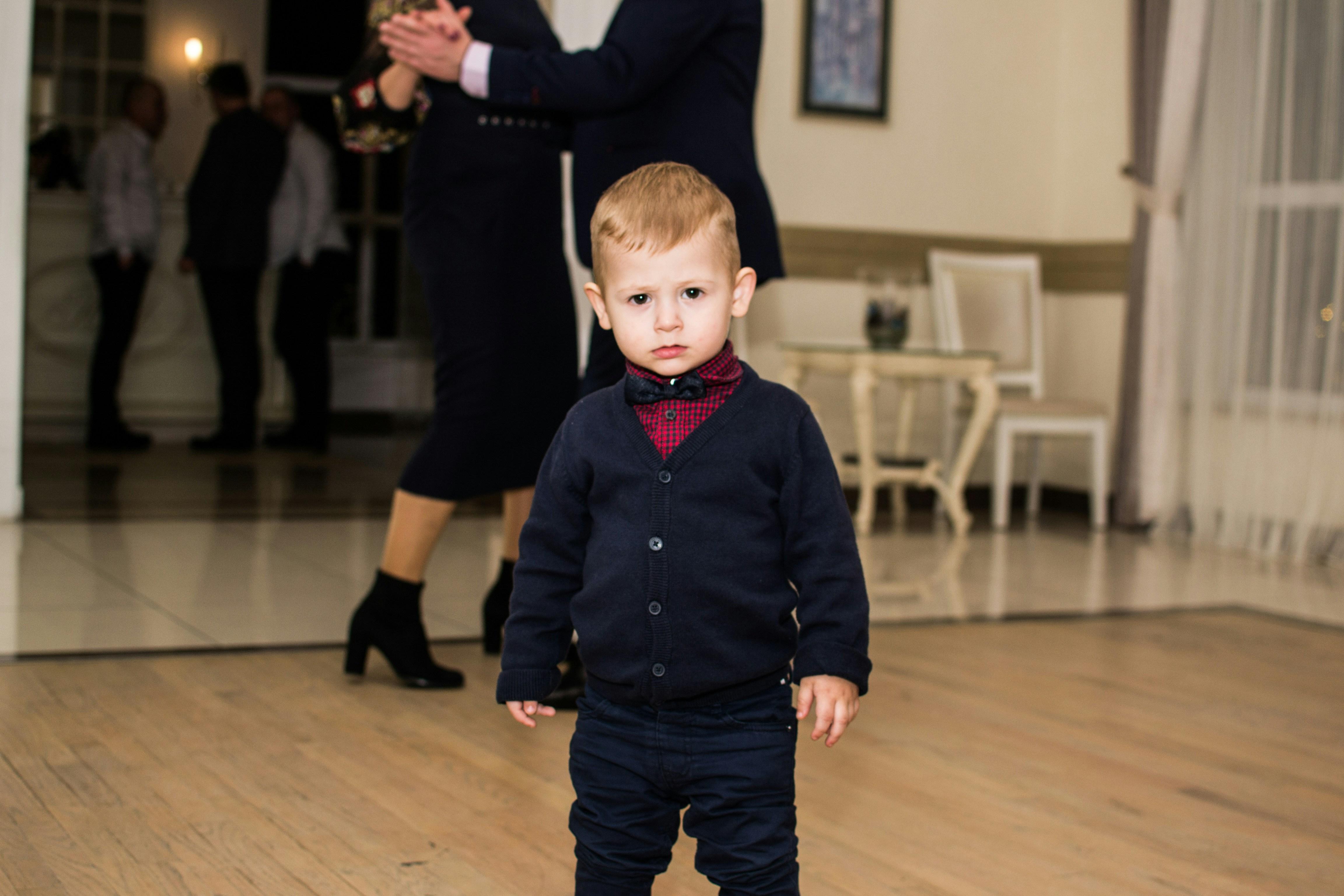
From an evolutionary perspective, this mixture of emotions serves to enhance survival. When placed in unfamiliar environments—such as a bustling party—young children tend to assess their surroundings with a critical eye. This cautious observation allows them to discern potential threats and opportunities, an instinct that can be traced back to our ancestors, who thrived by remaining vigilant in the face of uncertainty.
The child's serious expression, juxtaposed against joyous adult interactions, highlights a divergence in social expectations. Children do not merely mimic adult behaviors; they actively evaluate social cues and decide when to engage or withdraw. This requires not only cognitive development but also social awareness, illustrating the complex interplay of biological and social factors that shape human behavior.
Interestingly, studies have shown that toddlers can accurately read emotional contexts, often demonstrating emotional intelligence long before they possess the language to articulate their observations. For instance, the data suggests that by age three, children already begin to understand the feelings of others, a foundation built upon their own experiences and interactions.
As we observe the child standing apart, we are reminded of the delicate balance between exploration and caution that defines early human behavior. It is estimated that nearly 90% of a child's brain develops by the age of five, driven by such interactions. Thus, this moment is not merely a snapshot but a window into the rich tapestry of human development and social behavior.
 Dutch
Dutch
 Thai
Thai
 English
 French
 Spanish
 Portuguese
 Deutsch
 Turkish
 Italiano
 Russian