


 New! Search Engine
 About
About
 Terms
Terms
 Privacy
 Contact
 Invest
In the heart of the wilderness, the subtle dance of social bonding among wolves often unfolds in intimate, and at times unexpected, moments. Observe two wolves engaged not in conflict, but in a ritual that blurs the lines of friendship and kinship. What mi
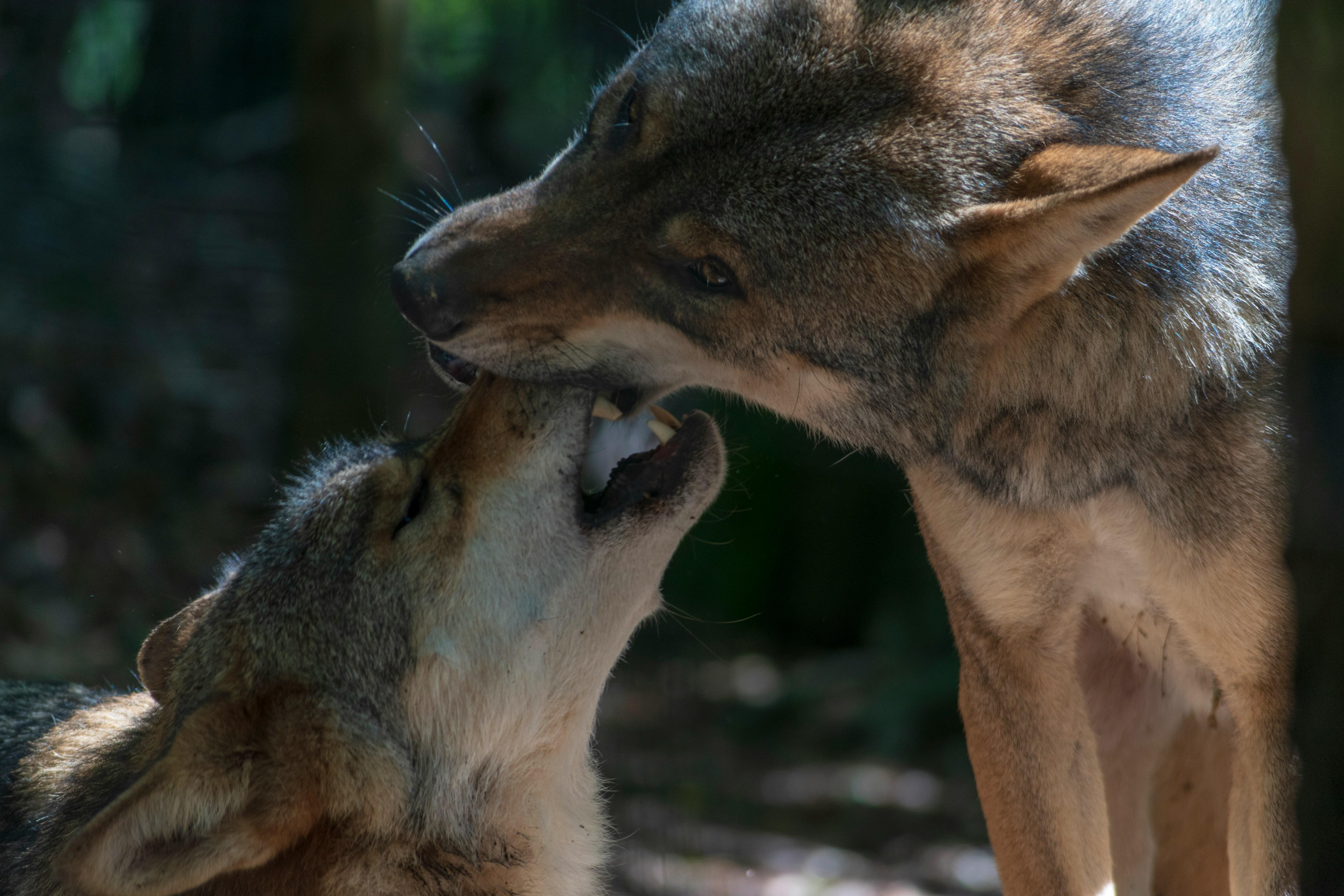
The behavior displayed here is a potent reminder of the complexities within wolf societies. Wolves live in tight-knit packs, where cooperation is essential for hunting and rearing pups. Their interactions often extend beyond mere functionality; they include grooming and affectionate gestures that strengthen bonds. These intricate behaviors enhance group cohesion, aiding in survival in the wild.
Interestingly, such displays also play a crucial role in managing stress. Australian researchers found that wolves exhibiting stronger social interactions exhibit lower stress levels, crucial in high-stakes environments like the wild. This is somewhat counterintuitive—one might assume that competition reigns in such a survival-driven world, but camaraderie proves equally significant. A shared howl or a gentle nudge serves not only to affirm status but to foster connections that can lead to more successful hunts.
As we reflect on the harmony within this pack dynamic, perhaps we can glean insights into our own social behavior. After all, studies reveal that social animals, like wolves, can experience reductions in stress by merely engaging in friendly interactions. In essence, the wolves remind us that sometimes a touch, a nuzzle, or a simple moment spent in the company of others can fortify not just bonds, but our very well-being in an often chaotic world.
 English
 Thai
Thai
 French
 Spanish
 Portuguese
 Deutsch
 Turkish
 Dutch
Dutch
 Italiano
 Russian