


 New! Search Engine
 About
About
 Terms
Terms
 Privacy
 Contact
 Invest
The Art of Camouflage in the Winter Woods
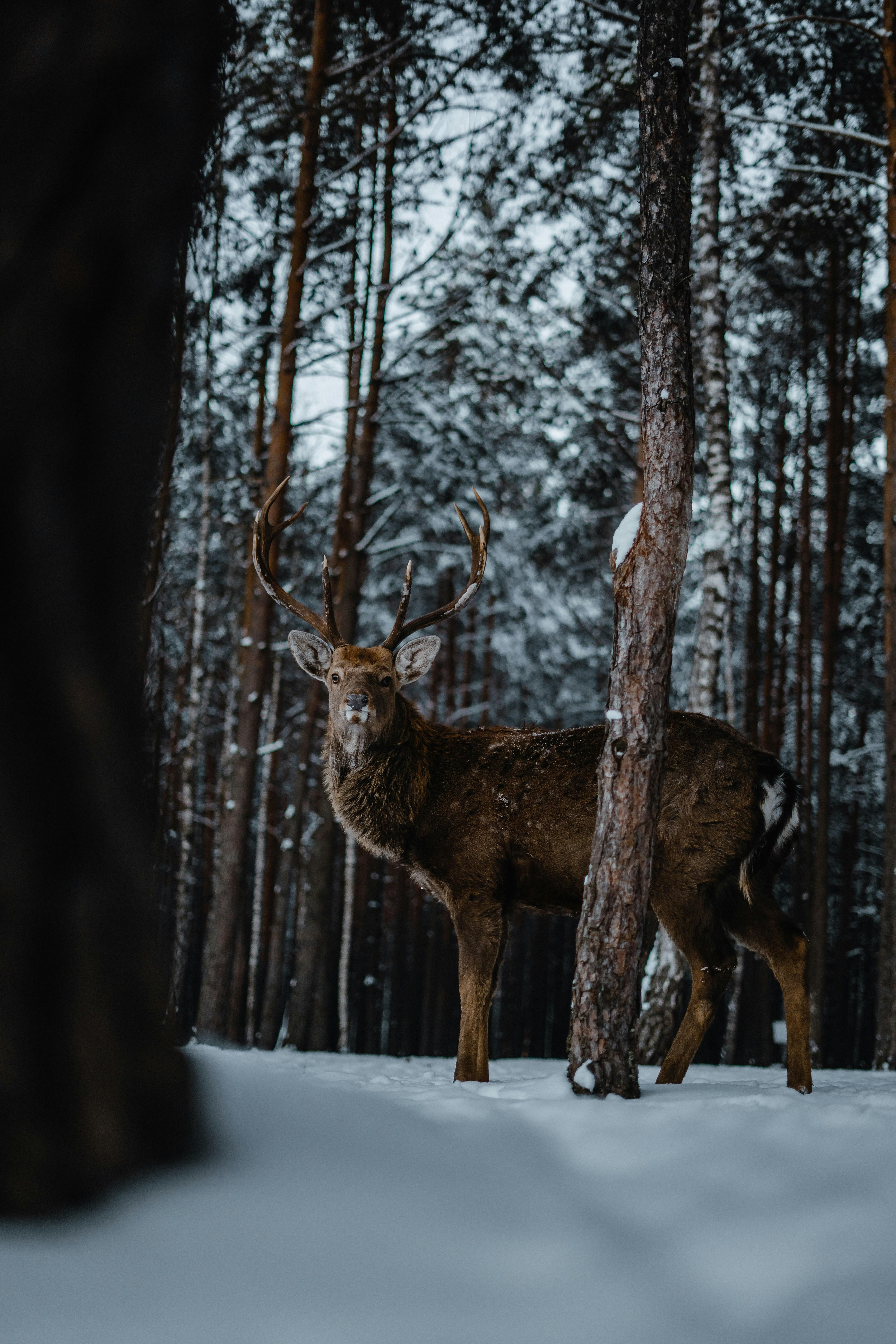
Amidst a tranquil winter forest, a deer stands poised, embodying a remarkable strategy in the art of camouflage. This behavior goes far beyond mere aesthetics; it serves as a vital survival mechanism. In habitats where snow blankets the ground, the deer’s muted hues harmonize with the wintry landscape, allowing it to blend seamlessly into its surroundings. While most might admire this natural beauty, the true marvel lies in how it has evolved to stay unseen from predators—an evolutionary tale inscribed in its very anatomy.
The deer’s large, expressive eyes can discern minute movements, enhancing its ability to detect potential threats long before they draw near. This acute sensitivity is matched by a remarkable ability to remain motionless, an instinctual response to danger rooted deep in the fabric of its biology. By freezing in place, it hopes to escape the notice of predators, who are more reliant on movement than mere sight.
Yet, there’s humor in this ballet of survival. Imagine, if you will, the deer internally calculating the risk of cough or sneeze amidst a world of silent threats. Their silent game of hide-and-seek illustrates the precarious balance of existence in the wild, where a moment's lapse can spell disaster.
Interestingly, studies indicate that deer have an impressive awareness of their surroundings, with some research suggesting they can detect sounds up to a mile away. As they navigate through dense woods, their ability to remain unseen, coupled with acute auditory capabilities, underscores a finely tuned survival strategy evolved over millennia.
As we step back and observe this delicate interplay of survival, it becomes evident just how extraordinary the mechanisms of biological behavior can be—in numbers, an estimated 85% of the deer population relies on such camouflage for survival in their natural habitat.
 English
 Thai
Thai
 French
 Spanish
 Portuguese
 Deutsch
 Turkish
 Dutch
Dutch
 Italiano
 Russian