


 New! Search Engine
 Sobre
Sobre
 Termos
 Privacidade
 Contact
 Invest
The Unseen Language of Arctic Giants
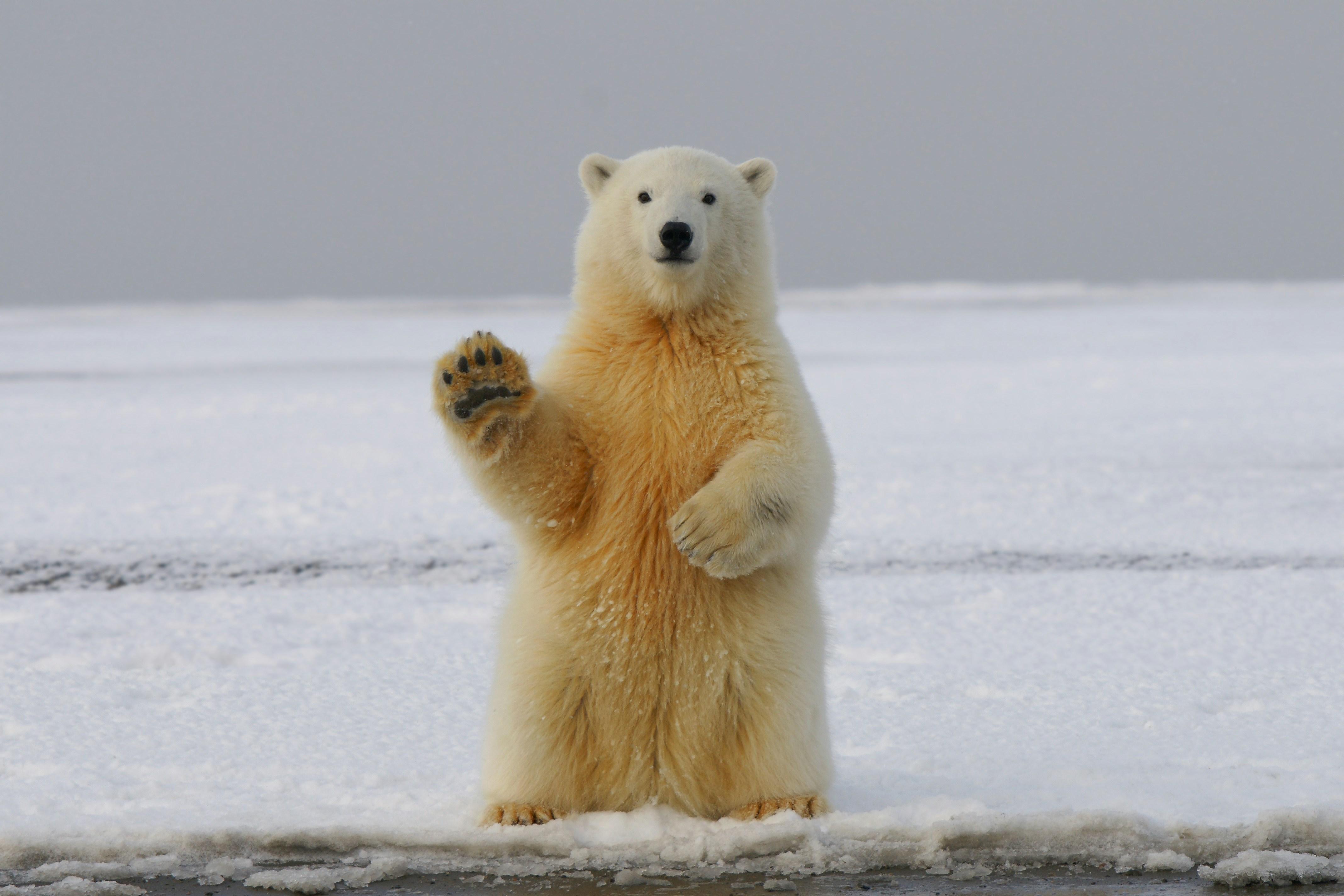
In the stark, icy expanses of the Arctic, remarkable spectacles unfold daily, often unnoticed by the casual observer. Among these wonders stands the polar bear, a majestic giant with powerful limbs and a thick coat designed to withstand frigid temperatures. Yet, beneath that fur lies a complex tapestry of social behavior that has evolved for survival in one of Earth's harshest environments.
When a polar bear raises a paw—a gesture that some may interpret as a simple wave—it can represent a multitude of emotions and intentions. This seemingly casual act transcends mere physical movement; it speaks volumes in the bear's world. Research indicates that such gestures play a crucial role in communication, helping these solitary creatures navigate their relationships, especially during mating seasons or territorial disputes. In fact, this subtlety of behavior presents an exciting area for researchers seeking to understand interspecies communication.
Despite their ornate appearance and commanding stature, polar bears face significant threats. The loss of sea ice—around 12.4% per decade—has turned their hunting grounds into a dangerous game of hide-and-seek. This transformation compels them to adapt their behaviors, from hunting techniques to social interactions. Ironically, an animal that relies heavily on solitude is increasingly learning to navigate the nuances of social dynamics in a dwindling environment.
In these moments of social interaction, we find a reflection of our own struggles with connection and communication, reminding us of our intertwined fates on this planet. Just as we continuously evolve, so too must polar bears adapt in an ever-changing landscape, where survival depends not only on instinct but also on the delicate art of interaction. At the intersection of biology and behavior, we learn that the challenges of one species illuminate the broader narrative of life itself.
 Portuguese
 Thai
Thai
 English
 French
 Spanish
 Deutsch
 Turkish
 Dutch
Dutch
 Italiano
 Russian