


 New! Search Engine
 Über
Über
 Bedingungen
 Datenschutz
 Contact
 Invest
Squirrels in the Golden Hour: How Fall Foliage Reveals Their Resourceful Dance
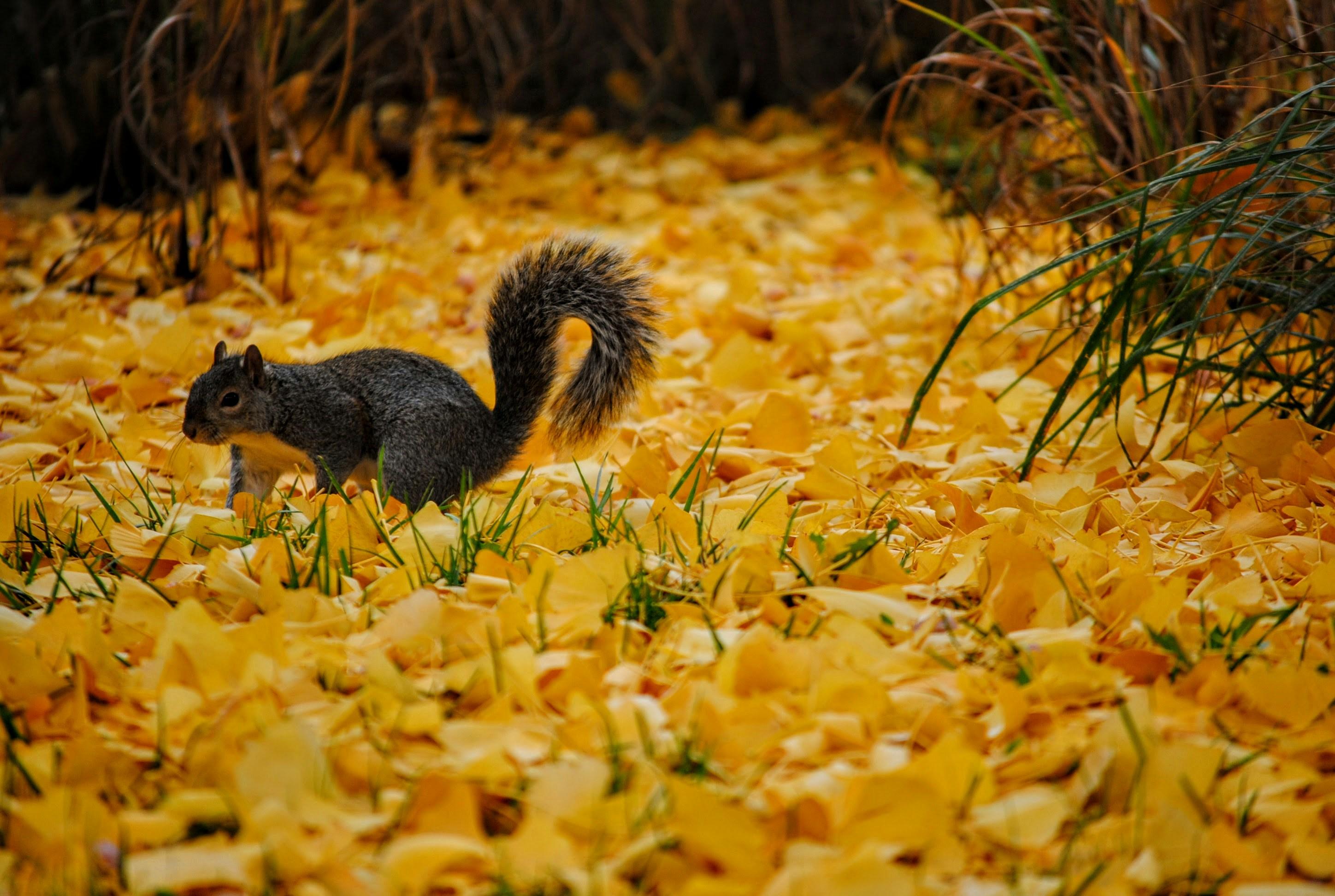
Amidst the cascade of golden leaves, a squirrel pauses, its tiny paws sifting through a vibrant carpet of ginkgo foliage. With a flick of its feathery tail, it seems to juxtapose autumn’s splendor and the urgency of survival—a furry acrobat tipping the scales between playfulness and purposeful foraging. What secrets does this little creature hold as it navigates its way through this fleeting season?
Squirrels are remarkable architects of their ecosystems, but there’s a pulse to their behavior that often goes unnoticed. Observing this particular specimen amid the ginkgo leaves, one can glean insights into its behavioral state. As a species known for their extraordinary memory, squirrels demonstrate a foraging efficiency that increases in autumn. Studies show that gray squirrels, such as the one in the image, expand their vigilance time—an average of 20% longer than in the summer months—focusing on both food cache retrieval and threat detection. Notably, research indicates that around 90% of individuals adopt some form of sentinel behavior, periodically scanning for predators while foraging. It’s a delicate balance: the squirrel's ability to multitask mirrors our own struggles between safety and satisfaction.
In terms of emotional state, the squirrel likely oscillates between excitement and wariness, a classic tug-of-war in an animal kingdom dictated by the looming seasonal changes. Hormones play a critical role here; studies suggest that cortisol levels can fluctuate significantly in these creatures, particularly as they prepare for winter. It’s their innate ability to adapt to these environmental stressors that aids in their survival, providing a striking parallel to human experience when times grow uncertain.
For those hoping to better understand and foster the well-being of their local wildlife, there are actionable takeaways from this little forager. Providing environments rich in diverse plants, particularly nut-bearing trees and shrubs, can create a hospitable habitat for squirrels. Interestingly, studies have shown that urban areas with more than 30% green coverage can increase local squirrel populations by up to 50%. Planting native species that produce varying types of fruits and nuts throughout the year will further ensure these agile animals have resources as they adapt their foraging strategies to changing seasons.
As this squirrel scuttles through the sea of autumn leaves, it reminds us of a universal truth: the intricate dance of survival is often hidden beneath the surface of nature's beauty. In our own lives, navigating the chaotic seasons of change often requires similar agility and resolve. Perhaps we too can learn from the persistence of the squirrel, finding warmth and sustenance in the golden moments of our surroundings, even as the winds of winter approach.
 Deutsch
 Thai
Thai
 English
 French
 Spanish
 Portuguese
 Turkish
 Dutch
Dutch
 Italiano
 Russian